Compression Lock Defence

Family

Translation: compression lock defence

Range & classification

Category
Strike & defenceLocksClose rangeFighting multiple people
Distance
CloseMiddleLong

Overview

The Compression Lock Defence family covers defensive techniques against compression locks (also called muscle crushes or slicers), where the attacker applies pressure across a muscle belly using a bone as a fulcrum. [1] Compression lock defence focuses on preventing the attacker from establishing the fulcrum position and relieving the compressive pressure before tissue damage occurs. [1],[2] This family includes arm compression defence (against bicep slicers) and leg compression defence (against calf slicers), each requiring specific defensive mechanics based on the anatomy being attacked. [2],[3]

Also known as
Slicer Defence[1]Crush Defence[2]Compression Defence[3]

History & Origin

Compression lock defences developed as these attacks became more prevalent in competitive grappling, particularly after the IBJJF allowed calf slicers at brown belt level and above. [1] The increasing sophistication of leg lock games in modern no-gi grappling made compression lock defence an essential component of defensive training. [2],[3]

Country of originΒ· shown in random order

  • BrazilBJJ, MMA
  • Japanεœ§θΏ«ζŠ€γƒ‡γ‚£γƒ•γ‚§γƒ³γ‚Ή(Appaku-waza Difensu)BJJ
  • USAMMA, Catch Wrestling
  • RussiaSambo
  • EnglandCatch Wrestling

Effectiveness

Compression lock defences prevent bicep and calf slicers by controlling the opponent's leg positioning and maintaining space. [1]

Lineage

Compression lock defences developed as these attacks became more common in BJJ. [1]

Competition Record

Used in BJJ competition. [1]

Images

No images yet for this technique.

Sign in to suggest an image.

Biomechanical Mechanism

Primary Action β€” Preventing or reducing the effect of an incoming attack through physical interception, evasion, or structural positioning
Joints Involved β€” Varies by defence type β€” blocks use arms/shins, evasions use head/body movement, sprawls use hips
Force Vector β€” Opposing or tangential to the attack β€” either absorbing, redirecting, or evading the incoming force
Defensive Principle β€” Economy of motion β€” the best defence uses minimal movement to neutralise the maximum threat

Position & Entry

From fighting stance (under fire) β€” Bring both hands to the head, elbows tight, tuck the chin β€” absorb the flurry while protecting vital targets
As emergency defence β€” When overwhelmed by volume, shell up in the cover position until the opponent pauses

Videos

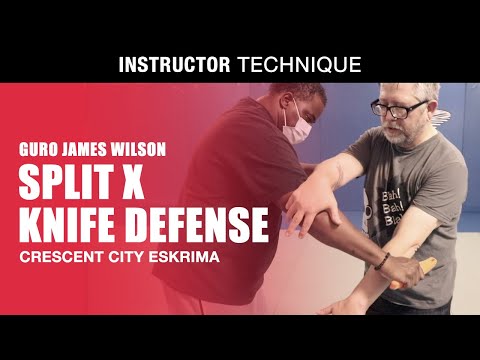
SPLIT X DEFENSE to COMPRESSION COMPRESSION LOCK | FILIPINO MARTIAL ARTS | CRESCENT CITY ESKRIMA

0
Compression Lock DefenceΒ·FMA Pulse

Guro James Wilson of Crescent City Eskrima shows a technique of defending yourself against a knife attack. Guro James i…

1 video

Learn This Technique

No instructional courses yet for this technique.

Sign in to suggest a course.

Ratings

Danger Rating

Risk of injury to the person this technique is applied to

3
Moderate3/10

Submission defence involves resisting joint locks/chokes; risk of injury if defence fails or is delayed

Difficulty

Skill level needed to execute this technique reliably

Intermediate
Competition Legality

Whether this technique is allowed under major competition rule sets

β€” Unified MMA β€” Legal defensive technique
Unified Rules of MMA, August 2025PDF
β€” IBJJF β€” Legal β€” defensive techniques are fundamental to g...
IBJJF Rules Book v6.0, June 2024PDF
β€” IJF β€” Legal defensive action
IJF Sport and Organisation Rules 2025, Article 27PDF
β€” ADCC β€” Legal
ADCC Rules Update, April 2025PDF
β€” UWW β€” Legal defensive technique
UWW International Wrestling Rules, January 2026PDF
β€” FIAS Sport Sambo β€” Legal
FIAS International Sambo Competition RulesPDF

Training Notes

βœ“Compression lock defence addresses bicep slicers, calf slicers, and other attacks that compress muscle against bone β€” these submissions cause intense pain and can damage ligaments (Danaher, Leg Lock System, 2018)
βœ“The first defence is recognizing the threat β€” compression locks often feel like pressure or discomfort rather than the sharp joint pain of armlocks or chokes
βœ“Straighten the attacked limb to reduce the angle of compression β€” a bent limb compresses more than a straight one
βœ“Control the opponent's lever arm (usually a shin or forearm) to prevent them from increasing compression force
βœ“In leg-based compression locks (calf slicers), hide the knee by straightening the leg and pulling the foot free
βœ“Compression lock defence must be drilled specifically β€” these submissions are less common, so defenders often lack experience with them
βœ“Tap early when caught deep in compression locks β€” ligament damage from compression can be sudden and severe

Common Mistakes

!Not recognizing the compression lock until pain is severe β€” learn to identify the setup and position early
!Bending the attacked limb further when caught β€” this increases compression; straighten the limb instead
!Trying to pull the limb straight out β€” work to control the opponent's lever arm first, then extract
!Ignoring compression locks in training because they're 'not real submissions' β€” compression locks cause serious injuries at all belt levels
!Defending the wrong direction β€” understand the mechanics: the lever arm creates the compression, so control or remove the lever
!Waiting too long to tap β€” compression locks can damage the knee or elbow ligaments before you feel the 'tap or snap' moment
!Not training compression lock defence because they're banned at your belt level β€” injuries don't respect rule sets

Related Techniques

Counter Techniques

Setup Chain

1Anticipate the Attack β€” read the opponent's intention through body cues
2Execute Defence β€” apply the specific defensive technique with proper timing
3Recover Stance β€” return to a balanced fighting position immediately
4Counter or Disengage β€” capitalize on the opening or create safe distance

Sources & References

Primary Source

Boxing (Edwin Haislet, 1940)

1BookBoxing (Dempsey, 1950)

Alias sources β€” [1] Enter the System (Danaher, 2018) [2] Jiu-Jitsu University (Ribeiro, 2008) [3] Mastering Jujitsu (Gracie & Danaher, 2003)

2BookKarate-Do Kyohan (Funakoshi, 1935)

Effectiveness sources β€” [1] Jiu-Jitsu University (Ribeiro, 2008)

3OtherJapanese Martial Arts Hybrid Terminology

Mixed Japanese-Western terminology β€” combines traditional Japanese terms with katakana loanwords

4CitationBoxing (Dempsey, 1950)

Alias sources β€” [1] Enter the System (Danaher, 2018) [2] Jiu-Jitsu University (Ribeiro, 2008) [3] Mastering Jujitsu (Gracie & Danaher, 2003)

5CitationKarate-Do Kyohan (Funakoshi, 1935)

Effectiveness sources β€” [1] Jiu-Jitsu University (Ribeiro, 2008)

Community

Athletics

Requires

reaction speed, structural body mechanics, defensive awareness

Favours

quick reflexes and conditioned defensive surfaces

Key muscles

varies β€” forearms (blocking), legs (movement), core (stability)

Sub-techniques

Find by what a technique does β€” not its name

Every move, in any martial art, shares a few universal traits. Mix and match below to pinpoint the right tool β€” or compare equivalents across styles.

Category
Distance
Body target

Notes

Compression lock defenses (against bicep slicers, calf slicers) require straightening the targeted limb before the compression locks on. Once the bone-on-muscle compression is fully applied, the pain is immediate and defense is difficult. Prevention is the primary defense. (BJJ instructionals; competition strategy)

Frequently Asked Questions

What's the most important element when executing a compression lock defence?

Creating a wall with your hands is the most critical foundation. FMA Pulse emphasizes splaying your fingers and turning to face the attack so that when your opponent strikes the wall, they feel a jarring impact that disrupts their momentum.

How do you prevent your opponent from escaping or pulling back during the compression lock?

Attack both their arm and their leg simultaneously to diminish their ability to retract. This dual-point control limits their options and traps them in the lock position.

What's a common mistake when applying the compression lock?

Rushing the technique. FMA Pulse warns against hurrying into the lock without first establishing the proper wall position and getting the jarring effectβ€”premature pressure won't be effective.

How does the Compression Lock Defence work?

The Compression Lock Defence family covers defensive techniques against compression locks (also called muscle crushes or slicers), where the attacker applies pressure across a muscle belly using a bone as a fulcrum. Compression lock defence focuses on preventing the attacker from establishing the fulcrum position and relieving the compressive pressure before tissue damage occurs.

Where does the Compression Lock Defence come from?

Compression lock defences developed as these attacks became more prevalent in competitive grappling, particularly after the IBJJF allowed calf slicers at brown belt level and above. The increasing sophistication of leg lock games in modern no-gi grappling made compression lock defence an essential component of defensive training.

Is the Compression Lock Defence legal in competition?

Unified MMA: legal β€” Legal defensive technique; IBJJF: legal β€” Legal β€” defensive techniques are fundamental to grappling; IJF: legal β€” Legal defensive action; ADCC: legal β€” Legal; UWW: legal β€” Legal defensive technique; FIAS Sport Sambo: legal β€” Legal

How dangerous is the Compression Lock Defence?

Danger rating 3/10. Moderate β€” submission defence involves resisting joint locks/chokes; risk of injury if defence fails or is delayed

How do I set up the Compression Lock Defence?

The standard setup chain: Anticipate the Attack β†’ Execute Defence β†’ Recover Stance β†’ Counter or Disengage.

How do I defend against the Compression Lock Defence?

Standard counters include: Timing β€” attack when the defence is recovering or between movements / Feint β€” use deception to create openings in the defensive structure / Angle Change β€” attack from an unexpected angle that the defence does not cover.

What are the variants of the Compression Lock Defence?

Common variants: Standard defence (primary defensive technique from the most common position); Reactive defence (triggered by the opponent's attack, minimal movement for …); Proactive defence (anticipating the attack and positioning to neutralise it …); Counter defence (using the defensive movement to create an immediate count…).

How effective is the Compression Lock Defence in competition?

Used in BJJ competition.

What are common mistakes when doing the Compression Lock Defence?

Top errors to watch for: Not recognizing the compression lock until pain is severe β€” learn to identify the setup and position early / Bending the attacked limb further when caught β€” this increases compression; straighten the limb instead / Trying to pull the limb straight out β€” work to control the opponent's lever arm first, then extract / Ignoring compression locks in training because they're 'not real submissions' β€” compression locks cause serious injur….

What are other names for the Compression Lock Defence?

The Compression Lock Defence is also known as Appaku-waza Difensu, Slicer Defence, Crush Defence, Compression Defence.