Strike & defenceLocksClose rangeFighting multiple people
Distance
CloseMiddleLong
Overview
Standard Posture Defence maintains an upright spine with the head high, chest lifted, and hips forward, creating an aligned body position that prevents the opponent from breaking the defender down for choke attacks. [1] The defender uses hand placement on the opponent's hips, biceps, or collar to maintain posture while resisting the opponent's attempts to pull the head down. [1],[2] Standard posture defence is the primary defensive tool when in the opponent's closed guard, where maintaining posture prevents most submission attacks from being initiated. [2],[3]
Standard posture defence is one of the foundational concepts in BJJ, emphasised since the art's early development as the most important defensive principle when inside the opponent's guard. [1] Every BJJ curriculum teaches posture maintenance as the first priority of guard top defence. [2],[3]
Country of origin· shown in random order
🇧🇷BrazilBJJ, MMA
🇯🇵JapanBJJ, Judo
🇺🇸USAMMA
🇷🇺RussiaSambo
Effectiveness
Maintaining good posture is the primary defence against chokes and submissions from inside an opponent's guard, as an upright posture makes it extremely difficult for the bottom player to pull the head down and establish collar or head-and-arm choke grips. [1] Breaking posture is the prerequisite for almost all guard-based submissions, making posture defence the highest-priority skill for the top player in closed guard. [2]
Lineage
Posture defence in the guard is a foundational concept in BJJ, emphasised by Saulo Ribeiro as the most important principle for survival inside the guard. [1]
✓Standard posture defence: hands on the opponent's hips, elbows pinched to your ribs, spine extended, head up — maintain this as your default position in the opponent's closed guard (Saulo Ribeiro, Jiu-Jitsu University, 2008)
✓The hand placement on the hips serves dual purpose: it prevents the opponent from climbing their hips high and gives you a base to push from
✓If posture is broken, recover in sequence: hands to hips → elbows in → extend spine → head up
✓The posture recovery must be explosive — a slow posture-up gives the opponent time to re-break or transition to a submission
✓Against guillotine attempts, add a head-pop component: posture up while turning the chin toward the ceiling
✓Standing up in the opponent's closed guard is the ultimate posture defence — it denies all guard-based chokes
✓Drill posture recovery as a specific skill — have your partner break your posture repeatedly while you practice recovering
Common Mistakes
!Placing hands on the opponent's chest instead of hips — chest placement gives poor leverage and is easy to overcome
!Extending the arms fully while posturing — keep slight bend in the elbows for strength and to prevent arm drags
!Posturing the head up but leaving the shoulders rounded — the entire spine must extend, not just the neck
!Not maintaining posture proactively — many fighters only posture up after feeling a choke threat; maintain it constantly
!Posturing up without checking for arm control — make sure your arms aren't trapped before committing to the posture-up
!Using posture defence against north-south chokes — different positions require different defences; posture is primarily for guard-based chokes
!Holding the posture statically without working to pass or stand — posture is a defensive platform, not a resting position
1Anticipate the Attack — read the opponent's intention through body cues
2Execute Defence — apply the specific defensive technique with proper timing
3Recover Stance — return to a balanced fighting position immediately
4Counter or Disengage — capitalize on the opening or create safe distance
Sources & References
Primary Source
Jiu-Jitsu University (Saulo Ribeiro, 2008)
1BookJiu-Jitsu University (Ribeiro, 2008)
Alias sources — [1] Jiu-Jitsu University (Ribeiro, 2008) [2] Fundamentals of Brazilian Jiu-Jitsu (Danaher, 2012) [3] Brazilian Jiu-Jitsu: Theory and Technique (Gracie, 2001)
2BookMastering Jujitsu (Gracie & Danaher, 2003)
Effectiveness sources — [1] Jiu-Jitsu University (Ribeiro, 2008) [2] Brazilian Jiu-Jitsu: Theory and Technique (Gracie, 2001)
3OtherJapanese Combat Sports Katakana Convention
Standard katakana transliteration of Western martial arts terminology (外来語) — used in Japanese MMA, boxing, and BJJ communities
4CitationJiu-Jitsu University (Ribeiro, 2008)
Alias sources — [1] Jiu-Jitsu University (Ribeiro, 2008) [2] Fundamentals of Brazilian Jiu-Jitsu (Danaher, 2012) [3] Brazilian Jiu-Jitsu: Theory and Technique (Gracie, 2001)
Effectiveness sources — [1] Jiu-Jitsu University (Ribeiro, 2008) [2] Brazilian Jiu-Jitsu: Theory and Technique (Gracie, 2001)
Community
Athletics
Requires
reaction speed, structural body mechanics, defensive awareness
Favours
quick reflexes and conditioned defensive surfaces
Key muscles
varies — forearms (blocking), legs (movement), core (stability)
Frequently Asked Questions
What are the key areas I need to protect when using Standard Posture Defence?
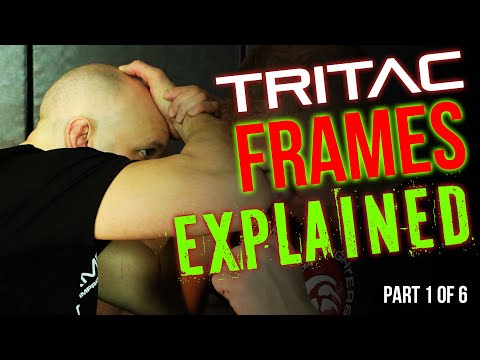
According to TRITAC Martial Arts, you need to make sure you're covering the back of the neck and then all down one side, with the same coverage mirrored on the other side if needed.
Should I drop my hands to throw a punch while in Standard Posture Defence?
No—TRITAC Martial Arts emphasizes that you shouldn't drop your hands and punch from the defence position; instead, if an opponent throws a punch, you should maintain your frame and respond with a sequential one-two counter.
How does the Standard Posture Defence work?
Standard Posture Defence maintains an upright spine with the head high, chest lifted, and hips forward, creating an aligned body position that prevents the opponent from breaking the defender down for choke attacks. The defender uses hand placement on the opponent's hips, biceps, or collar to maintain posture while resisting the opponent's attempts to pull the head down.
Where does the Standard Posture Defence come from?
Standard posture defence is one of the foundational concepts in BJJ, emphasised since the art's early development as the most important defensive principle when inside the opponent's guard. Every BJJ curriculum teaches posture maintenance as the first priority of guard top defence.
Is the Standard Posture Defence legal in competition?
Unified MMA: legal — Legal defensive technique; IBJJF: legal — Legal — defensive techniques are fundamental to grappling; IJF: legal — Legal defensive action; ADCC: legal — Legal; UWW: legal — Legal defensive technique; FIAS Sport Sambo: legal — Legal
How dangerous is the Standard Posture Defence?
Danger rating 3/10. Moderate — submission defence involves resisting joint locks/chokes; risk of injury if defence fails or is delayed
How do I set up the Standard Posture Defence?
The standard setup chain: Anticipate the Attack → Execute Defence → Recover Stance → Counter or Disengage.
How do I defend against the Standard Posture Defence?
Standard counters include: Timing — attack when the defence is recovering or between movements / Feint — use deception to create openings in the defensive structure / Angle Change — attack from an unexpected angle that the defence does not cover.
What are the variants of the Standard Posture Defence?
Common variants: Standard defence (primary defensive technique from the most common position); Reactive defence (triggered by the opponent's attack, minimal movement for …); Proactive defence (anticipating the attack and positioning to neutralise it …); Counter defence (using the defensive movement to create an immediate count…).
How effective is the Standard Posture Defence in competition?
Posture is a fundamental defence in BJJ.
What are common mistakes when doing the Standard Posture Defence?
Top errors to watch for: Placing hands on the opponent's chest instead of hips — chest placement gives poor leverage and is easy to overcome / Extending the arms fully while posturing — keep slight bend in the elbows for strength and to prevent arm drags / Posturing the head up but leaving the shoulders rounded — the entire spine must extend, not just the neck / Not maintaining posture proactively — many fighters only posture up after feeling a choke threat; maintain it constantly.
What are other names for the Standard Posture Defence?
The Standard Posture Defence is also known as Sutandādo Posuchā Difensu, Basic Posture Up, Standard Posture Control, Upright Posture Defence.