Learn the Art of Combat: Longsword Guards - Beginners Guide
0
Hanging Guard·Björn Rüther
Knowing the guards in the long sword, knowing which techniques and concepts to apply from each posture, and being able t…
Перевод: hanging guard (HEMA sword guard with point hanging downward)
The Hanging Guard (Hangetort) is a HEMA longsword guard position where the sword is held with the point hanging downward, typically with the hands above the head or at shoulder height and the blade angled toward the ground. [1] It provides protection for the upper body while threatening with a rising cut or thrust. The hanging guard appears in multiple German and Italian fencing treatises as a transitional or defensive position that can quickly convert to an attack. [1] It is particularly effective against overhead cuts, as the angled blade deflects downward strikes while positioning for an immediate counter-thrust. [1]
The Hanging Guard appears in multiple medieval German fight books (Fechtbücher), including treatises attributed to Johannes Liechtenauer and his tradition. [1] It is also found in Italian fencing as a pendent guard position. The guard was designed for armored and unarmored combat and remains a core position in modern HEMA longsword practice. [1]
German longsword lineage: Johannes Liechtenauer (14th century) → transmitted through the Gesellschaft Liechtenauers (Society of Liechtenauer) → documented in Fechtbücher by Sigmund Ringeck (c. 1440), Peter von Danzig (1452), Hans Talhoffer (1459), and Paulus Kal (1470). Reconstructed in modern HEMA from manuscript study beginning in the 1990s–2000s. [1]
Used in modern HEMA longsword tournaments sanctioned by HEMAA, HEMA Alliance, and regional federations. Scoring varies by ruleset (afterblow, first-touch, or exchange-based). [1]
Изображений для этой техники пока нет.
Войдите, чтобы предложить изображение.
Knowing the guards in the long sword, knowing which techniques and concepts to apply from each posture, and being able t…
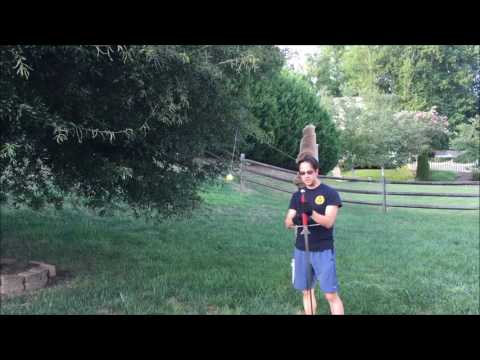
Two ways to use a hanging pell as a practice tool for historical fencing.
The Hanging Guard, known in Joachim Meyer's system as a variation positioned with the sword point directed downward rather than forward, represents a defensive posture that intentionally exposes the hands and head to provoke opponent action. Björn Rüther explains that while the Hanging Guard resembles the Ox guard in structure, its defining characteristic is the lowered point that eliminates an immediate thrusting threat, thereby inviting the opponent to commit to an attack. This tactical vulnerability transforms the guard into a reactive tool: once the opponent moves, the fencer can execute any of the principal strikes or twere strikes as counterattacks. Rüther emphasizes that the guard functions best as a transitional position rather than a prolonged defensive stance, requiring the fencer to flow smoothly into offensive responses. The Swordwind Historical Swordsmanship channel's focus on hanging pell training, while addressing solo practice methodology rather than guard theory directly, reinforces the principle of working from different guard positions—including lower positions—to develop targeting precision and thrust execution from varied postures. Both instructors align on the importance of intentional movement and spatial awareness when operating from positions that may seem exposing; guards are tools for structuring offense and response, not static retreats.
Сформировано на основе 2 инструкторов
Учебных курсов по этой технике пока нет.
Войдите, чтобы предложить курс.
Риск травмы для человека, к которому применяется техника
This is a guard position, not an attack.
Уровень мастерства, необходимый для надёжного выполнения техники
Разрешена ли техника по основным соревновательным правилам
Clements, J. Medieval Swordsmanship. Paladin Press.
[1] Clements, Medieval Swordsmanship, Guard Positions chapter
[1] Clements, Medieval Swordsmanship, Guard Positions chapter
shoulder endurance to hold elevated position, wrist strength for blade angle
deltoids, forearm extensors, core
The Hanging Guard (Hangetort) is documented in multiple Fechtbücher. Budo Mind and Body (Suino) notes it as a transitional position. The sword hangs with the point downward from an elevated hand position, threatening with a rising cut or thrust while deflecting overhead attacks. (Clements, Medieval Swordsmanship; Suino, Budo Mind and Body)
Practicing on a small target develops precision—it trains you to place your point exactly where you want it, which is crucial in actual fighting where it's surprisingly easy to miss even a large target like a head. As Swordwind Historical Swordsmanship explains, this skill becomes especially important when fights get chaotic.
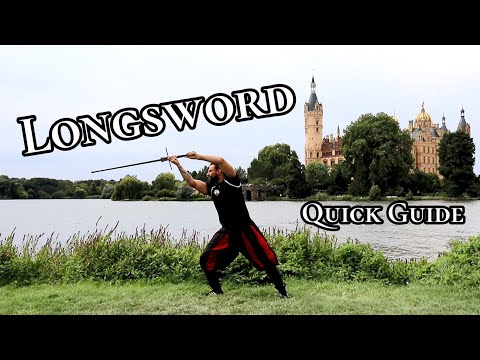
Never change your guard without an intention or idea behind it. As Björn Rüther emphasizes, changing guards without purpose only gives your opponent more options to attack openings while you're vulnerable.
Start by holding a long point and practicing basic contact with the target to develop the fundamental movement, then progress to thrusting while taking steps or with the target moving. Once you're reliable, practice thrusts that mimic actual fighting scenarios rather than just straight rushes.
The Hanging Guard (Hangetort) is a HEMA longsword guard position where the sword is held with the point hanging downward, typically with the hands above the head or at shoulder height and the blade angled toward the ground. It provides protection for the upper body while threatening with a rising cut or thrust.
The Hanging Guard appears in multiple medieval German fight books (Fechtbücher), including treatises attributed to Johannes Liechtenauer and his tradition. It is also found in Italian fencing as a pendent guard position.
HEMA tournaments: Legal: разрешён — standard guard in longsword competition; HEMAA/HEMA Alliance: Legal: разрешён — recognized in all affiliated tournaments; SCA Heavy Combat: Legal: разрешён — permitted in armored combat
Оценка опасности 2/10. Low — this is a guard position, not an attack.
Стандартная цепочка подготовки: Opponent attacks overhead → deflect into hanging guard → thrust to face → From Vom Tag → lower to hanging guard to draw an attack → counter-cut → After a parry → transition to hanging guard → rising cut.
Стандартные контрприёмы: Attack from below — the hanging guard is high, exposing the lower body / Winding — engage the blade and wind around it / Feint high, attack low — draw the guard out of position.
Распространённые варианты: Right hanging guard (sword hanging to the right side); Left hanging guard (sword hanging to the left); High hanging (hands above head, blade hanging behind); Low hanging (hands at shoulder, blade hanging in front).
Used in modern HEMA longsword tournaments sanctioned by HEMAA, HEMA Alliance, and regional federations. Scoring varies by ruleset (afterblow, first-touch, or exchange-based).
Основные ошибки, на которые стоит обратить внимание: Letting the point hang too far down — no threat to the opponent / Holding the guard too long — it is a transition, not a resting position / Hands too low — exposes the head to overhead cuts / Not maintaining structural alignment — wrists tire quickly.
Hanging Guard также известен как Hangingu Gādo, Hangetort, Hanging Point, Nebenhut variant, Pendant Guard.