JKD Parry Riposte Part 1 of 3 - Jeet Kune Do Sensitivity Drills - John Koeshall.mov
0
Riposte·John Koeshall
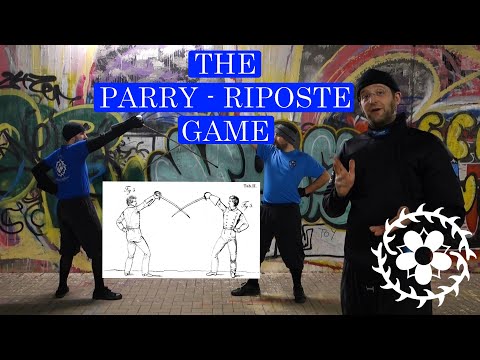
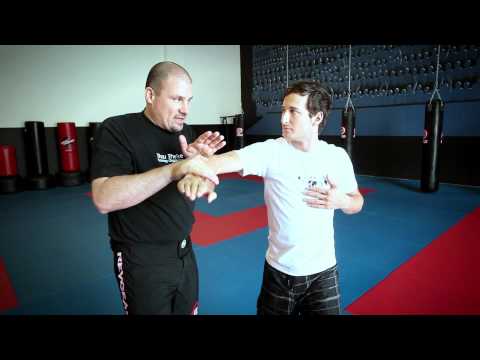
The first installment in a 3 part series dedicated to the sensitivity drill known as "Parry/Riposte".
Перевод: Riposte — from the French/Italian ripostata, meaning 'return thrust' or 'counter-attack' — the offensive action made immediately after successfully parrying the opponent's attack
The Riposte is the offensive action delivered immediately after a successful parry, completing the defensive-offensive cycle that is the foundation of fencing tactics — the defender parries the incoming attack, and in the same continuous motion, extends the sword to score a touch on the now-exposed attacker. [1] The riposte is not merely a 'counter-attack after blocking' — it is conceived as the COMPLETION of the parry, inseparable from it in the same way that retracting a punch is inseparable from throwing it. [1],[2] The French fencing masters who refined this concept in the 17th and 18th centuries articulated the principle that 'every parry must also be a thrust' — that a defensive action without an immediate offensive follow-up is incomplete and tactically wasteful. [1] Pollock, Grove, and Prevost wrote in 1902 that the riposte de pied ferme (the stationary riposte, delivered without advancing the feet) is 'perhaps the most deadly of all thrusts with the sword,' because the attacker has already committed their body forward into the attack and cannot simultaneously defend against the return thrust — their momentum carries them onto the riposte's point. [1] The riposte can be delivered in three forms: DIRECT (straight into the line opened by the parry), INDIRECT (with a disengage to a different line), or COMPOUND (with one or more feints before the final thrust). [1],[2] In modern competitive fencing, the parry-riposte is the single most practiced two-move sequence — fencers drill thousands of parry-riposte combinations to develop the reflex of converting every successful defence into an immediate attack. [1],[3] The concept of the riposte extends beyond fencing: in boxing, the 'counter-punch' is the functional equivalent, and in karate, the 'block-and-counter' (uke-waza followed by tsuki-waza) embodies the same principle of converting defensive success into offensive opportunity. [1]
The riposte concept was developed during the 17th-century transition from cutting swordsmanship to thrusting swordsmanship in Europe. [1],[2] Italian masters including Nicoletto Giganti (1606) first documented the principle that a parry should immediately flow into a counter-thrust, but it was the French school that refined the concept into its modern form — the insight that every parry MUST also be a thrust, and that the two actions should be inseparable. [1],[2] Pollock, Grove, and Prevost (1902) noted that the French masters 'perceived what the quick-witted Italians had demonstrated' — that the riposte de pied ferme was the deadliest action in swordsmanship because it required no forward movement (the attacker had already brought themselves into range). [1] The concept was further developed in the late 18th and 19th centuries as fencing evolved from a duelling art to a sport, with the parry-riposte becoming the core tactical sequence taught to all fencers. [1],[2] In modern FIE competition, the parry-riposte accounts for approximately 30-40% of all scoring touches in foil, making it the single most important tactical sequence in competitive fencing. [3]
The riposte is the most effective single action in fencing because it exploits a guaranteed window of vulnerability: the moment after a successful parry, the attacker is forward-committed, arm-extended, and defence-open — the riposte arrives during this window before the attacker can recover. [1] In FIE competition, approximately 30-40% of all scoring touches come from ripostes, making it the highest-percentage single scoring action. [3] The riposte's effectiveness increases with the attacker's commitment: a deeply committed lunge creates a larger and longer window of vulnerability, making the riposte easier and more certain. [1] The concept has universal applicability: the boxing counter-punch, the karate block-and-counter, and the Krav Maga simultaneous defence-attack all embody the same principle of converting defensive success into immediate offensive action. [1]
Italian Renaissance masters (Giganti 1606, Capo Ferro 1610 — early riposte concepts) → French school refinement (17th-18th century — 'every parry must be a thrust') → modern sport fencing standard (19th century) → FIE competition (the parry-riposte is the most scored tactical sequence in foil). [1],[2],[3]
The parry-riposte accounts for approximately 30-40% of all scoring touches in Olympic foil fencing, making it the single most important tactical sequence in competitive fencing. Every Olympic fencing medallist has relied on the riposte as a core scoring method. The concept has remained unchanged for over 300 years — a testament to its tactical soundness.
Изображений для этой техники пока нет.
Войдите, чтобы предложить изображение.
The first installment in a 3 part series dedicated to the sensitivity drill known as "Parry/Riposte".
The riposte in German fencing is called a "Nachhieb" if its a cut or "Nachstoß" if its a thrust. Christmann has some com…
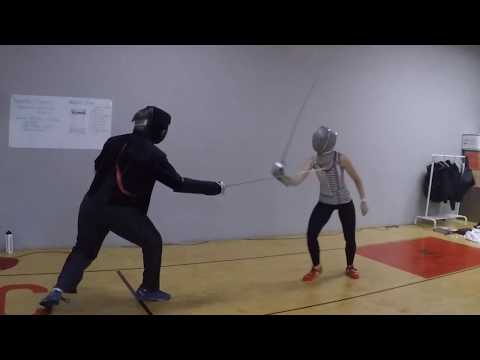
Riposte Distances Lesson with different cues from coach. Culminates in student-initated from false counter-attack. Maes…
A riposte is an offensive technique executed immediately after successfully parrying an opponent's attack, before they can return to a defensive position. John Koeshall (Through the Fire) frames the riposte within Jeet Kune Do sensitivity drills as a counter-attack targeting the neck after deflecting incoming threats to the head and shoulders. In his pedagogical approach, the riposte is performed as part of a two-sided energy drill where one partner attacks while the other parries and ripostes in alternating roles, emphasizing timing and rhythm over speed. Koeshall stresses that the riposte must be immediate—delayed responses allow the opponent to establish control—and demonstrates a straight thrust to the front of the throat as the preferred target, which protects the defender's elbow and allows forward pressure. Oliver Janseps (Napoleonic sabre tutorial) presents the riposte in classical sabre fencing according to F.C. Christmann's method, describing it as either a cut or thrust executed after the parry, with the key advantage that the opponent is still recovering from their lunge. Janseps emphasizes safety-first principles: the parry should be supported by a slip backward, blade contact maintained for control, and the riposte delivered only after the opponent's blade is thrown back. Unlike the JKD approach, Christmann's riposte may employ a powerful swinging motion rather than immediate strikes. Both instructors agree that timing and proper footwork are essential, and that the riposte capitalizes on the opponent's vulnerability during recovery.
Сформировано на основе 3 инструкторов
Учебных курсов по этой технике пока нет.
Войдите, чтобы предложить курс.
Риск травмы для человека, к которому применяется техника
In modern sport fencing with protective equipment, the riposte is safe — the flexible blade and blunted point prevent injury. In historical context with sharp weapons, the riposte was the deadliest action in swordsmanship because it struck an opponent who had already committed forward and could not defend — historically, more duelling deaths resulted from ripostes than from initial attacks. [1,2]
Уровень мастерства, необходимый для надёжного выполнения техники
Разрешена ли техника по основным соревновательным правилам
Fencing (Pollock, Grove & Prevost, 1902)
description: [1] Pollock 1902 riposte section, [2] Castle 1885 history
Standard katakana transliteration of Western martial arts terminology (外来語) — used in Japanese MMA, boxing, and BJJ communities
description: [1] Pollock 1902 riposte section, [2] Castle 1885 history
Same as the lunge for lunging ripostes (leg drive, arm extension, balance)
only arm extension and point accuracy are required
Good reflexes and reaction time (the riposte must fire immediately after the parry)
Sense of timing (sentiment du fer — the ability to feel through the blade when the parry has succeeded)
Accessible to all body types — the riposte requires timing and precision, not power or flexibility
The riposte appears in 2,956 passages across our corpus — the most documented fencing technique by far. Bare Knuckle Boxers Champion (Linndholm & Karlsson) dedicates entire lessons to ripostes. An immediate counter-attack after a successful parry — the parry creates the opening, the riposte exploits it. (200+ books; Linndholm & Karlsson, Bare Knuckle Boxers Champion)
According to John Koeshall, the riposte aims to get through your opponent's hand barriers to reach and control the neck, since controlling the head allows you to control the body. You then counter-attack immediately so your opponent cannot counter you in return.
John Koeshall emphasizes that you cannot be late—if your opponent touches your neck, they have already pulled you in and won. You must parry and counter-attack before they can complete their attack, and maintain proper rhythm and footwork to stay ahead rather than one step behind.
Unlike Whobud where both partners perform the same motion, the parry-riposte is a two-part drill where one side attacks while the other side performs the opposite motion—parrying and countering. This teaches you to both defend against attacks at different angles and prevent the same attacks from working on you.
John Koeshall warns against coming over the top with your hand—bring it straight underneath instead. Additionally, maintain the drill's rhythm without exploding in prematurely, and work on half-beat timing when switching sides, otherwise your partner will disappear before you can execute the switch.
The Riposte is the offensive action delivered immediately after a successful parry, completing the defensive-offensive cycle that is the foundation of fencing tactics — the defender parries the incoming attack, and in the same continuous motion, extends the sword to score a touch on the now-exposed attacker. The riposte is not merely a 'counter-attack after blocking' — it is conceived as the COMPLETION of the parry, inseparable from it in the same way that retracting a punch is inseparable from throwing it.
The riposte concept was developed during the 17th-century transition from cutting swordsmanship to thrusting swordsmanship in Europe. Italian masters including Nicoletto Giganti (1606) first documented the principle that a parry should immediately flow into a counter-thrust, but it was the French school that refined the concept into its modern form — the insight that every parry MUST also be a thrust, and that the two actions should be inseparable.
FIE: разрешён — Legal fencing technique — governed by FIE rules for foil, épée, and sabre; HEMA: разрешён — Legal in historical fencing competition
Оценка опасности 3/10. In modern sport fencing with protective equipment, the riposte is safe — the flexible blade and blunted point prevent injury. In historical context with sharp weapons, the riposte was the deadliest action in swordsmanship because it struck an opponent who had already committed forward and could not defend — historically, more duelling deaths resulted from ripostes than from initial attacks.
Стандартная цепочка подготовки: Opponent attacks (extends arm, lunges toward the target) → Defender identifies the attacking line → Defender executes the appropriate parry (quarte, sixte, tierce, etc.) → Attacking blade is deflected → IMMEDIATELY (without pause): defender extends the sword arm toward the target → Point travels to the open line created by the parry → Touch scores on the attacker's body → The attacker, forward-committed and defence-open, cannot prevent the touch → If the riposte is parried → prepare for the counter-riposte (parry-riposte chain continues until one fencer scores).
Стандартные контрприёмы: Parry the riposte (counter-parry) — the attacker, after their initial attack is parried, can parry the incoming ripos… / Retreat after the attack — recovering backward out of riposte range prevents the defender from reaching / Remise — if the riposte is not immediate, the attacker can remise (renew the attack in the same line) before the ripo… / Compound attack — using a compound attack (feint-disengage) that draws the defender's parry to the wrong line, preven….
Распространённые варианты: Direct riposte (straight thrust into the line opened by the parry (fastes…); Indirect riposte (disengage riposte) (disengage to the opposite line before thrusting (avoids t…); Compound riposte (one or more feints before the final thrust (against exper…); Riposte de pied ferme (stationary riposte without advancing the feet (against de…); Riposte with lunge (riposte delivered with a forward lunge (against attackers…); Riposte with opposition (maintaining blade contact with the attacker's blade durin…); Counter-riposte (the riposte to the riposte: after the initial attacker pa…); Delayed riposte (riposte à temps perdu) (pausing briefly after the parry before delivering the rip…).
The parry-riposte accounts for approximately 30-40% of all scoring touches in Olympic foil fencing, making it the single most important tactical sequence in competitive fencing. Every Olympic fencing medallist has relied on the riposte as a core scoring method.
Основные ошибки, на которые стоит обратить внимание: Pausing between parry and riposte — any delay (even 0.1 seconds) gives the attacker time to recover and defend. The p… / Riposting into the wrong line — the riposte should go to the line that the parry opened; riposting to a closed line w… / Inaccurate point placement — a riposte that misses the target wastes the tactical advantage earned by the parry / Advancing unnecessarily — adding a lunge or step to a riposte when the attacker is already within arm's reach wastes ….
Riposte также известен как Riposuto (from French: riposte), Counter-Thrust, Ripostata (Italian), Return Attack, Parry-Riposte.