Principles of Fencing with Blade Binds 1
0
Bind·Roland Warzecha (DIMICATOR)
Learn more about my work here: https://www.patreon.com/Dimicator You are welcome to get in touch via my Facebook page: h…
Перевод: Blade bind
The Bind is a blade taking action where the fencer uses forte-to-foible leverage to carry the opponent's blade from one line to another, typically from a high line to a low line diagonally. [1] The bind controls the opponent's blade through continuous contact while the fencer's point threatens the target. [1] It requires superior blade sentiment (sense of touch through the blades). [1]
The Bind remains a core technique in modern competitive fencing and historical swordsmanship. [1]
Used in FIE international fencing competition
Изображений для этой техники пока нет.
Войдите, чтобы предложить изображение.
Learn more about my work here: https://www.patreon.com/Dimicator You are welcome to get in touch via my Facebook page: h…
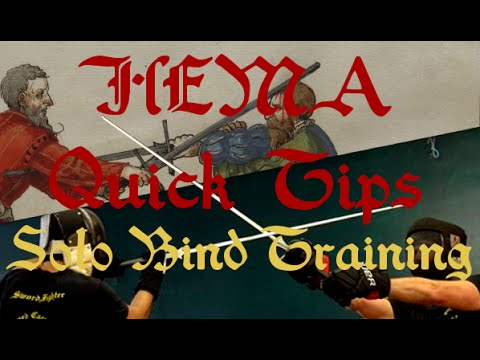
One of the most important aspects of HEMA, and one of the hardest to train by yourself, is working in the bind and feeli…
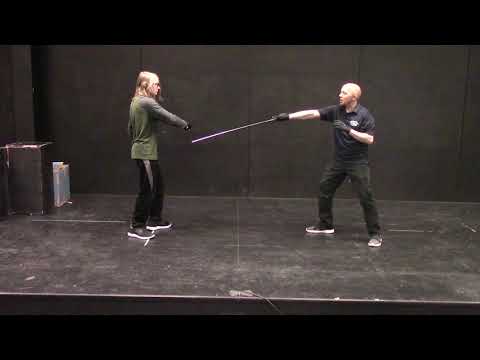
A bind is a blade-to-blade contact in which one combatant gains mechanical and positional control over the opponent's weapon, typically achieved through leverage, edge orientation, and pressure. Skyline Drama describes bind-to-line as a smallsword technique in which a parry (most commonly from tierce or quarte) is converted into a smooth expulsion of the opponent's blade while simultaneously extending into a thrust attack, transitioning from supinated to pronated grip (or vice versa) and moving directly from high line to low line. The technique emphasizes using the fort of the defender's blade against the foible of the attacker's blade. Sword Carolina's solo training method demonstrates that binds generate crucial tactile feedback—the distinction between strong and weak binds—which determines subsequent tactical options; strong binds favor continuing on the same line, while weak binds invite circling movements to the opposite side. Roland Warzecha (DIMICATOR) contextualizes binds within Germanic sword theory, emphasizing that control of the center is more mechanically important than executing the final attack, and identifies three winning principles: turning the edge against the opponent's flat, bringing one's sword over the opponent's, and leveraging a longer moment arm. Warzecha stresses pressure-based probing (Reinspühlen) to test the bind and regain center control if lost. All three instructors agree that the bind is fundamentally a transitional position from which controlled attacks follow, not merely incidental blade contact.
Сформировано на основе 3 инструкторов
Учебных курсов по этой технике пока нет.
Войдите, чтобы предложить курс.
Риск травмы для человека, к которому применяется техника
Sport fencing with protective equipment; historically lethal with sharp weapons
Уровень мастерства, необходимый для надёжного выполнения техники
Разрешена ли техника по основным соревновательным правилам
Fencing (Pollock, Grove & Prevost, 1902)
description, historyOrigin: sourced from Pollock, W
description, historyOrigin: sourced from Pollock, W
Requires good arm extension
Quick reflexes
Balance and footwork
The bind (liement) in fencing takes control of the opponent's blade by maintaining contact and pressure — transporting their blade from one line to another. A fundamental blade action in all three fencing weapons. (Fencing technique manuals; FIE fencing curriculum)
Roland Warzecha (DIMICATOR) emphasizes that you cannot safely thrust without first completely controlling the opposing sword and the center line; the attack works better once you have full control of the opponent's blade rather than thinking about hitting too early.
Sword Carolina recommends setting up two pells or a pell on a target to practice solo, which allows you to feel the difference between hard and soft pressure in binds and develop immediate recognition of these sensations through practice.
In a bind, you use the fort (strong part) of your blade to wrap around the foible (weak part) of your opponent's blade, then expel and extend as one smooth motion to drive their blade aside.
Sword Carolina explains that practicing against a single pell gives you incorrect angles and doesn't simulate the actual angles and feedback you experience when binding with a live opponent's sword.
The Bind is a blade taking action where the fencer uses forte-to-foible leverage to carry the opponent's blade from one line to another, typically from a high line to a low line diagonally. The bind controls the opponent's blade through continuous contact while the fencer's point threatens the target.
The Bind was codified in European fencing treatises from the 16th century onward. Italian and French schools developed the technique into its modern form through centuries of refinement.
FIE: разрешён — Legal fencing technique — governed by FIE rules for foil, épée, and sabre; HEMA: разрешён — Legal in historical fencing competition
Оценка опасности 3/10. Sport fencing with protective equipment; historically lethal with sharp weapons
Стандартная цепочка подготовки: En garde → Preparation → Bind → Recovery.
Стандартные контрприёмы: Counter-parry / Distance management / Stop-hit.
Распространённые варианты: Direct bind; Indirect bind; Compound bind.
Used in FIE international fencing competition
Основные ошибки, на которые стоит обратить внимание: Over-extending / Telegraphing the action / Poor recovery.
Bind также известен как Baindo, Bind, Liement, Transport.