Eskrima - Empty Hand Techniques (Mano Mano)
0
Empty Hand — Mano Mano·Chinese & Filipino Martial Arts
Empty Hand Techniques (Mano Mano)
Перевод: empty hand — mano mano
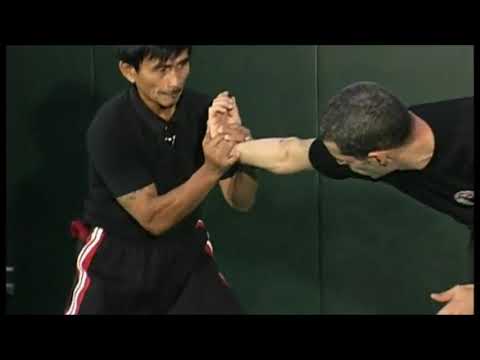
The Empty Hand (Mano Mano) family covers the weaponless fighting techniques of Filipino martial arts, which are derived from and informed by the same angles of attack, body mechanics, and tactical principles used in weapon combat. [1] The Filipino empty-hand approach is distinctive because it was developed from weapon fighting rather than independently — practitioners learn to apply stick and blade angles, entries, and destructions using the empty hands, elbows, knees, and headbutts. [1],[2] This family includes panantukan (Filipino boxing/dirty boxing), panajakman (kicking), dumog (Filipino wrestling/grappling), and sikaran (kicking art from Rizal Province). [2],[3]
Filipino empty-hand combat developed as an extension of weapon fighting, based on the principle that a practitioner who loses their weapon must be able to continue fighting with the same tactics and angles using empty hands. [1] The art gained international exposure through Dan Inosanto's integration of Filipino empty-hand techniques into Jeet Kune Do concepts and through MMA fighters who adopted panantukan techniques. [2],[3]
Mano mano applies FMA principles (angles of attack, defensive patterns, flow) to empty-hand combat, producing a striking system that differs significantly from other Asian martial arts. [1]
FMA empty-hand combat (mano mano/pangamot) was developed as an extension of weapon-based training, with the principle that all weapon movements translate to empty-hand applications. [1]
Mano mano is competed in some FMA tournaments as an empty-hand division, and FMA empty-hand techniques appear in MMA through fighters with FMA backgrounds. [1]
Изображений для этой техники пока нет.
Войдите, чтобы предложить изображение.
Empty Hand Techniques (Mano Mano)
Учебных курсов по этой технике пока нет.
Войдите, чтобы предложить курс.
Риск травмы для человека, к которому применяется техника
Arnis/Escrima/Kali stick and blade techniques; designed for close-range lethality
Уровень мастерства, необходимый для надёжного выполнения техники
Разрешена ли техника по основным соревновательным правилам
Bubishi: The Classic Manual of Combat (Patrick McCarthy, 2008)
Alias sources — [1] Filipino Martial Arts (Wiley, 1994) [2] Filipino Martial Arts (Wiley, 1994) [3] Filipino Martial Arts (Wiley, 1994)
Effectiveness sources — [1] Filipino Martial Arts (Wiley, 1997)
Mixed Japanese-Western terminology — combines traditional Japanese terms with katakana loanwords
Alias sources — [1] Filipino Martial Arts (Wiley, 1994) [2] Filipino Martial Arts (Wiley, 1994) [3] Filipino Martial Arts (Wiley, 1994)
Effectiveness sources — [1] Filipino Martial Arts (Wiley, 1997)
wrist speed, hand coordination (especially double stick), cardiovascular endurance
quick hands, conditioned forearms, coordination
forearms, wrists, shoulders, core rotators
Каждое движение в любом боевом искусстве обладает рядом универсальных свойств. Комбинируйте параметры ниже, чтобы найти нужный инструмент или сравнить аналоги из разных стилей.
Mano mano (empty hand) in Filipino martial arts applies the same angles and patterns learned with weapons to empty-hand combat. The principle: 'the hand is a blade, the forearm is a stick.' Panantukan (Filipino boxing) is the primary mano mano system. (Wiley, Filipino Martial Arts; FMA manuals)
The Empty Hand (Mano Mano) family covers the weaponless fighting techniques of Filipino martial arts, which are derived from and informed by the same angles of attack, body mechanics, and tactical principles used in weapon combat. The Filipino empty-hand approach is distinctive because it was developed from weapon fighting rather than independently — practitioners learn to apply stick and blade angles, entries, and destructions using the empty hands, elbows, knees, and headbutts.
Filipino empty-hand combat developed as an extension of weapon fighting, based on the principle that a practitioner who loses their weapon must be able to continue fighting with the same tactics and angles using empty hands. The art gained international exposure through Dan Inosanto's integration of Filipino empty-hand techniques into Jeet Kune Do concepts and through MMA fighters who adopted panantukan techniques.
WEKAF: разрешён — Legal in padded stick competition; HEMA: разрешён — Legal in applicable weapon categories
Оценка опасности 8/10. Very High — Arnis/Escrima/Kali stick and blade techniques; designed for close-range lethality
Стандартная цепочка подготовки: Grip and Stance → Chamber → Strike → Recovery.
Стандартные контрприёмы: Umbrella Block — raise the stick overhead to intercept a downward strike / Cross Block — meet the incoming strike with a perpendicular block / Disarm — strip the opponent's weapon through leverage on the hand or wrist.
Распространённые варианты: Angle 1 (forehand diagonal) (downward diagonal strike from the dominant side); Angle 2 (backhand diagonal) (downward diagonal strike from the off side); Angle 5 (thrust) (straight thrust with the tip of the stick); Redonda (continuous) (flowing circular strikes chaining multiple angles).
Mano mano is competed in some FMA tournaments as an empty-hand division, and FMA empty-hand techniques appear in MMA through fighters with FMA backgrounds.
Основные ошибки, на которые стоит обратить внимание: Training mano mano without understanding its weapon origins — every empty-hand movement comes from a weapon technique / Ignoring the live hand concepts — both hands work together in mano mano just as they do with weapons / Fighting at the wrong range — mano mano operates at trapping range, not boxing range or grappling range / Not using limb destructions — gunting is a key differentiator of FMA empty hand; neglecting it wastes a core tool.
Empty Hand — Mano Mano также известен как Sude-jutsu / Mano Mano, Mano Mano, Filipino Empty Hand, Pangamot.