3 “magic knockout” pressure points. (Amazing!)
0
Head Cut·FightFast
If you liked this, join our private FB group where you get exclusive access to more great videos like this Get Your 15 …
Перевод: head cut
The Head Cut delivers a vertical or near-vertical cutting attack to the top of the opponent's head (mask), which is the most commonly targeted area in sabre fencing. [1] The head cut is the fastest and most direct sabre attack because it travels the shortest distance from the en garde position to the target, following a direct downward path. [1],[2] The head cut dominates sabre tactics as the primary attacking action — most sabre exchanges begin with one or both fencers launching a head cut, making it the foundational offensive technique around which all other sabre tactics revolve. [2],[3]
The head cut is the most fundamental sabre attack, derived from the military sabre tradition where a downward cut to the head was the most natural and devastating mounted attack. [1] In modern sabre competition, the head cut is the most frequently used single attack, setting up all other offensive and defensive tactics. [2],[3]
The head cut is the highest-percentage attack in sport sabre because the head is the closest and largest target when the opponent is in a standard en garde position. [1] Its biomechanical path — a direct descending arc — is the fastest cutting trajectory, and defending against it requires covering the entire top of the head with a quinte or tierce parry. [2]
The head cut (men-uchi) is the foundational kendo technique and the descendant of the classical kenjutsu overhead cut, considered the purest expression of swordsmanship. [1]
The head cut and its preparations account for the majority of touches scored in elite sabre bouts, with studies of World Championship sabre matches showing head cuts representing approximately 40–50% of all scoring actions. [1]
Изображений для этой техники пока нет.
Войдите, чтобы предложить изображение.
If you liked this, join our private FB group where you get exclusive access to more great videos like this Get Your 15 …
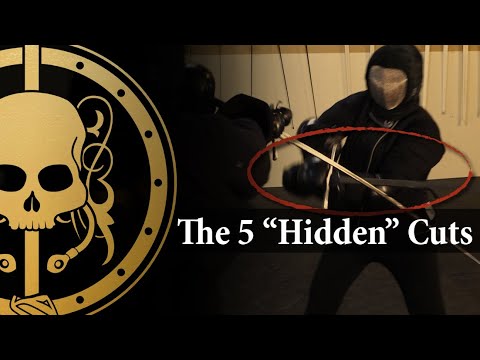
The master cuts, (sometimes referred to as the "hidden" cuts) can be found in every German longsword source, and even so…
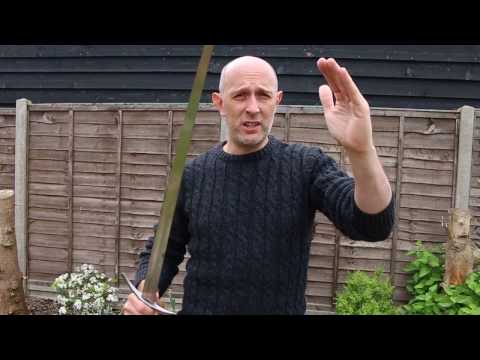
Some thoughts about how we cut in martial arts. How to actually cut and how we execute cuts in training and competition …
The head cut in sabre sport represents a fundamental target area in competitive fencing, though instructional emphasis varies considerably across different martial-arts traditions. Scholagladiatoria emphasizes that effective cutting to the head, as with all cuts, requires striking with the center of percussion (approximately two-thirds to three-quarters along the blade) rather than the tip, achieved through proper edge alignment and oblique angle of attack that allows the blade to slice through the target rather than stopping perpendicular to it. This instructor contrasts martial cutting principles with modern Olympic sabre sport, where flick cuts (taps to the head) dominate competition but lack the structural integrity of proper martial cuts. Blood and Iron HEMA addresses head cuts through the German longsword master-cut tradition, describing strikes like the zornhau (descending cut to the head), zwerkow (lateral cut across the head), and shilhau (cutting over the opponent's sword to reach the head), all of which prioritize stepping offline, leading with the tip, and maintaining superior geometry to avoid counterattack. FightFast's pressure-point instruction, while focused on self-defense rather than sport fencing, identifies the head and neck as critical target areas where nerve strikes can incapacitate opponents, including points beneath the jaw and along the neck musculature. All three instructors agree that head strikes require proper body mechanics and positioning, though their contexts—sport sabre, historical German longsword, and self-defense pressure points—produce different technical applications.
Сформировано на основе 3 инструкторов
Учебных курсов по этой технике пока нет.
Войдите, чтобы предложить курс.
Риск травмы для человека, к которому применяется техника
Modern sport fencing uses blunted weapons and full protective gear; injury rate ~2.5 per 1000 exposures (Harmer 2008)
Уровень мастерства, необходимый для надёжного выполнения техники
Разрешена ли техника по основным соревновательным правилам
The Art of Fencing (Luigi Barbasetti, 1932)
Alias sources — [1] FIE Rules of Competition [2] Classical Fencing (Rogers, 2014) [3] Classical Fencing (Rogers, 2014)
Effectiveness sources — [1] Czajkowski, Z., Understanding Fencing (SKA Swordplay Books, 2005) [2] Evangelista, N., The Inner Game of Fencing (McGraw-Hill, 2000)
Established Japanese martial arts naming convention — native Japanese term (和語/漢語)
Alias sources — [1] FIE Rules of Competition [2] Classical Fencing (Rogers, 2014) [3] Classical Fencing (Rogers, 2014)
Effectiveness sources — [1] Czajkowski, Z., Understanding Fencing (SKA Swordplay Books, 2005) [2] Evangelista, N., The Inner Game of Fencing (McGraw-Hill, 2000)
explosive lunge speed, finger/wrist dexterity, cardiovascular endurance
long reach (tall, long arms), fast-twitch legs
quadriceps (lunge), calves, forearm/finger flexors, core
According to Schola Gladiatoria, you must ensure the blade edge is aligned and that you're hitting with the correct portion of the blade. Additionally, you want to make impact at an oblique angle rather than perpendicular, which allows the blade to naturally draw through and pass the target.
Schola Gladiatoria explains that hitting at an oblique angle allows the blade to be free and continue moving naturally through the target, whereas hitting straight on doesn't cut particularly well and can cause the blade to stick or bind, especially with one-handed swords.
Blood and Iron HEMA emphasizes that geometry and structure are very important—you should lead with the tip of your sword rather than your hands, and stepping offline to the right (rather than only forward) will get you out of the path of your opponent's potential counterattack.
The Head Cut delivers a vertical or near-vertical cutting attack to the top of the opponent's head (mask), which is the most commonly targeted area in sabre fencing. The head cut is the fastest and most direct sabre attack because it travels the shortest distance from the en garde position to the target, following a direct downward path.
The head cut is the most fundamental sabre attack, derived from the military sabre tradition where a downward cut to the head was the most natural and devastating mounted attack. In modern sabre competition, the head cut is the most frequently used single attack, setting up all other offensive and defensive tactics.
FIE: разрешён — Legal fencing technique — governed by FIE rules for foil, épée, and sabre; HEMA: разрешён — Legal in historical fencing competition
Оценка опасности 2/10. Low — modern sport fencing uses blunted weapons and full protective gear; injury rate ~2.5 per 1000 exposures (Harmer 2008)
Стандартная цепочка подготовки: En Garde → Advance/Lunge Preparation → Attack → Recovery.
Стандартные контрприёмы: Parry (Absetzen) — deflect the incoming blade with a counter-displacement / Void (Step Back) — withdraw from measure to avoid the cutting arc / Counter-Cut (Nachreisen) — strike into the opponent's opening during their attack.
Распространённые варианты: Simple attack (single blade action (disengage, beat, or direct) to score); Compound attack (multiple blade actions (feint then disengage) to create a…); Riposte (immediate counter after a successful parry); Counter-attack (attacking into the opponent's attack with priority or rig…).
The head cut and its preparations account for the majority of touches scored in elite sabre bouts, with studies of World Championship sabre matches showing head cuts representing approximately 40–50% of all scoring actions.
Основные ошибки, на которые стоит обратить внимание: Using a large, overhead swing — the head cut is a compact wrist snap, not a full arm swing / Cutting without extending the arm first — the arm extension establishes right of way / Aiming too far forward (hitting the front of the mask only) — the cut should land on top of the mask with commitment / Not maintaining forward movement during the cut — the body must advance with the cut for right of way.
Head Cut также известен как Atama-giri, Coupe a la Tete, Cut to the Head, Coup au Masque.