![Battlefield Swordsmanship Basics - The Four Winds Drill [katana training / sword talk]](https://img.youtube.com/vi/S2sp2BMSC3A/hqdefault.jpg)
Battlefield Swordsmanship Basics - The Four Winds Drill [katana training / sword talk]
0
Quarte Parry·Just a Bug
Today we run through one of my favourite battlefield swordsmanship drills, the four winds drill. This is a basic but ver…
Перевод: quarte parry
The Quarte Parry (4th parry) defends the high inside line by moving the blade across the body to the inside (left side for a right-handed fencer), with the hand in pronation (palm down) or semi-supination, deflecting attacks directed at the inside of the torso. [1] Quarte is one of the two most frequently used parries in foil because a large proportion of attacks target the high inside line, which is the most direct path to the torso for a right-handed fencer attacking another right-hander. [1],[2] The quarte parry requires precise lateral blade movement — enough to deflect the incoming point but not so wide as to leave the outside line open. [2],[3]
Quarte (parry 4) is one of the oldest and most fundamental fencing parries, protecting the high inside line. It was a central technique in both Italian and French fencing schools. [1]
Tactical analysis of elite foil bouts shows that quarte and sixte together account for over 70% of all parries executed, with quarte being the single most common defensive blade action. [1]
Изображений для этой техники пока нет.
Войдите, чтобы предложить изображение.
Today we run through one of my favourite battlefield swordsmanship drills, the four winds drill. This is a basic but ver…
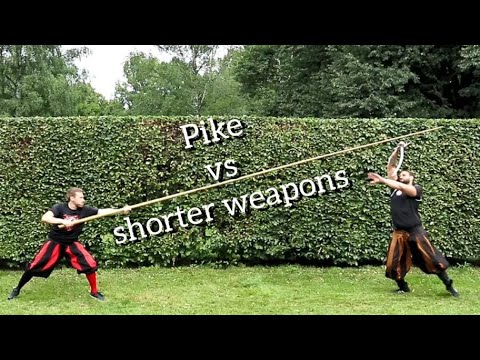
With weapons that are much shorter than the pike, running in is an essential part of mixed weapon fencing. Here the carr…
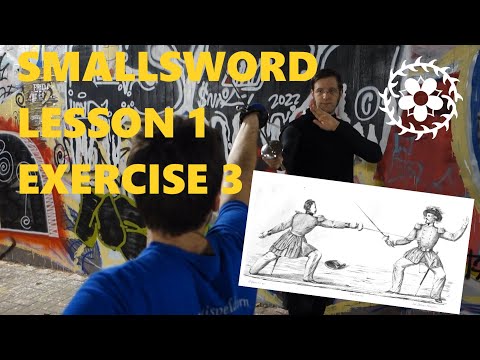
This is the main basic exercise Paolo de Scalzi wants us to do every training! It contains the four primary parries: Qua…
The quarte parry is a foundational defensive position in foil fencing that protects the high inside line of the body. Oliver Janseps describes quarte as one of four classical parry positions (alongside tierce, seconde, and quinte), positioning it in the high inside line with the arm extended and blade angled appropriately. He emphasizes that quarte parry is a core element of systematic training, particularly within Italian smallsword methodology where it appears in fundamental drills repeated continuously to build muscle memory. The technique is typically combined with offensive responses; Janseps demonstrates how practitioners execute a thrust in opposition immediately following a successful quarte parry, maintaining blade contact with the opponent's weapon to control their movement and prevent counterattack. The parry can be executed as a simple lateral deflection or as a circular parry that follows the opponent's disengagement, allowing the defender to track the attacking blade through its movement. Janseps stresses that mastering quarte parry through repetitive drilling in structured exercises—where the sequence cycles through all four main parries in opposition—is essential for developing reliable, reflexive defense in foil technique.
Сформировано на основе 1 инструктора
Учебных курсов по этой технике пока нет.
Войдите, чтобы предложить курс.
Риск травмы для человека, к которому применяется техника
Modern sport fencing uses blunted weapons and full protective gear; injury rate ~2.5 per 1000 exposures (Harmer 2008)
Уровень мастерства, необходимый для надёжного выполнения техники
Разрешена ли техника по основным соревновательным правилам
The Art of Fencing (Luigi Barbasetti, 1932)
Alias sources — [1] FIE Rules of Competition [2] Classical Fencing (Rogers, 2014) [3] Classical Fencing (Rogers, 2014)
Effectiveness sources — [1] Czajkowski, Z., Understanding Fencing (SKA Swordplay Books, 2005) [2] Barbasetti, L., The Art of the Sabre and the Epée (E.P. Dutton, 1936)
Mixed Japanese-Western terminology — combines traditional Japanese terms with katakana loanwords
Alias sources — [1] FIE Rules of Competition [2] Classical Fencing (Rogers, 2014) [3] Classical Fencing (Rogers, 2014)
Effectiveness sources — [1] Czajkowski, Z., Understanding Fencing (SKA Swordplay Books, 2005) [2] Barbasetti, L., The Art of the Sabre and the Epée (E.P. Dutton, 1936)
explosive lunge speed, finger/wrist dexterity, cardiovascular endurance
long reach (tall, long arms), fast-twitch legs
quadriceps (lunge), calves, forearm/finger flexors, core
In dueling, you keep your sword facing forward and stay mobile before attacking to prevent counterattacks. In battlefield swordsmanship, you cut through the target, take a longer path around, and remain mobile while attacking simultaneously to conserve energy against multiple opponents.
Because there are many enemies on the battlefield, stopping after each cut wastes energy that could be used attacking more opponents. In dueling you cut and stop, but in battlefield swordsmanship you minimize this stopping motion to maintain offensive momentum.
You must overcome base instincts developed from dueling practice, including learning to overswing and keep your sword in constant motion rather than returning to a defensive guard position after each technique.
The Quarte Parry (4th parry) defends the high inside line by moving the blade across the body to the inside (left side for a right-handed fencer), with the hand in pronation (palm down) or semi-supination, deflecting attacks directed at the inside of the torso. Quarte is one of the two most frequently used parries in foil because a large proportion of attacks target the high inside line, which is the most direct path to the torso for a right-handed fencer attacking another right-hander.
The quarte parry has been a fundamental defensive position since the earliest fencing treatises, named from the French 'quatrieme' (fourth). It is one of the first parries taught to beginning foil fencers and remains the most commonly executed parry in competitive foil.
FIE: разрешён — Legal fencing technique — governed by FIE rules for foil, épée, and sabre; HEMA: разрешён — Legal in historical fencing competition
Оценка опасности 2/10. Low — modern sport fencing uses blunted weapons and full protective gear; injury rate ~2.5 per 1000 exposures (Harmer 2008)
Стандартная цепочка подготовки: En Garde → Advance/Lunge Preparation → Attack → Recovery.
Стандартные контрприёмы: Guard Position — return to a defensive ready stance / Distance Management — control the measure to avoid being in range / Counter-Attack — strike during the opponent's recovery or between movements.
Распространённые варианты: Simple attack (single blade action (disengage, beat, or direct) to score); Compound attack (multiple blade actions (feint then disengage) to create a…); Riposte (immediate counter after a successful parry); Counter-attack (attacking into the opponent's attack with priority or rig…).
Tactical analysis of elite foil bouts shows that quarte and sixte together account for over 70% of all parries executed, with quarte being the single most common defensive blade action.
Основные ошибки, на которые стоит обратить внимание: Moving the hand too far to the left — the parry should be just enough to deflect the blade / Dropping the hand during the parry — the hand must stay at chest height to cover the torso / Not using the forte to contact the opponent's blade — weak-on-weak parries are ineffective / Pausing between the parry and riposte — the riposte must follow the parry immediately.
Quarte Parry также известен как Karuto Uke, Parade de Quarte, Fourth Parry, Quarta.