Dynamic Foil Footwork
0
Foil Footwork·OSM Fencing
Footwork is the foundation from which technique is developed. For this reason it is important to ensure your footwork co…
Перевод: foil footwork
The Foil Footwork subfamily covers all movement techniques used in fencing to control distance, create attacking opportunities, and maintain defensive readiness. [1] Fencing footwork is the engine that drives all blade actions — without proper footwork, even perfect blade technique is ineffective because the fencer cannot reach the target or escape the opponent's attacks. [1],[2] Core fencing footwork includes the advance (step forward), retreat (step backward), lunge (the primary attacking step), fleche (running attack), and balestra (jump forward into a lunge). [2],[3]
Fencing footwork was formalised by the Italian and French schools of the 16th-17th centuries, with the lunge becoming the defining attack movement. [1] Domenico Angelo's 'The School of Fencing' (1763) illustrated the en garde position and lunge that remain essentially unchanged in modern fencing. [2],[3]
Fencing footwork was systematised by Italian and French masters from the 16th century onward, with the lunge credited to Girard Thibault and refined by later French école masters. [1]
Footwork quality is a primary differentiator at Olympic-level foil fencing, where competitors cover the 14-metre piste with explosive advances and retreats. [1]
Изображений для этой техники пока нет.
Войдите, чтобы предложить изображение.
Footwork is the foundation from which technique is developed. For this reason it is important to ensure your footwork co…
Introduction to Fencing: Beginners Foil OSM Fencing Intro to Fencing series provides an overview of what fencing is lik…
Учебных курсов по этой технике пока нет.
Войдите, чтобы предложить курс.
Риск травмы для человека, к которому применяется техника
Modern sport fencing uses blunted weapons and full protective gear; injury rate ~2.5 per 1000 exposures (Harmer 2008)
Уровень мастерства, необходимый для надёжного выполнения техники
Разрешена ли техника по основным соревновательным правилам
The Art of Fencing (Luigi Barbasetti, 1932)
Alias sources — [1] FIE Rules of Competition [2] Classical Fencing (Rogers, 2014)
Effectiveness sources — [1] The Art and Science of Fencing (Evangelista, 1996) [2] FIE coaching manuals
Mixed Japanese-Western terminology — combines traditional Japanese terms with katakana loanwords
Alias sources — [1] FIE Rules of Competition [2] Classical Fencing (Rogers, 2014)
Effectiveness sources — [1] The Art and Science of Fencing (Evangelista, 1996) [2] FIE coaching manuals
explosive lunge speed, finger/wrist dexterity, cardiovascular endurance
long reach (tall, long arms), fast-twitch legs
quadriceps (lunge), calves, forearm/finger flexors, core
Каждое движение в любом боевом искусстве обладает рядом универсальных свойств. Комбинируйте параметры ниже, чтобы найти нужный инструмент или сравнить аналоги из разных стилей.
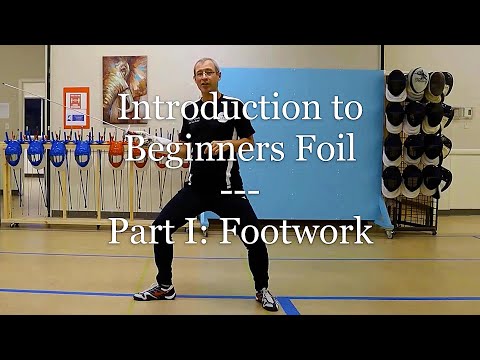
Your dominant foot (matching your weapon hand) should point straight forward, while your non-dominant foot points to the side. Start with your heels touching, then take two full steps forward—each step should be about the length of your own foot—before settling into your on-guard stance (OSM Fencing, Introduction to Beginners Foil).
Stand side-on to minimize your target area rather than facing your opponent straight on with your full chest exposed. Bend your knees and sit on your hips while keeping your weight centered. Your weapon hand should be held up to the side with your elbow slightly away from your body (OSM Fencing, Introduction to Beginners Foil).
Foil is a linear sport where you move forward and backward, not side to side. Maintaining your on-guard position ensures you stay properly balanced and prepared to attack or defend during movement (OSM Fencing, Introduction to Beginners Foil).
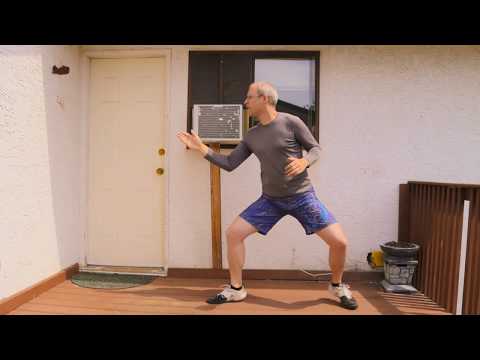
Dynamic footwork helps distribute your weight more appropriately, lowers your center of gravity, and allows you to apply force and power when needed—skills that are particularly valuable in competitive fencing (OSM Fencing, Dynamic Foil Footwork).
The Foil Footwork subfamily covers all movement techniques used in fencing to control distance, create attacking opportunities, and maintain defensive readiness. Fencing footwork is the engine that drives all blade actions — without proper footwork, even perfect blade technique is ineffective because the fencer cannot reach the target or escape the opponent's attacks.
Fencing footwork was formalised by the Italian and French schools of the 16th-17th centuries, with the lunge becoming the defining attack movement. Domenico Angelo's 'The School of Fencing' (1763) illustrated the en garde position and lunge that remain essentially unchanged in modern fencing.
FIE: разрешён — Legal fencing technique — governed by FIE rules for foil, épée, and sabre; HEMA: разрешён — Legal in historical fencing competition
Оценка опасности 2/10. Low — modern sport fencing uses blunted weapons and full protective gear; injury rate ~2.5 per 1000 exposures (Harmer 2008)
Стандартная цепочка подготовки: En Garde → Advance/Lunge Preparation → Attack → Recovery.
Стандартные контрприёмы: Beat Parry — deflect the blade with a sharp lateral beat before it reaches target / Displacement — move the body off the line while threatening with the point / Counter-Thrust — extend into the attacker's line during their advance.
Распространённые варианты: Simple attack (single blade action (disengage, beat, or direct) to score); Compound attack (multiple blade actions (feint then disengage) to create a…); Riposte (immediate counter after a successful parry); Counter-attack (attacking into the opponent's attack with priority or rig…).
Footwork quality is a primary differentiator at Olympic-level foil fencing, where competitors cover the 14-metre piste with explosive advances and retreats.
Основные ошибки, на которые стоит обратить внимание: Crossing the feet during advances or retreats — the feet must maintain their relative position; crossing creates inst… / Standing flat-footed — the weight should be on the balls of the feet for quick movement / Leaning forward during the advance — the torso stays upright; the legs move while the upper body remains stable / Lunging with the rear leg instead of the front — the front foot extends while the rear leg pushes.
Foil Footwork также известен как Furūre Ashi-sabaki, Jeu de Jambes, Fencing Footwork.