Epee lesson
0
Epee Attack·Ivan Blagoev / Fencing & Music
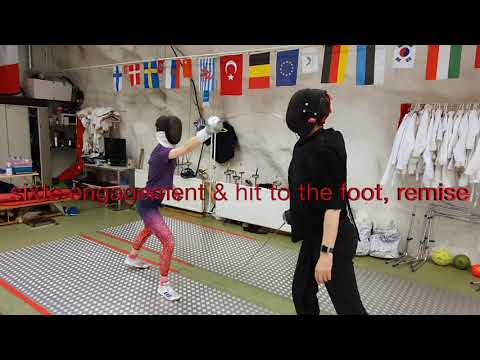
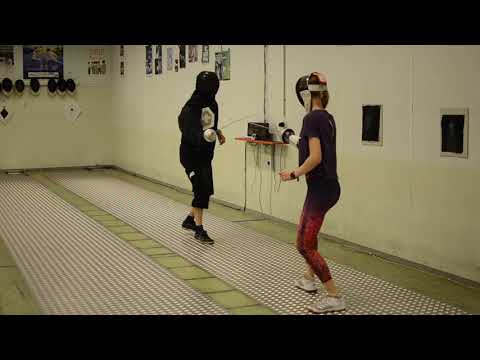
Warm up, timing, choice of attacks, feint with disengagement, counter attack with binds, flèche & more
Перевод: epee attack
The Epee Attack subfamily covers all offensive thrusting actions in epee, where the fencer extends the arm and advances to land the point on any part of the opponent's body. [1] Epee attacks are unique among the three weapons because there is no right-of-way convention — an attack does not gain priority, meaning both fencers can score simultaneously (double touch). [1],[2] This fundamentally changes attack strategy compared to foil or sabre: epee attacks must be executed with extreme precision and timing because a poorly timed attack invites a counter-attack that scores equally. [2],[3] Common epee attacks include the direct thrust, the disengage (deceiving the opponent's blade), and attacks to the hand, forearm, and foot — targets unique to epee. [3]
Épée attacking technique evolved from French duelling sword practice, with the emphasis on hitting without being hit reflecting actual duel conditions. [1]
Изображений для этой техники пока нет.
Войдите, чтобы предложить изображение.
Warm up, timing, choice of attacks, feint with disengagement, counter attack with binds, flèche & more
Sixte and quarte counter-binds plus flick as an attack (with or without approach-step), or parry repost actions, remises…
Учебных курсов по этой технике пока нет.
Войдите, чтобы предложить курс.
Риск травмы для человека, к которому применяется техника
Modern sport fencing uses blunted weapons and full protective gear; injury rate ~2.5 per 1000 exposures (Harmer 2008)
Уровень мастерства, необходимый для надёжного выполнения техники
Разрешена ли техника по основным соревновательным правилам
The Art of Fencing (Luigi Barbasetti, 1932)
Alias sources — [1] FIE Rules of Competition [2] Classical Fencing (Rogers, 2014)
Effectiveness sources — [1] The Art and Science of Fencing (Evangelista, 1996) [2] FIE technical guidelines
Mixed Japanese-Western terminology — combines traditional Japanese terms with katakana loanwords
Alias sources — [1] FIE Rules of Competition [2] Classical Fencing (Rogers, 2014)
Effectiveness sources — [1] The Art and Science of Fencing (Evangelista, 1996) [2] FIE technical guidelines
explosive lunge speed, finger/wrist dexterity, cardiovascular endurance
long reach (tall, long arms), fast-twitch legs
quadriceps (lunge), calves, forearm/finger flexors, core
Каждое движение в любом боевом искусстве обладает рядом универсальных свойств. Комбинируйте параметры ниже, чтобы найти нужный инструмент или сравнить аналоги из разных стилей.
The Epee Attack subfamily covers all offensive thrusting actions in epee, where the fencer extends the arm and advances to land the point on any part of the opponent's body. Epee attacks are unique among the three weapons because there is no right-of-way convention — an attack does not gain priority, meaning both fencers can score simultaneously (double touch).
Epee attack technique evolved from duelling sword methodology, where the primary concern was striking without being struck in return. The 'stop-hit to the hand' — an attack to the opponent's closest target — became a defining epee technique that has no equivalent in foil or sabre.
FIE: разрешён — Legal fencing technique — governed by FIE rules for foil, épée, and sabre; HEMA: разрешён — Legal in historical fencing competition
Оценка опасности 2/10. Low — modern sport fencing uses blunted weapons and full protective gear; injury rate ~2.5 per 1000 exposures (Harmer 2008)
Стандартная цепочка подготовки: En Garde → Advance/Lunge Preparation → Attack → Recovery.
Стандартные контрприёмы: Parry (Absetzen) — deflect the incoming blade with a counter-displacement / Void (Step Back) — withdraw from measure to avoid the cutting arc / Counter-Cut (Nachreisen) — strike into the opponent's opening during their attack.
Распространённые варианты: Simple attack (single blade action (disengage, beat, or direct) to score); Compound attack (multiple blade actions (feint then disengage) to create a…); Riposte (immediate counter after a successful parry); Counter-attack (attacking into the opponent's attack with priority or rig…).
Épée has been an Olympic event since 1900. Notable champions include Edoardo Mangiarotti (Italy, 13 Olympic medals across career) and Pavel Kolobkov (Russia).
Основные ошибки, на которые стоит обратить внимание: Attacking without preparation — epee attacks require setup: feints, blade actions, or footwork to create the opening / Ignoring the risk of the counter-attack — every attack exposes a forward target; protect while attacking / Using only direct attacks — develop the full repertoire: disengage, coupe, attacks au fer / Attacking from too far — the attack must arrive decisively; launching from excessive distance invites the counter.
Epee Attack также известен как Epe Kōgeki, Attaque d'Epee, Epee Offensive Action.