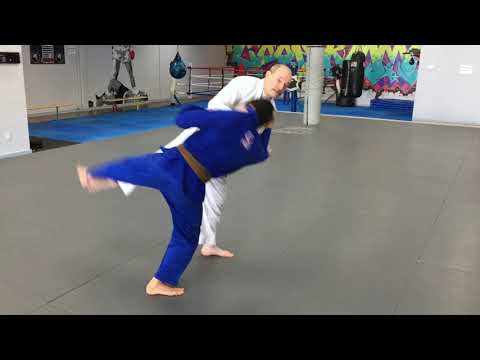
Ko Soto Gari to O Soto Throws
0
Ko Soto Gari·welcomematstevescott
This is a common and effective throwing combination. Ko Soto Gari is often used as a set up for a variety of O Soto thro…
Перевод: minor outer reap
Ko Soto Gari (minor outer reap) is a foot sweep subfamily where the attacker reaps the opponent's heel or ankle from the outside using the sole of the foot or the heel, while driving the opponent's upper body backward over the reaped leg. [1] The 'minor' designation distinguishes it from o soto gari (major outer reap) — ko soto gari uses a smaller, more precise reaping action targeting the ankle rather than a full leg sweep. [1],[2] The upper body drives the opponent's weight backward onto the heel, and the reap removes that support point. [2] Ko soto gari is effective at close range and from various clinch positions. [2],[3]
Ko soto gari is used in judo competition at all levels, frequently as a combination technique with forward throws. [1]
Изображений для этой техники пока нет.
Войдите, чтобы предложить изображение.
This is a common and effective throwing combination. Ko Soto Gari is often used as a set up for a variety of O Soto thro…
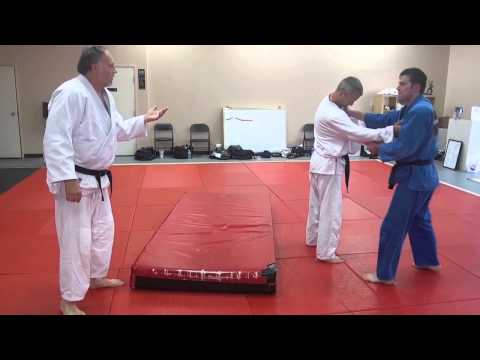
Mark Gilston, 4th degree judo black belt, shows an integrated attack sequence beginning with the minor outer sweep. http…
Учебных курсов по этой технике пока нет.
Войдите, чтобы предложить курс.
Риск травмы для человека, к которому применяется техника
Timing-based sweep; lower force than trips
Уровень мастерства, необходимый для надёжного выполнения техники
Разрешена ли техника по основным соревновательным правилам
Kodokan Judo — Official Nage-waza Classification
Traditional Judo throwing/takedown terminology (Kodokan Institute)
Official Kodokan ground technique classification system
Standard Japanese martial arts terminology (kanji/hiragana)
Established Japanese martial arts naming convention — native Japanese term (和語/漢語)
Traditional Judo throwing/takedown terminology (Kodokan Institute)
timing, balance, upper body control for push-pull
good coordination and sense of opponent's weight distribution
core stabilisers, hip adductors/abductors, calves
Каждое движение в любом боевом искусстве обладает рядом универсальных свойств. Комбинируйте параметры ниже, чтобы найти нужный инструмент или сравнить аналоги из разных стилей.
You should have a follow-up technique in mind before attempting the throw. According to Seiryoku Zenyo, going in for one technique without a backup plan if it fails is a failing strategy—instead, you should be ready to transition to techniques like O Soto Gari or O Soto Garuma if your opponent defends.
Ko Soto Gari drilling teaches fast foot movement, foot manipulation, body posture, and shin timing, according to welcomematstevescott, making it an excellent practice tool for developing these fundamental skills even if you're not focusing on the throw itself.
Yes, Ko Soto Gari works well as a setup or fake for O Soto Gari and O Soto Garuma, according to welcomematstevescott, allowing you to flow into these larger throws when your opponent defends against or escapes the initial Ko Soto Gari attempt.
Ko Soto Gari (minor outer reap) is a foot sweep subfamily where the attacker reaps the opponent's heel or ankle from the outside using the sole of the foot or the heel, while driving the opponent's upper body backward over the reaped leg. The 'minor' designation distinguishes it from o soto gari (major outer reap) — ko soto gari uses a smaller, more precise reaping action targeting the ankle rather than a full leg sweep.
Ko soto gari is one of the original judo throws classified in the Kodokan gokyo-no-waza (five sets of techniques) and has been a competition technique since judo's early years. The technique has been adapted into sambo, wrestling, and MMA as a close-range trip.
IJF: разрешён — Legal (ashi-waza) — trips executed without grabbing opponent's legs are permi…; IBJJF: разрешён — Legal at all belt levels, scored as takedown (2 points); UWW: ограничен — Legal in freestyle, restricted in Greco-Roman (leg-to-leg contact prohibited); Unified MMA: разрешён — Legal takedown technique; ADCC: разрешён — Legal, scored 2-4 points in second half of match; FIAS Sport Sambo: разрешён — Legal — all takedowns permitted; FIAS Combat Sambo: разрешён — Legal; NCAA Folkstyle: разрешён — Legal, scored as takedown (2 points)
Оценка опасности 4/10. Moderate — timing-based sweep; lower force than trips
Стандартная цепочка подготовки: Establish Contact → Create Off-Balance → Execute the Takedown → Follow to Ground.
Стандартные контрприёмы: Sprawl — drop hips back and drive weight down to stuff the takedown attempt / Underhook — establish inside position to control distance and prevent the takedown entry / Post and Circle — post on the attacker's head and circle away to break their angle / Level Change Defence — recognize the shot early and react with appropriate hip defence.
Распространённые варианты: Standard trip (blocking or sweeping the support leg while driving the up…); Combination trip (chaining an inside trip with an outside trip when the opp…); Counter trip (using the trip as a counter when the opponent attacks); Clinch trip (executing the trip from a tight clinch position).
Ko soto gari is used in judo competition at all levels, frequently as a combination technique with forward throws.
Основные ошибки, на которые стоит обратить внимание: Reaping before pushing the opponent's weight backward — they can lift the targeted foot / Standing too far away to effectively reap the heel / Reaping with the top of the foot instead of the sole — less control and less surface area / Only pushing with the hands without following through with body weight.
Ko Soto Gari также известен как Ko Soto Gari, Minor Outer Reap, Small Outside Reap.