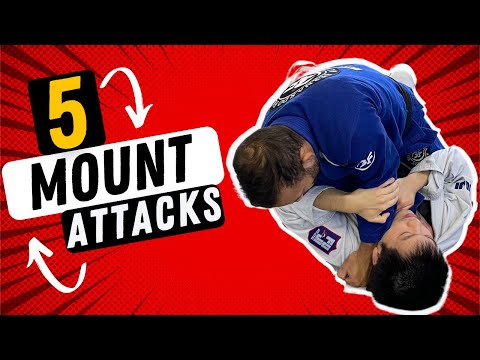
5 Ways to Submit From Mount (Lower Belts Should Learn)
0
Lower Limb·BIG OSS Jiu-Jitsu Channel
IF YOU HAVEA HARD TIME SUBMIT FROM MOUNT THIS VODEO IS FOR YOU On This Video today i show 5 ways to apply a submissions…
Перевод: lower limb
Lower limb nerve locks target the nerve pathways of the legs — primarily the peroneal nerve (running along the outside of the knee), the sciatic nerve (posterior thigh), and the tibial nerve (behind the knee and calf). [1],[2] The most common application is peroneal nerve compression: pressing a shin, knee, or forearm into the lateral side of the opponent's leg just below the knee, where the common peroneal nerve passes superficially over the fibular head. This generates sharp, electric pain that can force a positional change or submission. [3] Lower limb nerve locks are primarily used as positional tools rather than primary submissions — for example, using peroneal pressure to open up guard passes or force defensive reactions that create openings for more decisive attacks. [4]
Lower limb nerve attacks are documented in classical Japanese jujutsu under kyusho-jutsu (vital point techniques) and in Chinese martial arts Chin Na systems that map nerve pathways throughout the body. [1],[2] In koryu jujutsu, attacking nerve points on the legs was practiced as part of ground combat (ne-waza) and standing grappling curricula. [2] In modern grappling, lower limb nerve pressure is commonly applied during guard passing — using the knee or shin to compress the peroneal nerve as a way to weaken the guard player's leg hooks. [3],[4]
Lower limb submissions (heel hooks, kneebars, ankle locks, toe holds) attack the knee, ankle, and foot joints, providing powerful finishing options from leg entanglement positions. [1]
Lower limb attacks were developed primarily in catch wrestling and sambo, with the modern leg lock renaissance driven by John Danaher's systematic approach. [1]
Leg locks are the dominant submission category at ADCC and modern no-gi events. [1]
Изображений для этой техники пока нет.
Войдите, чтобы предложить изображение.
IF YOU HAVEA HARD TIME SUBMIT FROM MOUNT THIS VODEO IS FOR YOU On This Video today i show 5 ways to apply a submissions…
Учебных курсов по этой технике пока нет.
Войдите, чтобы предложить курс.
Риск травмы для человека, к которому применяется техника
Lower limb nerve compression targets the peroneal or tibial nerve for pain compliance
Уровень мастерства, необходимый для надёжного выполнения техники
Разрешена ли техника по основным соревновательным правилам
Koryu Jujutsu — nerve compression techniques
Japanese terminology sourced from Koryu Jujutsu — nerve compression techniques
Classical schools: Tenjin Shin'yo-ryu, Takenouchi-ryu, etc.
Standard Japanese martial arts terminology (kanji/hiragana)
Established Japanese martial arts naming convention — native Japanese term (和語/漢語)
Japanese terminology sourced from Koryu Jujutsu — nerve compression techniques
shin pressure, leg triangling ability
bony, angular shins for sharper compression
quadriceps, hamstrings, calf muscles (for leg triangle lock)
According to BIG OSS Jiu-Jitsu, the key is to walk in a straight line and wipe your opponent's arm to the side, then replace your arm with your head. Keep your head pressed against their head to maintain the arm in place, and squeeze at about 80% pressure continuously rather than squeezing and releasing repeatedly.
BIG OSS Jiu-Jitsu explains that you need to have a solid base and keep the opponent's elbow far away from their body to reduce their bridge power. If they do bridge, maintain an active hook with your lower body and block before they can escape to the side.
BIG OSS Jiu-Jitsu emphasizes that the transition is the most critical moment—when you go to mount, your opponent will try to bridge. You must block and base out properly, maintaining your lower body hook so you don't lose position during the transition.
Lower limb nerve locks target the nerve pathways of the legs — primarily the peroneal nerve (running along the outside of the knee), the sciatic nerve (posterior thigh), and the tibial nerve (behind the knee and calf). The most common application is peroneal nerve compression: pressing a shin, knee, or forearm into the lateral side of the opponent's leg just below the knee, where the common peroneal nerve passes superficially over the fibular head.
Lower limb nerve attacks are documented in classical Japanese jujutsu under kyusho-jutsu (vital point techniques) and in Chinese martial arts Chin Na systems that map nerve pathways throughout the body. In koryu jujutsu, attacking nerve points on the legs was practiced as part of ground combat (ne-waza) and standing grappling curricula.
IBJJF: запрещён — Pain compliance without structural submission mechanism is prohibited; IJF: запрещён — Not a recognized submission category; ADCC: разрешён — Legal; Unified MMA: разрешён — Legal; FIAS Sport Sambo: запрещён — Prohibited; FIAS Combat Sambo: разрешён — Legal
Оценка опасности 4/10. Lower limb nerve compression targets the peroneal or tibial nerve for pain compliance
Стандартная цепочка подготовки: Establish Position → Create the Threat → Secure the Hold → Finish.
Стандартные контрприёмы: Early Recognition — identify the submission attempt early and begin defence immediately / Posture and Base — maintain strong posture and base to prevent submission setups / Grip Fight — deny the attacker their preferred gripping configuration.
Распространённые варианты: Standard calf slicer (shin across the calf with triangle leg lock compressing t…); Truck calf slicer (applied from truck position after a back-take attempt); Standing calf slicer (trapping the calf during a scramble or guard exchange).
Leg locks are the dominant submission category at ADCC and modern no-gi events.
Основные ошибки, на которые стоит обратить внимание: Targeting nerve locks on the lower limb without positional control — the opponent will simply retract the leg if they… / Applying random pressure — nerve locks require precise targeting; pressing generally on the leg is ineffective / Using nerve pressure as a substitute for proper leg lock mechanics — the nerve lock enhances the joint lock, it doesn… / Expecting the nerve lock to finish the match — lower limb nerve pressure usually enhances position rather than creati….
Lower Limb также известен как Kashi, Lower Body Nerve Lock, Leg Nerve Compression.