What is an Omoplata? BJJ How-to Tutorial
0
Standard Omoplata·fightTIPS·Added by Admin
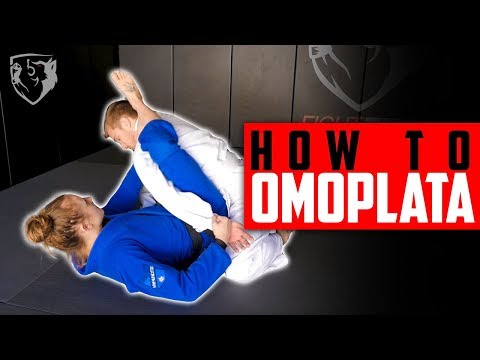
Coach Erin Herle teaches how to do a omaplata submission (which means 'scapula' in Portuguese). This shoulder lock is do…
Перевод: Leg Triangle Entanglement
The omoplata is a shoulder lock applied from guard using the legs to isolate and torque the opponent's arm, forcing internal rotation of the glenohumeral joint beyond its normal range. The attacker swings a leg over the opponent's shoulder, sits up perpendicular, and leans forward to apply downward pressure on the trapped arm. [1] Originally known as ashi-sankaku-garami in judo, the technique was dormant in competition for decades until Nino Schembri revolutionized it in the mid-1990s, transforming it from a low-percentage submission into a complete system of attacks and sweeps. [2] It is one of the fundamental BJJ submissions, forming the famous 'three brothers' trio with the triangle choke and armbar — every triangle setup is also an omoplata setup.
The omoplata originated in judo as ashi-sankaku-garami (leg triangle entanglement). It is depicted in Vital Judo: Grappling Techniques by Isao Okano (1976), confirming its judo lineage. [1] The technique arrived in Brazil through judo and catch wrestling influences in the 1930s-1940s but was considered low-percentage for decades. In 1994, the Brazilian Jiu-Jitsu Confederation (CBJJ) changed rules to award points for omoplata sweeps, and Nino Schembri subsequently revolutionized the technique into a complete attacking system, winning back-to-back IBJJF World Championships in 1997-1998. [2]
The omoplata is one of BJJ's fundamental submissions, forming the triangle-armbar-omoplata trio that constitutes the core guard attack system. [1] While relatively rare as a competition submission finish compared to triangles and armbars, it is extremely common as a transitional tool and sweep. [2] Ben Saunders recorded the first UFC omoplata finish (2014), and Adam Wieczorek the second (2018). In IBJJF competition, the omoplata sweep is one of the highest-percentage reversals from guard.
Изображений для этой техники пока нет.
Войдите, чтобы предложить изображение.
Coach Erin Herle teaches how to do a omaplata submission (which means 'scapula' in Portuguese). This shoulder lock is do…
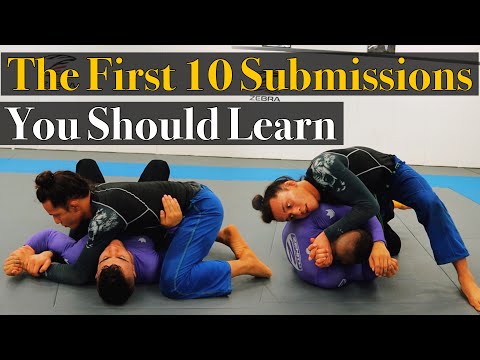
In today’s video I’ll be giving you the 10 first bjj submissions that every white belt should learn. These are the submi…
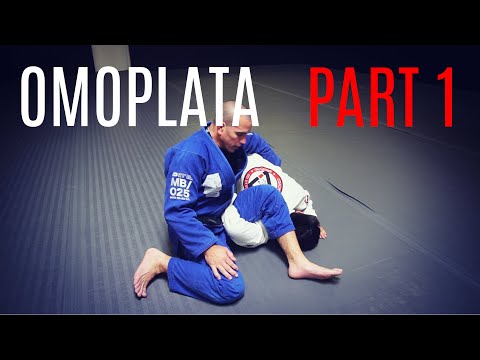
3rd degree black belt Anthony Mantanona shows several entries into the shoulder lock, or omoplata. This is a favorite t…
The standard omoplata is a shoulder lock submission that isolates the opponent's arm using the legs, analogous to a Kimura grip but executed with leg pressure. According to fightTIPS, the fundamental mechanics require trapping the opponent's elbow away from their body—the position is easiest to establish from closed guard when the opponent postures up. The initial grip typically involves controlling the sleeve or tricep, with the practitioner pushing the opponent's hand down while bending their arm. CVBJJ Online emphasizes multiple entry points, including from open guard by shooting the knee past the shoulder, from butterfly guard as a follow-up to a failed sweep, from lasso guard, and from cross-sleeve positions. Both fightTIPS and CVBJJ Online stress keeping the elbow tightly trapped throughout execution. The finish involves positioning perpendicular to the opponent with heel-to-knee leg configuration, then extending the legs while maintaining arm compression and driving the hips diagonally to apply shoulder pressure. fightTIPS notes the arm should meet the back of the opponent's head, similar to Kimura mechanics. Common defenses include rolling through, which allows transition to top position. CVBJJ Online details multiple variations when the opponent resists, including transitions to lasso guard or shin-to-shin positioning. Jedi Does Jiujitsu does not specifically cover the omoplata in their beginner submission overview, focusing instead on foundational techniques. The three instructors collectively present the omoplata as a versatile technique suitable for multiple positions and capable of transitioning to other submissions.
Сформировано на основе 3 инструкторов
Учебных курсов по этой технике пока нет.
Войдите, чтобы предложить курс.
Риск травмы для человека, к которому применяется техника
Moderately dangerous — applies significant torque to the shoulder joint via forced internal rotation; can cause glenohumeral dislocation or rotator cuff tears, but has a relatively slow application curve giving opponents time to tap before catastrophic injury
Уровень мастерства, необходимый для надёжного выполнения техники
Разрешена ли техника по основным соревновательным правилам
Vital Judo: Grappling Techniques (Okano, 1976) — Ashi-Sankaku-Garami
Historical origin — [1] Vital Judo: Grappling Techniques (Okano, 1976) — earliest known published depiction of ashi-sankaku-garami
BJJ development — [2] BJJ Heroes (bjjheroes.com) — Nino Schembri biography and omoplata history
Technique instruction — Jiu-Jitsu University (Ribeiro, 2008), p.144
Standard Japanese martial arts terminology (kanji/hiragana)
Established Japanese martial arts naming convention — native Japanese term (和語/漢語)
Historical origin — [1] Vital Judo: Grappling Techniques (Okano, 1976) — earliest known published depiction of ashi-sankaku-garami
BJJ development — [2] BJJ Heroes (bjjheroes.com) — Nino Schembri biography and omoplata history
Technique instruction — Jiu-Jitsu University (Ribeiro, 2008), p.144
hip flexibility, ability to control with legs, core strength for sitting up
longer legs for easier figure-four lock around opponent's shoulder
hip adductors, hip flexors, hamstrings, obliques
Keep your opponent's elbow trapped and maintain tight leg control—the leg over the arm should be locked down while the other leg stays bent. fightTIPS emphasizes keeping your legs tight and the elbow in close to prevent your opponent from creating space to escape.
Cut the elbow to keep it tight, then sit up and bring your head over your opponent's far shoulder so their arm meets the back of their head similar to a Kimura. Drive your hips diagonally while controlling the sleeve and keeping your heel to your knee for maximum pressure.
Go to the collar to keep your opponent's body close, then quickly let go and catch their elbow and tricep. Pull with your hands to bring them into the omoplata position.
If your opponent rolls through, it alleviates the submission pressure, but you can then transition to getting on top and exploring other finishing options from that position.
The omoplata is a shoulder lock applied from guard using the legs to isolate and torque the opponent's arm, forcing internal rotation of the glenohumeral joint beyond its normal range. The attacker swings a leg over the opponent's shoulder, sits up perpendicular, and leans forward to apply downward pressure on the trapped arm.
The omoplata originated in judo as ashi-sankaku-garami (leg triangle entanglement). It is depicted in Vital Judo: Grappling Techniques by Isao Okano (1976), confirming its judo lineage.
IBJJF: разрешён — Legal at all belt levels; IJF: запрещён — Only elbow joint locks (kansetsu-waza) permitted in judo — all other joint lo…; ADCC: разрешён — Legal — all submissions legal in ADCC; Unified MMA: разрешён — Legal submission technique; FIAS Sport Sambo: разрешён — Legal; FIAS Combat Sambo: разрешён — Legal
Оценка опасности 6/10. Moderately dangerous — applies significant torque to the shoulder joint via forced internal rotation; can cause glenohumeral dislocation or rotator cuff tears, but has a relatively slow application curve giving opponents time to tap before catastrophic injury
Стандартная цепочка подготовки: Isolate One Arm → Swing Leg Over Shoulder → Sit Up Perpendicular → Control the Hip → Apply Downward Pressure.
Стандартные контрприёмы: Forward Roll Escape — roll forward over the trapped shoulder to relieve pressure (most common defense) / Posture Up Early — stand up and stack before the omoplata is locked in / Limp Arm / Hitchhiker Escape — rotate the trapped arm to reduce shoulder torque / Grab Belt or Pants — clasp hands or grab clothing to prevent arm isolation.
Распространённые варианты: Standard omoplata (classic application from closed guard, swing leg over sho…); Rolling omoplata (entry via forward roll, often from turtle or top position); Mounted omoplata (applied from mount position); Tarikoplata (hybrid of kimura and omoplata developed by Tarik Hopstock…); Baratoplata (named after Rafael 'Barata' Freitas, uses a leg triangle …); Reverse omoplata (Huizinga Roll) (inverted application of the shoulder lock); Rubber guard omoplata (entry via Eddie Bravo's rubber guard system from chill do…).
First UFC omoplata finish: Ben Saunders vs. Chris Heatherly, UFC Fight Night 49, August 23, 2014, Round 1 (Performance of the Night).
Основные ошибки, на которые стоит обратить внимание: Not controlling the opponent's hip — allows the forward roll escape, the most common defense / Not sitting up enough — staying flat on the back reduces leverage and makes the finish impossible / Not cutting the angle — the attacker must be perpendicular to the opponent, not parallel / Allowing the forward roll escape — must grab the belt/hip or hook the far leg to prevent.
Standard Omoplata также известен как Omoplata, Ashi-Sankaku-Garami, Coil Lock, Leg Shoulder Lock.
The forward roll is the number one escape. Three ways to prevent it: (1) Grab their belt or far-side hip — this physically blocks the roll. (2) Hook their far leg with your arm as you sit up. (3) Lean your weight forward and drive your hip into their back — if they try to roll, follow them and come up on top. The key is controlling the hip before you start applying the shoulder lock.
Yes — this is actually its most common use in high-level competition. When the opponent defends the submission by posturing up or grabbing their belt, you use the leverage to sweep them. Sit up, drive into them, and roll them over using the trapped arm as your lever. You come up on top in side control. Many world champions use the omoplata primarily as a sweep, with the submission as a bonus.
They are called the 'three brothers' because every setup for one is a setup for the others. All three require isolating one arm (one arm in, one arm out from guard). If you set up a triangle and they hide the arm, the omoplata is right there. If the omoplata is defended and they posture, the triangle or armbar opens up. At high levels, you chain between all three until one lands.