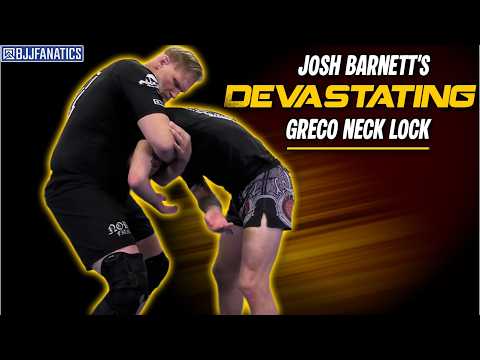
How to do the Greco Neck Lock BJJ Move by Josh Barnett
0
Neck Lock·BJJ Fanatics
Josh Barnett teaches how to do the Greco Neck Lock in this BJJ Training video. https://bjjfanatics.com This sample clip…
Перевод: Neck joint technique
The Neck Lock family covers joint lock submissions that target the cervical spine through cranking, twisting, or compressing the neck beyond its normal range of motion — among the most dangerous and controversial techniques in grappling. [1] Unlike chokes that restrict blood or air flow, neck cranks attack the vertebral joints and surrounding ligaments of the cervical spine, causing intense pain and the risk of serious spinal injury including disc herniation, vertebral fracture, and nerve damage. [1],[2] The most well-known neck cranks include the can opener (pulling the head forward from inside guard), the Twister (10th Planet spinal crank from the Truck position), the neck crank from back control, and various cervical spine attacks from cradle positions. [2],[3] Due to the severity of potential injuries, neck cranks are banned or restricted in many competition formats — they are illegal in IBJJF gi competition, controversial in no-gi, and permitted in MMA and some submission grappling formats. [3]
Neck cranks have been used in combat throughout history — catch wrestling included neck attacks ('hooks') as part of its submission repertoire. [1] In BJJ, neck cranks were historically controversial — many instructors discouraged them as 'dirty' techniques, while others incorporated them into self-defence curricula. [1],[2] The Twister, codified by Eddie Bravo (10th Planet Jiu-Jitsu), brought a specific neck/spinal crank into the modern grappling conversation and sparked debate about the legitimacy and safety of cervical attacks in competition. [2],[3] The medical research on cervical spine injuries in combat sports has reinforced the controversy around neck cranks, with many governing bodies restricting or banning them. [3]
Neck cranks are effective submissions when legally applicable — they create extreme pain and the risk of serious injury, forcing most opponents to tap. [1] The Twister has produced numerous submission victories at EBI and ADCC. [2] However, neck cranks are less efficient than chokes (which cause unconsciousness quickly) and carry significantly higher injury risk, making them controversial in the grappling community. [3]
Изображений для этой техники пока нет.
Войдите, чтобы предложить изображение.
Josh Barnett teaches how to do the Greco Neck Lock in this BJJ Training video. https://bjjfanatics.com This sample clip…
Учебных курсов по этой технике пока нет.
Войдите, чтобы предложить курс.
Риск травмы для человека, к которому применяется техника
Neck cranks target the cervical spine, one of the most vulnerable and critical structures in the body; cervical spine injuries can cause paralysis, permanent nerve damage, disc herniation, and in extreme cases, death; the risk-to-reward ratio makes neck cranks controversial in training and competition
Уровень мастерства, необходимый для надёжного выполнения техники
Разрешена ли техника по основным соревновательным правилам
Twister (Eddie Bravo, 2007)
Description sources — [1] Catch wrestling neck attack traditions [2] Twister (Bravo, 2007) [3] Medical research on cervical spine injuries in combat sports
Description sources — [1] Catch wrestling neck attack traditions [2] Twister (Bravo, 2007) [3] Medical research on cervical spine injuries in combat sports
understanding of cervical anatomy (critical for safe application), positional control (the neck can only be cranked when the opponent's body is controlled), responsible training mindset
upper body strength (pulling force for cranks), positional control ability
biceps and forearms (pulling the head), core (stabilising while cranking), shoulders (driving force into the crank)
Каждое движение в любом боевом искусстве обладает рядом универсальных свойств. Комбинируйте параметры ниже, чтобы найти нужный инструмент или сравнить аналоги из разных стилей.
Neck locks (cranks) attack the cervical spine through forced rotation, extension, or lateral flexion. More dangerous than blood chokes because the spine tolerates less force than the carotid arteries. The can opener, twister, and neck crank are the primary neck lock techniques. Restricted at lower belt levels in IBJJF. (IBJJF Rules v6.0; Danaher, Enter the System)
Once you have your opponent turned, focus on keeping the position locked in place. Josh Barnett emphasizes that securing this lock is more important than the initial turning motion, as it allows you to drive your hips through for the finish.
The Neck Lock family covers joint lock submissions that target the cervical spine through cranking, twisting, or compressing the neck beyond its normal range of motion — among the most dangerous and controversial techniques in grappling. Unlike chokes that restrict blood or air flow, neck cranks attack the vertebral joints and surrounding ligaments of the cervical spine, causing intense pain and the risk of serious spinal injury including disc herniation, vertebral fracture, and nerve damage.
Neck cranks have been used in combat throughout history — catch wrestling included neck attacks ('hooks') as part of its submission repertoire. In BJJ, neck cranks were historically controversial — many instructors discouraged them as 'dirty' techniques, while others incorporated them into self-defence curricula.
IBJJF: разрешён — Legal at all belt levels; IJF: запрещён — Only elbow joint locks (kansetsu-waza) permitted in judo — all other joint lo…; ADCC: разрешён — Legal — all submissions legal in ADCC; Unified MMA: разрешён — Legal submission technique; FIAS Sport Sambo: разрешён — Legal; FIAS Combat Sambo: разрешён — Legal
Оценка опасности 9/10. Very high — neck cranks target the cervical spine, one of the most vulnerable and critical structures in the body; cervical spine injuries can cause paralysis, permanent nerve damage, disc herniation, and in extreme cases, death; the risk-to-reward ratio makes neck cranks controversial in training and competition
Стандартная цепочка подготовки: Establish Controlling Position → Secure Head Control → Stabilise the Body → Apply Force → Maintain Pressure → Release.
Стандартные контрприёмы: Chin Tuck — tucking the chin prevents many neck cranks from accessing the cervical spine / Turn Into the Crank — rotating toward the cranking direction relieves pressure / Hand Fight — stripping the grips before the crank is fully established / Posture Up — in the can opener, driving the hips forward and posturing up counteracts the pulling force.
Распространённые варианты: Can opener (pulling the head forward from inside guard; a pain compli…); Twister (10th Planet spinal crank from the Truck position; attacks…); Neck crank from back control (cranking the head laterally or backward from behind); Full nelson crank (clasping hands behind the opponent's head from behind and…); Crucifix neck crank (attacking the neck while the opponent's arms are trapped …); Cervical lock from front headlock (applying rotational or compression force to the neck from…); Guillotine as neck crank (a guillotine applied with the forearm under the chin rath…).
Neck cranks are effective when legal — the Twister has produced finishes at EBI and ADCC. The can opener is commonly used in MMA and no-gi grappling.
Основные ошибки, на которые стоит обратить внимание: Applying neck cranks at full speed in training — this is extremely dangerous; cervical spine injuries can be permanent / Not tapping early enough — stubbornness against neck cranks can result in serious spinal injury / Using the can opener as a primary technique — it is a pain compliance move that experienced grapplers can absorb; rel… / Confusing cranks with chokes — applying a guillotine as a crank (chin-strapping) rather than a proper choke is less e….
Neck Lock также известен как Kubi Kansetsu Waza, Neck Crank, Cervical Lock, Neck Twist, Kubi Hishigi.