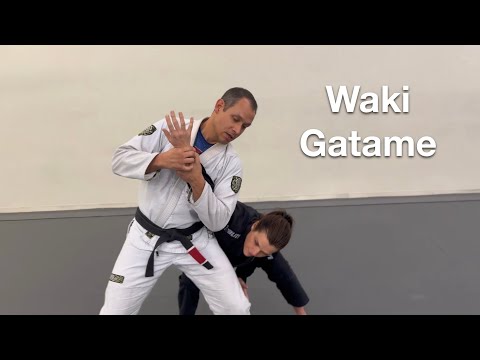
Waki Gatame - when and how to use it.
0
Waki-Gatame·Robert Silas (Aiki_and_Jiu)
Waki Gatame - when and how to use it. There are a lot of traditional judo example videos on waki gatame, and I’m sure @…
Перевод: armpit hold
Waki-gatame (脇固め, 'armpit hold') is a standing or ground armlock where the opponent's extended arm is trapped under the attacker's armpit, and downward pressure is applied to hyperextend the elbow. [1],[2] The attacker catches the opponent's wrist or forearm, tucks it under the armpit, and uses body weight or a dropping motion to straighten and hyper-extend the elbow against the armpit as a fulcrum. [1] Waki-gatame is notable for its speed — it can be applied in a single explosive motion during standing exchanges, making it one of the fastest arm locks. [1],[3]
Waki-gatame is a classical Kodokan Judo kansetsu-waza that is somewhat restricted in judo competition due to its speed and injury potential — dropping into waki-gatame while standing is considered dangerous. [2],[3] In aikido, a similar armpit-fulcrum arm lock is practiced as ikkyo or variations thereof. [1] The technique appears in self-defense and law enforcement systems worldwide. [1]
Waki-gatame (armpit armlock) traps the opponent's arm under the attacker's armpit and applies downward pressure to hyperextend the elbow. [1]
Waki-gatame is a classical judo armlock, though it is currently banned in IJF competition due to its dangerous rapid application. [1]
Waki-gatame is banned in IJF judo competition but remains legal in BJJ, MMA, and other grappling formats. [1]
Изображений для этой техники пока нет.
Войдите, чтобы предложить изображение.
Waki Gatame - when and how to use it. There are a lot of traditional judo example videos on waki gatame, and I’m sure @…
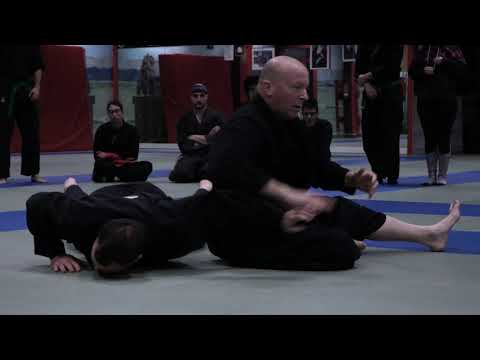
From the Madrid 2020 seminar in Tonobu dojo - Yossi Sheriff, AKBAN Academy founder, first explains breaking the elbow, …
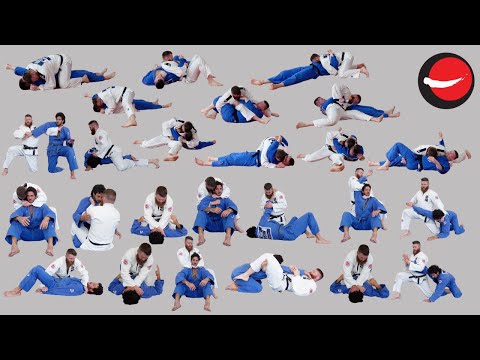
* An updated summary of all the Osaekomi Waza (Pinning Techniques), now including the Japanese names spoken: https://yo…
Waki-gatame is a traditional elbow lock found across judo, jiu-jitsu, and ninjutsu curricula, though its application and effectiveness vary by context. Robert Silas (Aiki_and_Jiu) provides the most detailed technical breakdown, explaining that waki-gatame begins by stepping behind or to the side of an opponent, throwing the arm over the top and squeezing tightly in the armpit to create a standing joint lock. He notes it is banned in judo tournaments as a standing lock due to safety concerns, but remains viable in self-defense and ground positions. Silas emphasizes that against trained opponents in randori, the technique's standing form is rarely effective because practitioners instinctively protect their arms; instead, he advocates using the initial waki-gatame attempt to create kazushi (off-balance), allowing transitions into sacrifice throws or ground pins. He details ground variations where the shoulder is pinned with the opponent's palm facing upward, requiring angle changes and forward pressure to force submission. Yossi Sheriff (AKBAN Ninjutsu) demonstrates waki-gatame as part of a combination flowing into ura oni kudaki, stressing dangerous arm mechanics that can fracture the head or break the eardrum if applied with force, and emphasizing controlled dojo practice versus street applications. Sheriff highlights proper leg positioning and immobilization angles as critical to safe execution. The Judo Way of Life video provides minimal technical content beyond categorizing the technique within katame waza (grappling techniques).
Сформировано на основе 3 инструкторов
Учебных курсов по этой технике пока нет.
Войдите, чтобы предложить курс.
Риск травмы для человека, к которому применяется техника
Waki-gatame (armpit armlock) applies sudden force and is considered one of the most dangerous armlocks in judo
Уровень мастерства, необходимый для надёжного выполнения техники
Разрешена ли техника по основным соревновательным правилам
Kodokan Judo — Official Katame-waza Classification
Kodokan — Waki-gatame (脇固め) classification
Standard Japanese martial arts terminology (kanji/hiragana)
Established Japanese martial arts naming convention — native Japanese term (和語/漢語)
Kodokan — Waki-gatame (脇固め) classification
fine motor control, grip sensitivity, quick hand transitions
dexterous hands with strong fingers
forearm flexors and extensors, intrinsic hand muscles
Каждое движение в любом боевом искусстве обладает рядом универсальных свойств. Комбинируйте параметры ниже, чтобы найти нужный инструмент или сравнить аналоги из разных стилей.
Waki gatame (armpit arm lock) is a Kodokan judo technique — the attacker traps the opponent's arm under their armpit and applies pressure against the elbow. One of the nine officially recognized kansetsu-waza. Can be applied standing or on the ground. (Kano, Kodokan Judo)
According to Robert Silas, pulling your opponent forward creates kazushi—they naturally sit back in response. If you push them back, they sit forward. By pulling forward with an overhand grip during the initial arm throw, you break their balance and create the opportunity to sit behind them for the technique.
Robert Silas explains that against a trained opponent who keeps their arm defended, you should abandon trying to enter into a walking atami and instead use the kuzushi to sit behind them, then work to isolate and control the arm from that position.
Robert Silas teaches that you should block your opponent's face and drop your shoulder while scooting your foot out to isolate the arm, then take a big step while maintaining shoulder pressure. You can finish by dropping your weight on their shoulder with your triceps across their face, or transition to chokes or other submissions.
Waki-gatame (脇固め, 'armpit hold') is a standing or ground armlock where the opponent's extended arm is trapped under the attacker's armpit, and downward pressure is applied to hyperextend the elbow. The attacker catches the opponent's wrist or forearm, tucks it under the armpit, and uses body weight or a dropping motion to straighten and hyper-extend the elbow against the armpit as a fulcrum.
Waki-gatame is a classical Kodokan Judo kansetsu-waza that is somewhat restricted in judo competition due to its speed and injury potential — dropping into waki-gatame while standing is considered dangerous. In aikido, a similar armpit-fulcrum arm lock is practiced as ikkyo or variations thereof.
IBJJF: разрешён — Legal at all belt levels; IJF: запрещён — Only elbow joint locks (kansetsu-waza) permitted in judo — all other joint lo…; ADCC: разрешён — Legal — all submissions legal in ADCC; Unified MMA: разрешён — Legal submission technique; FIAS Sport Sambo: разрешён — Legal; FIAS Combat Sambo: разрешён — Legal
Оценка опасности 8/10. Waki-gatame (armpit armlock) applies sudden force and is considered one of the most dangerous armlocks in judo
Стандартная цепочка подготовки: Control the Arm → Position the Hips → Pinch Knees → Extend for the Finish.
Стандартные контрприёмы: Clasp Hands — grip own wrist to prevent arm extension / Stack — drive forward to compress the attacker and relieve elbow pressure / Hitchhiker Escape — rotate the thumb toward the mat and roll to extract the arm.
Распространённые варианты: Standard wrist lock (kote gaeshi) (two-handed rotational lock on the wrist); Gooseneck wrist lock (flexion lock bending the wrist down toward the forearm); Standing wrist lock (applied during grip fighting or a standing exchange); Ground wrist lock (catching the opponent's posted hand from mount, side cont…).
Waki-gatame is banned in IJF judo competition but remains legal in BJJ, MMA, and other grappling formats.
Основные ошибки, на которые стоит обратить внимание: Applying explosively without control — waki-gatame can break the elbow instantly; always apply with control in training / Not securing the wrist before committing — the wrist must be locked against the chest before the drop or rotation / Attempting when the arm is bent — the arm must be relatively straight for the armpit to serve as an effective fulcrum / Not using body weight — waki-gatame finishes through body weight and gravity; arm strength alone is insufficient.
Waki-Gatame также известен как Waki-gatame, Side Arm Lock, Armpit Hold, Standing Armbar.