Finger Joint Lock Flow Training | Core JKD Method
0
Grip Finger Lock·corejkd
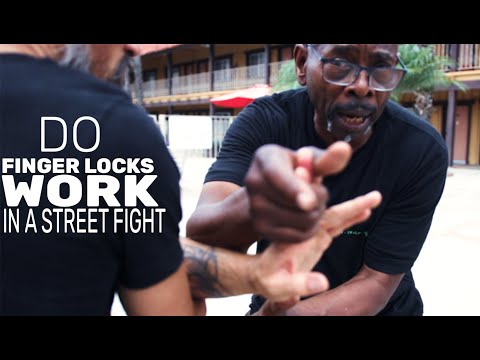
Ming shows how Core JKD trains a flow designed to ingrain finger joint locks and projections without seeing the wrist or…
Перевод: Finger Joint Techniques
Grip and finger locks are submission techniques that target the small joints of the hand — the fingers and thumb — by hyperextending, hyperflexing, or twisting individual digits or groups of digits beyond their anatomical range. [7] These techniques exploit the relatively low structural strength of the finger joints compared to larger joints, making them effective but also prone to causing sudden, difficult-to-control injuries. Finger locks can be applied from virtually any grappling position and are particularly relevant in self-defense and traditional martial arts. [3] In competition, finger and small-joint manipulation is prohibited in nearly all major rule sets: the IBJJF [1], ADCC, judo (IJF), and MMA under Unified Rules all ban small-joint manipulation. The prohibition stems from the speed at which finger joints can be broken — there is minimal warning between the onset of pain and structural failure, making a controlled tap out unreliable. Despite competition restrictions, finger locks remain an important part of traditional jujutsu (yubi-waza), aikido (yubi-dori), and law enforcement control techniques. [3],[4]
Finger-locking techniques (yubi-waza) are well-documented in classical Japanese jujutsu, where they served both as standalone submissions and as methods for controlling an armed opponent's weapon hand. [2],[3] Daito-ryū Aiki-jūjutsu, the parent art of Aikido, features extensive finger and wrist manipulation techniques (te-hodoki and yubi-dori) developed for neutralizing samurai armed with swords. [4] In Aikido, Morihei Ueshiba preserved and refined these small-joint techniques as part of the art's control-oriented philosophy. [4] Chinese martial arts — particularly Chin Na (擒拿, seizing and locking) — include sophisticated finger and joint manipulation systems documented in texts dating to the Ming Dynasty. In Western martial traditions, finger locks appear in medieval European combat manuals, including Fiore dei Liberi's 'Fior di Battaglia' (1409), which illustrates finger-breaking techniques used in armored and unarmored combat. [9]
Finger locks are generally banned in IBJJF competition but legal in some submission grappling formats and MMA. [1]
Изображений для этой техники пока нет.
Войдите, чтобы предложить изображение.
Ming shows how Core JKD trains a flow designed to ingrain finger joint locks and projections without seeing the wrist or…
When we were all in school, we knew the feeling of someone grabbing our fingers and pulling on them. But do finger locks…
Учебных курсов по этой технике пока нет.
Войдите, чтобы предложить курс.
Риск травмы для человека, к которому применяется техника
Finger locks cause dislocations and ligament sprains but rarely career-ending injuries
Уровень мастерства, необходимый для надёжного выполнения техники
Разрешена ли техника по основным соревновательным правилам
Kodokan Judo — Jigoro Kano (1986)
Small-joint techniques excluded from judo competition rules
Medieval finger-breaking techniques in Abrazare
Historical jujutsu finger lock (yubi-waza) context
Official Kodokan ground technique classification system
Standard Japanese martial arts terminology (kanji/hiragana)
Established Japanese martial arts naming convention — native Japanese term (和語/漢語)
Small-joint techniques excluded from judo competition rules
Medieval finger-breaking techniques in Abrazare
Historical jujutsu finger lock (yubi-waza) context
grip strength, joint isolation ability, positional control
strong forearms and stable base
forearm flexors, core stabilisers, hip muscles for base
Каждое движение в любом боевом искусстве обладает рядом универсальных свойств. Комбинируйте параметры ниже, чтобы найти нужный инструмент или сравнить аналоги из разных стилей.
Small joint manipulation (finger locks, toe locks) is banned in virtually all competition — IBJJF, IJF, ADCC, and Unified MMA rules all prohibit individual finger attacks. Used only in self-defense and military combatives. (IBJJF Rules; Unified Rules of MMA; IJF Rules; military manuals)
Core JKD emphasizes developing feel rather than visual awareness through drills where you use the same side hand as your partner and manipulate using the back of your hand to develop tactile sensitivity.
According to Budo Brothers, you should never grab or snatch for the fingers in the air—that's the wrong approach. Instead, use fundamental Jeet Kune Do trapping exercises to control your opponent's hand and create the opportunity for the lock.
Core JKD notes that you can throw in strikes, kicks, knees, or headbutts from the finger lock position depending on your fighting style and what the situation calls for.
Grip and finger locks are submission techniques that target the small joints of the hand — the fingers and thumb — by hyperextending, hyperflexing, or twisting individual digits or groups of digits beyond their anatomical range. These techniques exploit the relatively low structural strength of the finger joints compared to larger joints, making them effective but also prone to causing sudden, difficult-to-control injuries.
Finger-locking techniques (yubi-waza) are well-documented in classical Japanese jujutsu, where they served both as standalone submissions and as methods for controlling an armed opponent's weapon hand. Daito-ryū Aiki-jūjutsu, the parent art of Aikido, features extensive finger and wrist manipulation techniques (te-hodoki and yubi-dori) developed for neutralizing samurai armed with swords.
IBJJF: запрещён — Small joint manipulation prohibited at all belt levels; IJF: запрещён — Prohibited; ADCC: запрещён — Small joint manipulation prohibited; Unified MMA: запрещён — Small joint manipulation is a prohibited foul; FIAS Sport Sambo: запрещён — Prohibited; FIAS Combat Sambo: запрещён — Prohibited
Оценка опасности 5/10. Finger locks cause dislocations and ligament sprains but rarely career-ending injuries
Стандартная цепочка подготовки: Establish Position → Create the Threat → Secure the Hold → Finish.
Стандартные контрприёмы: Early Recognition — identify the submission attempt early and begin defence immediately / Posture and Base — maintain strong posture and base to prevent submission setups / Grip Fight — deny the attacker their preferred gripping configuration.
Распространённые варианты: Standard variation (primary grip configuration and finishing angle); Gi variation (using the gi material for grip assistance and control); No-gi variation (adapted grips for submission grappling without the gi); Transition variation (applied during a positional change or scramble).
Finger locks are generally banned in IBJJF competition but legal in some submission grappling formats and MMA.
Основные ошибки, на которые стоит обратить внимание: Applying finger locks in competition where they're illegal — know the rules; finger locks are banned in most grapplin… / Using excessive force — finger joints break easily; minimal force is needed to create a submission / Attacking all fingers at once — finger locks work by isolating one or two fingers; attacking the whole hand allows re… / Not knowing the legal boundaries — even in systems where finger locks are allowed, there are usually limitations on w….
Grip Finger Lock также известен как Yubi Kansetsu Waza, Small Joint Manipulation, Finger Lock, Yubi-kansetsu.