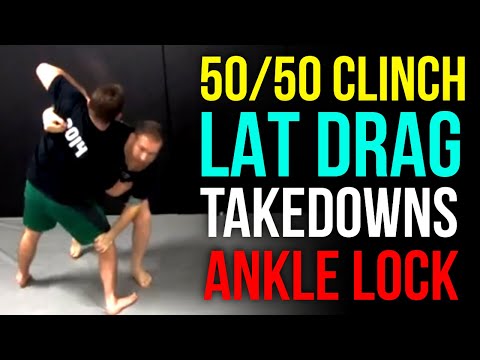
2 Takedowns from 50/50 clinch To Standing Ankle Lock
0
Clinch Lock·TRITAC Martial Arts
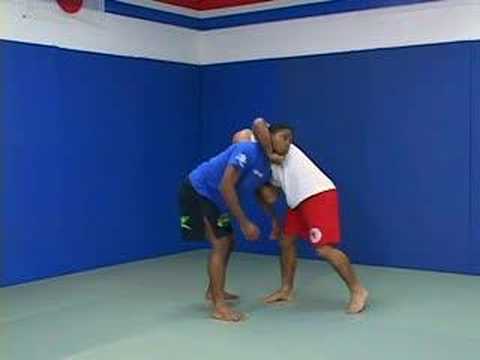
The 50/50 Clinch is such a common position if any form of combat. The lat drag is a great tool to off-balance your oppo…
Перевод: Clinch Joint Techniques
Clinch locks are standing submission techniques applied from a clinch position — an upright grappling engagement where both fighters maintain grip contact. [6] Unlike ground-based submissions, clinch locks must be executed while both practitioners are on their feet, which demands precise timing, grip strength, and the ability to control the opponent's posture and balance simultaneously. [6] Common clinch lock submissions include standing guillotines, standing arm triangles, standing kimuras, standing wrist locks, and various neck cranks applied from tie-up positions. Clinch locks are particularly relevant in MMA, where the cage or ropes provide a wall-based clinch environment that enables standing submission attempts, and in self-defense contexts where taking the fight to the ground may be undesirable. In wrestling, certain clinch-based holds that apply joint pressure (such as the double wristlock) blur the line between clinch control and submission. [1]
Standing submission techniques have roots in classical jujutsu, where combat encounters frequently began from a standing clinch. Takenouchi-ryū (1532) and other koryu jujutsu schools included tachi-waza (standing techniques) that combined throws with standing joint locks and chokes. [5] Catch wrestling also featured extensive standing submission work, as professional catch matches often involved prolonged clinch exchanges where standing locks were applied. [1] In modern competition, standing submissions are uncommon in pure grappling but remain relevant in MMA, where fighters like Ronda Rousey (standing armbar) and Khabib Nurmagomedov (standing guillotine defense) have demonstrated their tactical value. [6]
Clinch locks apply joint pressure from standing clinch positions, typically targeting the shoulder, elbow, or wrist. [1]
Standing joint locks from the clinch derive from jūjutsu and catch wrestling traditions. [1]
Standing joint locks from the clinch occasionally appear in MMA competition. [1]
Изображений для этой техники пока нет.
Войдите, чтобы предложить изображение.
The 50/50 Clinch is such a common position if any form of combat. The lat drag is a great tool to off-balance your oppo…
BJJ techniques, Watch out for more...
Учебных курсов по этой технике пока нет.
Войдите, чтобы предложить курс.
Риск травмы для человека, к которому применяется техника
Standing joint locks from the clinch carry moderate risk of sudden joint damage during transitions
Уровень мастерства, необходимый для надёжного выполнения техники
Разрешена ли техника по основным соревновательным правилам
Mastering Jujitsu — Renzo Gracie, John Danaher (2003)
Standing submission principles from jujutsu tradition
Tachi-waza standing techniques in Kodokan framework
Official Kodokan ground technique classification system
Standard Japanese martial arts terminology (kanji/hiragana)
Established Japanese martial arts naming convention — native Japanese term (和語/漢語)
Standing submission principles from jujutsu tradition
Tachi-waza standing techniques in Kodokan framework
grip strength, rotational power, shoulder/core stability
strong forearms and thick wrists
forearm flexors, rotator cuff, core rotators, deltoids
Каждое движение в любом боевом искусстве обладает рядом универсальных свойств. Комбинируйте параметры ниже, чтобы найти нужный инструмент или сравнить аналоги из разных стилей.
Clinch locks — standing joint manipulations applied from the clinch — are fundamental to Aikido, Hapkido, and self-defense systems. Kote gaeshi appears in 66 passages across 17 books, shiho nage in 91 across 9. In MMA, standing submissions from the clinch are rare but spectacular. (17+ books; Roedel, Aikido: The Basics; Hapkido texts)
Bernard Rizon emphasizes that a tight elbow prevents your opponent from creating space to escape. If you leave your elbow out, it gives him room to bring his head out, so you must close your elbow to maintain control.
According to TRITAC Martial Arts, you should focus on pummeling and feeling for checkpoints rather than just hugging your opponent—this active hand-fighting is what makes it real fighting, not just static positioning.
Clinch locks are standing submission techniques applied from a clinch position — an upright grappling engagement where both fighters maintain grip contact. Unlike ground-based submissions, clinch locks must be executed while both practitioners are on their feet, which demands precise timing, grip strength, and the ability to control the opponent's posture and balance simultaneously.
Standing submission techniques have roots in classical jujutsu, where combat encounters frequently began from a standing clinch. Takenouchi-ryū (1532) and other koryu jujutsu schools included tachi-waza (standing techniques) that combined throws with standing joint locks and chokes.
IBJJF: разрешён — Legal — standing submissions follow same rules as ground submissions; IJF: разрешён — Legal — standing joint locks and chokes permitted within standard judo rules; ADCC: разрешён — Legal; Unified MMA: разрешён — Legal — standing submissions permitted; FIAS Sport Sambo: разрешён — Legal — standing joint locks permitted; FIAS Combat Sambo: разрешён — Legal
Оценка опасности 5/10. Standing joint locks from the clinch carry moderate risk of sudden joint damage during transitions
Стандартная цепочка подготовки: Control Position → Isolate the Arm → Lock the Figure-Four → Apply Rotation.
Стандартные контрприёмы: Straighten the Arm — extend the arm to break the figure-four grip angle / Roll Toward — roll in the direction of the lock to relieve rotational pressure / Grip the Belt/Shorts — anchor the hand to prevent the arm from being isolated.
Распространённые варианты: Standard kimura (figure-four grip rotating the shoulder from guard, side c…); Kimura trap (using the kimura grip as a controlling position to chain …); Standing kimura (applied during a clinch or takedown exchange); Reverse kimura (attacking from the opposite rotation angle (Americana dir…).
Standing joint locks from the clinch occasionally appear in MMA competition.
Основные ошибки, на которые стоит обратить внимание: Sacrificing balance for the submission — if the standing submission fails and you've compromised your base, you end u… / Holding a standing submission attempt too long — if the lock isn't finishing within a few seconds, take the fight to … / Not controlling the opponent's posture — standing submissions require head and posture control; without it, the oppon… / Attempting complex submissions from the clinch — standing locks should be simple and fast; elaborate techniques fail ….
Clinch Lock также известен как Kumitsuki Kansetsu Waza, Standing Submission, Clinch Submission, Tachi-kansetsu.