Punch Choke by Heath Pedigo
0
Choke·BJJ Fanatics
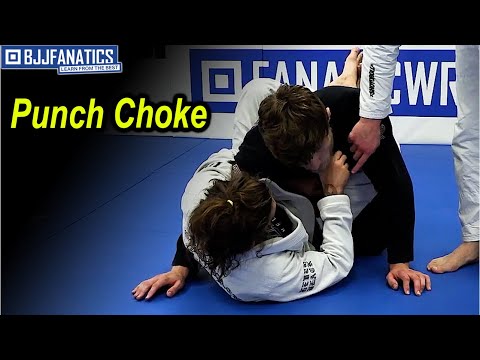
PUNCH CHOKE https://bjjfanatics.com Heath Pedigo shows how to do the Punch Choke Jiu Jitsu move in this video. Heath …
Перевод: Choke
The Choke group encompasses submission techniques that restrict the opponent's breathing by compressing the trachea (windpipe) or obstructing the airway. [1] Unlike blood chokes (strangles) which target the carotid arteries and cause unconsciousness in 6–10 seconds, true chokes prevent air from reaching the lungs and require sustained pressure over 30–60 seconds to force a tap. [1],[2] While generally considered less efficient than strangles, air chokes are devastating when applied with proper mechanics — the crushing pressure on the trachea creates intense pain and panic that can force submission even from experienced fighters. [2],[3] This group covers tracheal compression chokes, 10th Planet system chokes, and various hybrid chokes that combine airway restriction with blood flow disruption. [3]
Choking techniques appear in the earliest recorded martial arts, including ancient Greek pankration (5th century BCE) where throat attacks were permitted. [1] In Japan, choking (shime waza) was systematised within jujutsu schools and later formalised in Kodokan judo by Jigoro Kano, though judo tradition blurs the line between air chokes and blood strangles. [1],[2] The distinction between tracheal chokes and vascular strangles became clinically important in the 20th century as medical research clarified the different mechanisms and risks. [2],[3] In modern BJJ and MMA, both types are trained extensively, with fighters learning to apply whichever mechanism their position and grips allow. [3]
Tracheal chokes are highly effective submissions that force opponents to tap from pain and air hunger, though they typically require longer application time than blood strangles. [1],[2] In MMA competition, chokes (both air and blood) account for approximately 30% of all submission finishes, making them the most common submission category overall. [2] The psychological impact of a choke — the primal panic of not being able to breathe — makes even partial choke application tactically valuable for creating openings. [3]
Choking techniques trace from ancient pankration through Japanese jujutsu schools to Kodokan judo's shime waza curriculum. [1] Brazilian Jiu-Jitsu inherited and expanded the choke repertoire through the Gracie lineage, while catch wrestling contributed its own throat-compression traditions. [1],[2] The 10th Planet system added a modern no-gi choking framework built around unique guard positions. [2]
Chokes (including both air and blood varieties) are the most common submission finish category in professional MMA, accounting for roughly 30% of all submission victories in the UFC (ufcstats.com). [1] In IBJJF competition, gi-based chokes (particularly cross-collar and loop chokes) are among the highest-percentage submissions at brown and black belt levels. [1],[2]
Изображений для этой техники пока нет.
Войдите, чтобы предложить изображение.
PUNCH CHOKE https://bjjfanatics.com Heath Pedigo shows how to do the Punch Choke Jiu Jitsu move in this video. Heath …
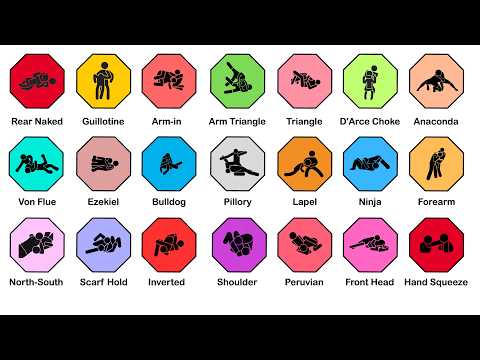
From UFC submissions like the rear-naked choke to the guillotine, we're breaking down EVERY chokehold in just 11 minutes…
Учебных курсов по этой технике пока нет.
Войдите, чтобы предложить курс.
Риск травмы для человека, к которому применяется техника
Tracheal compression can cause laryngeal fracture, tracheal damage, and airway swelling; more immediately painful than blood chokes but slower to cause unconsciousness; risk of lasting throat injury if applied explosively or held after submission
Уровень мастерства, необходимый для надёжного выполнения техники
Разрешена ли техника по основным соревновательным правилам
Jiu-Jitsu University (Saulo Ribeiro, 2008)
Description sources — [1] Jiu-Jitsu University (Ribeiro, 2008) ch. on submissions [2] Medical Aspects of Boxing (Unterharnscheidt, 2003) on tracheal vs vascular mechanisms [3] Mastering Jujitsu (Gracie & Danaher, 2003)
History sources — [1] A Killing Art (Gillis, 2008) on pankration origins [2] Kodokan Judo (Kano, 1986) on shime waza formalisation [3] The Encyclopedia of Brazilian Jiu-Jitsu (Renzo Gracie, 2003)
Effectiveness sources — [1] Jiu-Jitsu University (Ribeiro, 2008) [2] UFC fight finish statistics (ufcstats.com) [3] Mastering Jujitsu (Gracie & Danaher, 2003)
Official Kodokan ground technique classification system
Description sources — [1] Jiu-Jitsu University (Ribeiro, 2008) ch. on submissions [2] Medical Aspects of Boxing (Unterharnscheidt, 2003) on tracheal vs vascular mechanisms [3] Mastering Jujitsu (Gracie & Danaher, 2003)
History sources — [1] A Killing Art (Gillis, 2008) on pankration origins [2] Kodokan Judo (Kano, 1986) on shime waza formalisation [3] The Encyclopedia of Brazilian Jiu-Jitsu (Renzo Gracie, 2003)
Effectiveness sources — [1] Jiu-Jitsu University (Ribeiro, 2008) [2] UFC fight finish statistics (ufcstats.com) [3] Mastering Jujitsu (Gracie & Danaher, 2003)
grip strength (especially for gi chokes), forearm endurance, precise wrist/forearm placement against the trachea
long arms (easier to wrap around the neck), strong grip, heavy chest pressure for top-position chokes
forearm flexors and extensors (grip), biceps and shoulder (squeeze), core (body alignment and pressure generation)
Каждое движение в любом боевом искусстве обладает рядом универсальных свойств. Комбинируйте параметры ниже, чтобы найти нужный инструмент или сравнить аналоги из разных стилей.
The 10th Planet Choke family covers choking submissions developed within Eddie Bravo's 10th Planet Jiu-Jitsu system — specifically designed for no-gi grappling and applied from the system's proprietary guard positions (Rubber Guard, Mission Control, Truck) and unique entanglement pathways. [1] These chokes address the fundamental problem of no-gi choking: without gi collars for grip, traditional BJJ chokes are unavailable, so 10th Planet developed novel choking pathways using the legs, body positioning, and creative arm configurations. [1,2] The most famous 10th Planet chokes include the gogoplata (shin-across-throat choke from Rubber Guard), the Twister (a spinal crank from the Truck that functions as a choke on the neck), and various guillotine-style chokes entered from the system's unique guard positions. [2,3] While requiring flexibility and familiarity with 10th Planet nomenclature, these chokes have proven effective in EBI, ADCC, and MMA competition. [3]
The Fundamental Choke family covers the core choking techniques that form the foundation of submission grappling's choke curriculum — the essential air chokes, collar chokes, and hybrid chokes that every grappler learns first and that remain effective at the highest levels of competition. [1] This family includes the cross-collar choke (the most fundamental gi choke, applied from mount, guard, and side control), the ezekiel choke (sleeve-assisted forearm choke), guillotine variations (front headlock chokes), and the baseball bat choke. [1,2] These 'fundamental' chokes are distinguished from specialised system chokes (like 10th Planet chokes) by their universal applicability across all grappling styles and their presence in virtually every BJJ curriculum worldwide. [2,3] Many of these chokes have decided World Championship matches and UFC title fights, demonstrating that mastery of fundamentals trumps exotic technique at every level. [3]
The choke group covers fundamental choking techniques common across multiple grappling systems. Triangle choke appears in 156 passages, guillotine in 592 across 61 books. Blood chokes cause unconsciousness in 5-10 seconds by occluding the carotid arteries bilaterally. (200+ books; Kano, Kodokan Judo; Ribeiro, Jiu-Jitsu University)
The guillotine is one of the fastest ways to end a fight in submission grappling and is especially effective when your opponent shoots for a takedown with their head exposed. According to Simply Solved, it's a powerful submission that gets the job done fast—Khabib famously used it to finish Conor McGregor at UFC 229.
Instead of trying to pull your head out, pass to side control and apply heavy shoulder pressure onto your opponent's neck while trapping their arm and driving your weight down to cut off blood flow. This counter has become the go-to defense against the guillotine choke.
According to Heath Pedigo, the punch choke might be easier to hit on higher-level guys because they don't expect it as much as the cross collar choke, which they anticipate. The key is using a loose initial grip so you can pull the collar down and punch it across with better leverage.
Heath Pedigo emphasizes keeping your fist close to the neck, positioned almost underneath the chin rather than straight in the neck, so you can cut off the artery effectively without needing your whole fist pressed against it.
The Choke group encompasses submission techniques that restrict the opponent's breathing by compressing the trachea (windpipe) or obstructing the airway. Unlike blood chokes (strangles) which target the carotid arteries and cause unconsciousness in 6–10 seconds, true chokes prevent air from reaching the lungs and require sustained pressure over 30–60 seconds to force a tap.
Choking techniques appear in the earliest recorded martial arts, including ancient Greek pankration (5th century BCE) where throat attacks were permitted. In Japan, choking (shime waza) was systematised within jujutsu schools and later formalised in Kodokan judo by Jigoro Kano, though judo tradition blurs the line between air chokes and blood strangles.
IBJJF: разрешён — Legal at all belt levels, gi and no-gi — chokes are the safest submission cat…; IJF: разрешён — Legal (shime-waza) — strangulation techniques are one of three permitted subm…; ADCC: разрешён — Legal; Unified MMA: разрешён — Legal — choke submissions are among the most common finishes in MMA; FIAS Sport Sambo: запрещён — All chokes prohibited in Sport Sambo; FIAS Combat Sambo: разрешён — Legal
Оценка опасности 7/10. High — tracheal compression can cause laryngeal fracture, tracheal damage, and airway swelling; more immediately painful than blood chokes but slower to cause unconsciousness; risk of lasting throat injury if applied explosively or held after submission
Стандартная цепочка подготовки: Establish Dominant Position → Control Posture → Secure Grips → Isolate Defence → Apply Compression → Maintain and Finish.
Стандартные контрприёмы: Chin Tuck — tucking the chin to prevent forearm access to the throat; effective but temporary / Two-on-One Grip Fight — using both hands to strip the choking grip before it is fully set / Posture Up — in guard-based chokes, posturing the head and shoulders up and away removes compression distance / Frame and Turn — framing against the choking arm and turning toward it to relieve pressure.
Распространённые варианты: Tracheal compression choke (direct forearm or hand pressure against the windpipe (e.g…); 10th Planet system choke (chokes developed within Eddie Bravo's no-gi system, appli…); Gi-based lapel choke (using the opponent's or own gi collar/lapel to create tra…); Forearm guillotine (guillotine choke variations that emphasise tracheal compr…); Hybrid choke-strangle (techniques that combine airway and blood flow restriction…).
Chokes (including both air and blood varieties) are the most common submission finish category in professional MMA, accounting for roughly 30% of all submission victories in the UFC (ufcstats. com).
Основные ошибки, на которые стоит обратить внимание: Targeting the chin or jaw instead of the trachea — the choke must compress the windpipe, not push the head; adjust an… / Using arm strength alone instead of body mechanics — effective chokes use shoulder pressure, hip squeeze, and body al… / Holding a choke too long after the tap in training — tracheal chokes can cause lasting injury; release immediately / Applying explosive force — gradual, increasing pressure is safer and often more effective than a sudden crush.
Choke также известен как Chōku, Air Choke, Tracheal Choke, Windpipe Choke, Respiratory Choke.