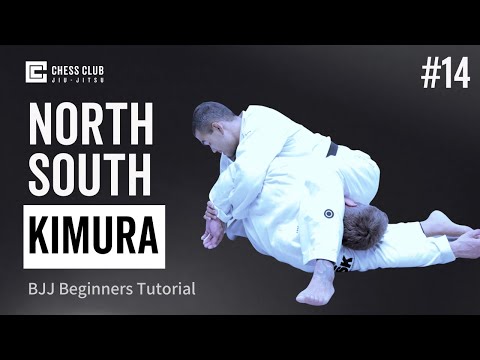
BJJ Beginners Tutorial - North South Kimura
0
Kimura Grip North-South·Chess Club Jiu-Jitsu·Added by Admin
Welcome back to our BJJ tutorial series! Today, we're diving deep into the North-South Kimura, an incredibly effective t…
Перевод: Kimura grip north-south
The Kimura Grip North-South establishes north-south control while maintaining a kimura grip (double wrist lock) on one of the opponent's arms, creating immediate submission pressure from the position. [1] The kimura grip allows the top fighter to attack the shoulder joint while the north-south weight keeps the opponent pinned and unable to roll or escape. [1],[2] The combination of chest pressure and kimura control makes this one of the most difficult positions to escape. [2],[3]
Kimura grip north-south secures a kimura grip from north-south, providing a platform for the kimura submission or transition to other attacks. [1]
Kimura grip north-south combines two fundamental BJJ techniques. [1]
The kimura from north-south is a common submission path in BJJ competition. [1]
Изображений для этой техники пока нет.
Войдите, чтобы предложить изображение.
Welcome back to our BJJ tutorial series! Today, we're diving deep into the North-South Kimura, an incredibly effective t…
Учебных курсов по этой технике пока нет.
Войдите, чтобы предложить курс.
Риск травмы для человека, к которому применяется техника
Top positions enable pressure and striking; rib compression risk under heavy pressure
Уровень мастерства, необходимый для надёжного выполнения техники
Разрешена ли техника по основным соревновательным правилам
Mastering Jujitsu (Renzo Gracie & John Danaher, 2003)
Alias sources — [1] IBJJF Rules (2024) [2] Jiu-Jitsu University (Ribeiro, 2008) [3] Mastering Jujitsu (Gracie & Danaher, 2003)
Effectiveness sources — [1] Jiu-Jitsu University (Ribeiro, 2008)
Mixed Japanese-Western terminology — combines traditional Japanese terms with katakana loanwords
Alias sources — [1] IBJJF Rules (2024) [2] Jiu-Jitsu University (Ribeiro, 2008) [3] Mastering Jujitsu (Gracie & Danaher, 2003)
Effectiveness sources — [1] Jiu-Jitsu University (Ribeiro, 2008)
body awareness, stability, control of weight distribution
athletic build with good proprioception
core, hips, legs for base stability
Use a palm-up grip to lock your opponent's wrist against your chest, which prevents them from moving their hand freely. Chess Club Jiu-Jitsu emphasizes positioning one knee in and one knee out while maintaining this grip.
After securing the grip, go behind the triceps and lower elbow to bring your opponent to the side, then feed your hand through to control your own wrist with the goal of bringing their hand behind their back. Chess Club Jiu-Jitsu notes you can also break toward the other side if going straight back doesn't work.
Sit over the head with one leg positioned over their head and clamp their body with your legs by covering the back of your knee in front of your other knee, maintaining diagonal control. Chess Club Jiu-Jitsu demonstrates this leg positioning to prevent them from rolling back to their back.
The Kimura Grip North-South establishes north-south control while maintaining a kimura grip (double wrist lock) on one of the opponent's arms, creating immediate submission pressure from the position. The kimura grip allows the top fighter to attack the shoulder joint while the north-south weight keeps the opponent pinned and unable to roll or escape.
The kimura grip north-south developed in BJJ as a natural combination of north-south pinning and kimura submission attack, used by grapplers who sought to maintain submission pressure while controlling from north-south. It is a common transition in the kimura system of BJJ.
IBJJF: разрешён — Legal, mount scores 4 points — highest-scoring position; IJF: разрешён — Legal, osaekomi (pin) — 10-19 seconds scores waza-ari, 20 seconds scores ippon; ADCC: разрешён — Legal, mount scores 2 points; Unified MMA: разрешён — Legal dominant position; UWW: разрешён — Legal, back exposure scores points, pin ends match by fall; FIAS Sport Sambo: разрешён — Legal, pin scores points
Оценка опасности 3/10. Moderate — top positions enable pressure and striking; rib compression risk under heavy pressure
Стандартная цепочка подготовки: Achieve Position → Stabilize → Maintain → Attack.
Стандартные контрприёмы: Bridge (Upa) — explosive hip elevation to off-balance the top player / Elbow-Knee Escape (Shrimp) — create space by driving elbow to knee and hip-escaping / Frame — establish forearm frames to prevent the top player from settling weight.
Распространённые варианты: Standard variation (primary positioning for control and attack); Offensive variation (configured for submission or striking opportunities); Transitional variation (positioned for quick movement to the next position); Defensive variation (prioritising stability and control over attack).
The kimura from north-south is a common submission path in BJJ competition.
Основные ошибки, на которые стоит обратить внимание: Gripping the kimura without chest pressure — maintain north-south pressure while setting up the grip / Attempting to finish the kimura before the grip is secure — the figure-four must be fully locked / Not using the kimura grip for transitions — the grip is a control tool, not just a submission / Forcing the kimura finish when the opponent defends — transition to armbar or use the grip to advance position.
Kimura Grip North-South также известен как Kimura Gurippu Nanboku, Kimura Trap North-South, Double Wrist North-South, Kimura NS.