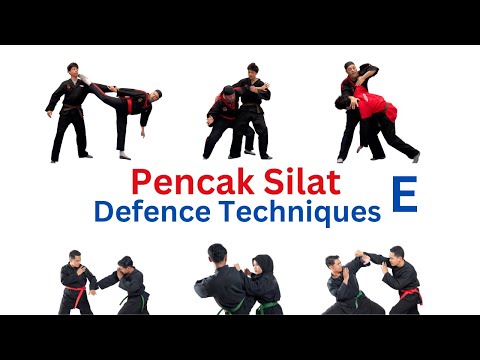
Silat Defence Techniques E
0
Silat Stance·Pencak Silat Canada
This is a summary of Basic Silat Defence techniques from a resting position (not a fighting position) although they can …
Перевод: Pencak Silat fighting positions
Silat Stances (kuda-kuda and sikap pasang) are the foundational fighting positions of Pencak Silat, the martial art of the Malay Archipelago. [1] Unlike the upright guards of boxing or karate, Silat stances are characterized by low centers of gravity, wide or asymmetric bases, and constant transitional movement between levels — from standing to deep crouch to ground. [1] The stances serve as the launching platform for Silat's distinctive combination of strikes, sweeps, locks, and throws, and they are designed for the uneven terrain and close-quarters combat environments of Southeast Asia. [2] Each Silat aliran (style) maintains its own set of named stances, but common principles include: weight distribution for rapid direction change, a bladed body angle to minimize the target area, and hands positioned to both guard and redirect incoming attacks. [2] The family includes animal-inspired stances such as Harimau (tiger), which fights from ground level, as well as more conventional standing guards. [1],[2]
Silat stances derive from the indigenous fighting systems of the Malay Archipelago — primarily Indonesia, Malaysia, Brunei, and the southern Philippines. [1] Each regional style (aliran) developed stances adapted to local terrain and combat needs: Minangkabau styles developed the low Harimau (tiger) stance for mountainous terrain, while coastal Malay styles maintained higher stances for fighting on boats and in water. [2] The stances were formalized through the jurus (forms) and buah (combat applications) training systems that have been passed down through oral and physical lineage for centuries. [1],[2]
Silat stances provide excellent stability and multi-directional attack capability due to the low center of gravity. [1] The constant level-changing makes the Silat fighter unpredictable and difficult to strike. However, the deep stances demand significant leg conditioning and are less practical for fighters without specific Silat training. [2]
Pencak Silat lineage: indigenous fighting systems of the Malay Archipelago — transmitted through regional aliran (styles) and guru (masters) across Indonesia, Malaysia, Brunei, and the southern Philippines. Minangkabau lineage for Harimau style from West Sumatra. [1]
Used in IPSF Pencak Silat tanding (match) competition. Pencak Silat was featured as a medal sport at the 2018 Asian Games in Jakarta. Regional Silat tournaments are held across Southeast Asia. [1]
Изображений для этой техники пока нет.
Войдите, чтобы предложить изображение.
This is a summary of Basic Silat Defence techniques from a resting position (not a fighting position) although they can …
Учебных курсов по этой технике пока нет.
Войдите, чтобы предложить курс.
Риск травмы для человека, к которому применяется техника
These are guard positions, not attacks. Risk of knee strain from deep stances during training.
Уровень мастерства, необходимый для надёжного выполнения техники
Разрешена ли техника по основным соревновательным правилам
Draeger, D.F. (1972). Weapons and Fighting Arts of Indonesia. Tuttle Publishing.
[1] Draeger, Weapons and Fighting Arts of Indonesia (1972), chapters on Pencak Silat stance systems and regional styles
[2] de Bordes, Pukulan Pencak Silat (2002), sections on kuda-kuda and sikap pasang
[1] Draeger, Weapons and Fighting Arts of Indonesia (1972), chapters on Pencak Silat stance systems and regional styles
[2] de Bordes, Pukulan Pencak Silat (2002), sections on kuda-kuda and sikap pasang
strong legs for deep knee flexion, flexible hips, good ankle stability
lower body strength, flexibility
quadriceps, gluteus maximus, hip adductors, calves, core stabilizers
Каждое движение в любом боевом искусстве обладает рядом универсальных свойств. Комбинируйте параметры ниже, чтобы найти нужный инструмент или сравнить аналоги из разных стилей.
According to Pencak Silat Canada instructors, positioning yourself towards your opponent's back gives you a significant advantage because they can only see with one eye and lose situational awareness, making them easier to control.
Pencak Silat Canada recommends that beginners stick to basic techniques and avoid advanced variations until they have more experience, emphasizing that mastery requires consistent practice and speed development.
Pencak Silat Canada teaches that against a straight punch you can move inside or outside, but against a hook you are already caught inside and must use different defensive mechanics to escape danger and move to your opponent's back.
Silat Stances (kuda-kuda and sikap pasang) are the foundational fighting positions of Pencak Silat, the martial art of the Malay Archipelago. Unlike the upright guards of boxing or karate, Silat stances are characterized by low centers of gravity, wide or asymmetric bases, and constant transitional movement between levels — from standing to deep crouch to ground.
Silat stances derive from the indigenous fighting systems of the Malay Archipelago — primarily Indonesia, Malaysia, Brunei, and the southern Philippines. Each regional style (aliran) developed stances adapted to local terrain and combat needs: Minangkabau styles developed the low Harimau (tiger) stance for mountainous terrain, while coastal Malay styles maintained higher stances for fighting on boats and in water.
IPSF Pencak Silat: Legal: разрешён — stances are the foundation of all competition technique; Unified MMA: Legal: разрешён — all stances permitted
Оценка опасности 2/10. Low — these are guard positions, not attacks. Risk of knee strain from deep stances during training.
Стандартная цепочка подготовки: Langkah entry (footwork) → settle into kuda-kuda → launch sweep or strike from low base → Standing exchange → drop to Harimau stance → sweep standing opponent's legs → Defensive retreat → drop level into sikap pasang → counter-attack from low angle.
Стандартные контрприёмы: Low kicks — attack the deeply bent lead knee / Pressure forward — close distance to prevent level changes / Takedown from above — use the low position against the fighter by sprawling on top.
Распространённые варианты: Kuda-kuda depan (front horse stance with weight on the lead leg); Kuda-kuda belakang (rear-weighted stance for defensive positioning); Kuda-kuda samping (side horse stance with lateral weight distribution); Sikap pasang (ready position (specific to each style)); Harimau (tiger ground stance (see child entry)).
Used in IPSF Pencak Silat tanding (match) competition. Pencak Silat was featured as a medal sport at the 2018 Asian Games in Jakarta.
Основные ошибки, на которые стоит обратить внимание: Holding stances statically — Silat stances are meant to be transitional / Keeping the center of gravity too high — loses the evasive advantage / Neglecting the hands — both hands must guard and prepare for redirection / Not training transitions — moving between stances is more important than any single stance.
Silat Stance также известен как Shiratto Sutansu, Kuda-Kuda, Sikap Pasang, Langkah Stance, Silat Guard.