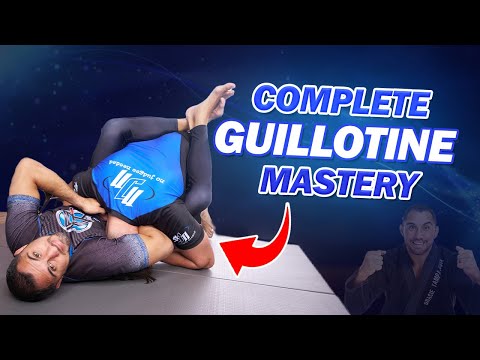
How to do the Guillotine in Jiu Jitsu | Everything You Need to Know!
0
High Closed Guard·Matt Arroyo Jiu Jitsu
Join My Online Academy to Improve Your Jiu Jitsu FAST!!! https://www.skool.com/mattarroyojiujitsu/about Buy my complet…
Перевод: high closed guard
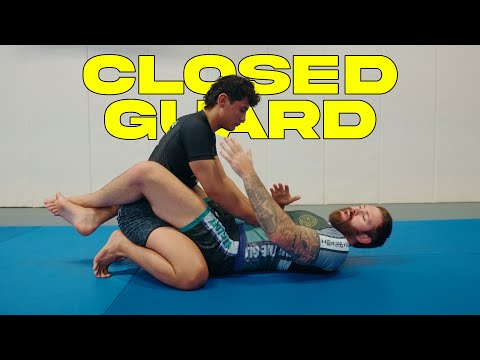
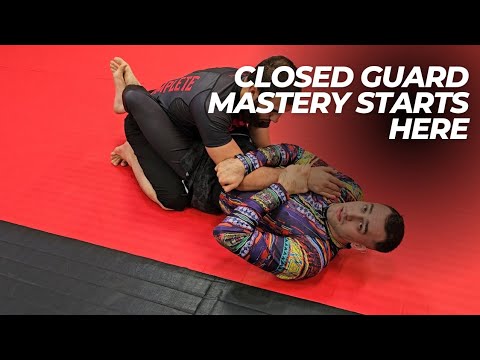
The High Closed Guard positions the guard player's legs high on the opponent's back, with the ankles crossed near the shoulder blades rather than around the waist. [1] The high guard breaks the opponent's posture more effectively than the low guard because the elevated legs pull the opponent's upper body down, making it difficult for them to posture up. [1],[2] The high closed guard is particularly effective for setting up armbar, triangle, and omoplata attacks because the legs are already in position near the opponent's shoulders. [2],[3]
The high closed guard is a refined closed guard configuration used by advanced guard players who seek to maximise submission opportunities from the closed guard. [1] It is particularly associated with armbar and triangle attacks that require the guard player's legs to be high on the opponent's body. [2],[3]
High guard positioning was developed in BJJ as an attacking closed guard variant. [1]
High closed guard is frequently used to set up armbars and triangles in BJJ competition. [1]
Изображений для этой техники пока нет.
Войдите, чтобы предложить изображение.
Join My Online Academy to Improve Your Jiu Jitsu FAST!!! https://www.skool.com/mattarroyojiujitsu/about Buy my complet…
Hi everyone, my name is Gordon Ryan. This is a look into my life. If you enjoy it, watch it. If you hate it, watch it. I…
🔺 Welcome to IsakIvanovicjj - Your Gateway to BJJ Mastery! 🔺 📚 Today's Lesson: "Elevated Basics: The Ultimate No-Gi …
The high closed guard represents a refined position within closed guard where the practitioner's legs lock high on the opponent's torso, typically above the shoulders. IsakIvanovicjj provides the most comprehensive instructional framework, emphasizing that closed guard functions as an inverted mount position, offering significant safety while limiting the opponent's high-percentage attacks. The fundamental mechanics involve using leg strength and core engagement rather than relying primarily on hand control, with the knees driving inward to maintain compression. A critical tactical element is competing for middle hand position—the practitioner must secure hand control in the center of the opponent's body to access submissions and prevent the opponent from establishing arm pits control or standing up effectively. From the high closed guard position, IsakIvanovicjj details a systematic approach to offensive options: the armbar (securing an underhook and controlling the head before sliding the leg over), triangles (including reverse triangle variations), and the Kimora/shoulder crunch combination. Positional transitions include the high cross sweep for reaching mount position and shoulder crunch-based back takes involving grapevine leg control and lat grabs. Defense against standing involves shin framing with strong knee pulls, hip-driven knee buckles, or transitioning to knee reap guard with potential for heel hook attacks. Matt Arroyo Jiu Jitsu's content on guillotine positioning provides relevant submission context accessible from certain closed guard transitions. Gordon Ryan's video transcript does not contain substantive technical content beyond promotional material.
Сформировано на основе 3 инструкторов
Учебных курсов по этой технике пока нет.
Войдите, чтобы предложить курс.
Риск травмы для человека, к которому применяется техника
Guard positions are defensive; injury risk comes from transitions, not the position itself
Уровень мастерства, необходимый для надёжного выполнения техники
Разрешена ли техника по основным соревновательным правилам
Jiu-Jitsu University (Saulo Ribeiro, 2008)
Alias sources — [1] IBJJF Rules (2024) [2] Jiu-Jitsu University (Ribeiro, 2008) [3] The Guard (Moreira & Beneville, 2003)
Effectiveness sources — [1] Jiu-Jitsu University (Ribeiro, 2008) [2] Mastering Jujitsu (Gracie & Danaher, 2003)
Standard katakana transliteration of Western martial arts terminology (外来語) — used in Japanese MMA, boxing, and BJJ communities
Alias sources — [1] IBJJF Rules (2024) [2] Jiu-Jitsu University (Ribeiro, 2008) [3] The Guard (Moreira & Beneville, 2003)
Effectiveness sources — [1] Jiu-Jitsu University (Ribeiro, 2008) [2] Mastering Jujitsu (Gracie & Danaher, 2003)
hip flexibility, active legs, grip management
long legs for distance control and guard retention
hip flexors, adductors, quadriceps, core, grip
Your legs and core are what make closed guard really strong, not your hands pulling in. According to Isak Ivanovicjj, you want to be using your knees to pull someone in since your legs are much stronger than your hands.
Closed guard is often a battle for inside position—when your hands are in the middle, you can grab the head, get overhooks, and attack with shoulder crunches, whereas if your opponent's hands are in the middle, they can try to get in your armpits and stand up. Isak Ivanovicjj emphasizes winning this hand position battle early.
You must pull the opponent's elbow into your belly button rather than leaving it outside your hip, as this limits your ability to climb your legs high for armbars and triangles. Isak Ivanovicjj stresses keeping the elbow inside so you have more offensive options.
Isak Ivanovicjj describes a rare and highly effective technique taught to him by Dana that involves keeping your guard closed as the opponent attempts to stand, though he notes this is something he had never seen before learning it.
The High Closed Guard positions the guard player's legs high on the opponent's back, with the ankles crossed near the shoulder blades rather than around the waist. The high guard breaks the opponent's posture more effectively than the low guard because the elevated legs pull the opponent's upper body down, making it difficult for them to posture up.
The high closed guard is a refined closed guard configuration used by advanced guard players who seek to maximise submission opportunities from the closed guard. It is particularly associated with armbar and triangle attacks that require the guard player's legs to be high on the opponent's body.
IBJJF: разрешён — Legal — guard is fundamental to BJJ, sweeps from guard score 2 points; IJF: ограничен — Guard pulling penalized as non-combativity — groundwork from guard permitted …; ADCC: разрешён — Legal, guard pull penalized -1 point in points portion; Unified MMA: разрешён — Legal — no penalty for playing guard; FIAS Sport Sambo: разрешён — Legal
Оценка опасности 2/10. Low — guard positions are defensive; injury risk comes from transitions, not the position itself
Стандартная цепочка подготовки: Achieve Guard Contact → Control Grips → Manage Distance → Threaten Submissions/Sweeps.
Стандартные контрприёмы: Guard Pass — systematically work to clear the legs and establish a dominant position / Leg Pin — control one or both legs to neutralize guard retention / Pressure Passing — use heavy chest pressure to flatten and immobilize the guard player.
Распространённые варианты: High closed guard (legs high on the back for tighter control and more submis…); Low closed guard (ankles locked at the waist, controlling posture with grips); Body-lock closed guard (wrapping with both overhooks for tight breaking mechanics).
High closed guard is frequently used to set up armbars and triangles in BJJ competition.
Основные ошибки, на которые стоит обратить внимание: Attempting to climb to high guard without first breaking posture — the opponent must be broken down before climbing / Climbing with arm strength instead of hip movement — alternating hip escapes create the climbing motion / Locking high but not maintaining the position — the opponent will try to push the legs back down; resist actively / Not attacking immediately from high guard — the high position is temporary; attack before the opponent adjusts.
High Closed Guard также известен как Hai Kurōzudo Gādo, High Guard, Climbing Guard, High Full Guard.