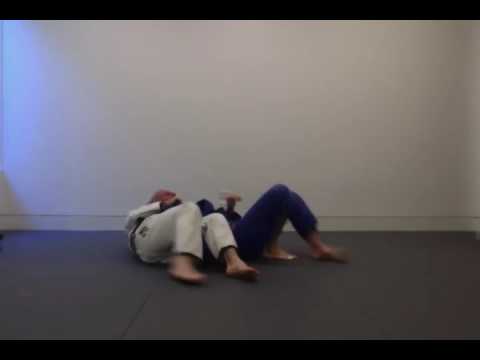
Crucifix Back Control

Подсемейство

Перевод: crucifix back control

Дистанция и классификация

Категория
Удар и защитаЗамкиБлижний бойБой против нескольких
Дистанция
БлижняяСредняяДальняя
Целевая зона
Верхняя частьСредняя частьНижняя часть

Обзор

The Crucifix Back Control subfamily covers the extreme back control position where the controlling fighter traps both of the opponent's arms — one arm with the legs and the other with the arms — leaving the opponent completely immobilised. [1] The crucifix is one of the most dominant control positions in all of grappling because the defender has no arms available for defence, making them completely vulnerable to strikes (in MMA) and chokes. [1],[2] The position requires significant skill to establish but provides near-total control once secured. [2],[3]

Также известна как
Crucifix[1]Crucifix Position[2]Jūmonji Gatame (十文字固)JP[3]

История и происхождение

The crucifix position has roots in wrestling and was developed as a finishing position in BJJ and MMA. [1] Its devastating effectiveness in MMA, where it allows completely undefended ground-and-pound, has made it one of the most feared positions in the sport. [2],[3]

Страна происхождения· показано в случайном порядке

  • БразилияБразильское джиу-джитсу, ММА, Сабмишн-грэпплинг
  • ЯпонияБразильское джиу-джитсу, Сабмишн-грэпплинг
  • СШАММА, Сабмишн-грэпплинг, Кэтч-реслинг
  • АнглияКэтч-реслинг

Эффективность

The crucifix traps one of the opponent's arms between the attacker's legs while controlling the other arm, leaving the neck completely exposed. [1],[2]

Родословная

The crucifix position has roots in catch wrestling and was adopted into BJJ competition. [1],[2]

Соревновательные результаты

The crucifix is used in both BJJ and MMA competition; Chan Sung Jung famously submitted Dustin Poirier via twister from a crucifix setup at UFC 2012. [1]

Изображения

Изображений для этой техники пока нет.

Войдите, чтобы предложить изображение.

Биомеханический механизм

Primary ActionControlling the opponent from behind — seatbelt grip and hooks restrict movement while exposing the neck
Joints InvolvedAttacker's hooks (inside the opponent's thighs), seatbelt arm (over-under chest control), hips (body triangle or hooks)
Force VectorRearward control — opponent cannot see or effectively counter attacks from behind
Positional MechanicBack control is the highest-value position — direct access to rear chokes with minimal defensive options for the opponent

Позиция и вход

From arm drag or duck underCreate an angle behind the opponent, secure seatbelt grip, insert hooks to establish back control
From turtle (opponent turtles)When the opponent turtles to avoid guard pass, take the back by inserting hooks and securing the seatbelt
From sweep (taking the back during the sweep)During a sweep, circle behind and establish back control instead of ending on top

Видео

Crucifix Control

0
Crucifix Back Control·John Will

A basic Intro to the Crucifix position

1 video

Изучить технику

Учебных курсов по этой технике пока нет.

Войдите, чтобы предложить курс.

Оценки

Уровень опасности

Риск травмы для человека, к которому применяется техника

4
Умеренный4/10

Back control is dominant position; enables rear chokes (Danaher 2021)

Сложность

Уровень мастерства, необходимый для надёжного выполнения техники

Средний
Допустимость на соревнованиях

Разрешена ли техника по основным соревновательным правилам

IBJJF — Legal, back control with hooks or body triangle s...
IBJJF Rules Book v6.0, June 2024PDF
IJF — Legal — back control leads to pin or submission opp...
IJF Sport and Organisation Rules 2025, Article 27PDF
Unified MMA — Legal — dominant position for ground-and-po...
Unified Rules of MMA, August 2025PDF
UWW — Legal — back exposure is the primary scoring mechan...
UWW International Wrestling Rules, January 2026PDF
FIAS Sport Sambo — Legal
FIAS International Sambo Competition RulesPDF

Заметки по тренировке

The crucifix from back control traps both of the opponent's arms — one arm trapped between the legs, the other controlled by the seatbelt arm — creating a completely defenceless position (Danaher, Back Attacks, 2018)
The crucifix is the most dominant variant of back control because the opponent has no hands to defend chokes
Entry: from back control, trap one arm between your legs (triangle the arm with your legs), then control the other arm with your hands
The crucifix exposes the opponent's neck completely — they cannot hand-fight against the choke
From the crucifix, attacks include: neck cranks, rear naked choke (with no hand defence), and wrist locks
In MMA, the crucifix allows devastating ground strikes — the opponent's face is completely unprotected
The crucifix can be entered from turtle as well as from standard back control
The crucifix is a fight-ending position in MMA — several UFC fights have been finished from this control

Типичные ошибки

!Not trapping both arms — the crucifix requires control of both; one free arm allows defence
!Losing the arm trap between the legs — the leg triangle on the arm must be tight
!Attempting chokes before both arms are fully controlled — secure the crucifix first, then attack
!Not maintaining back connection — the crucifix still requires chest-to-back contact
!Over-extending to reach the second arm and losing the first — secure one arm, then methodically trap the second
!Not training crucifix entries — the transition from back control or turtle to crucifix requires specific drilling
!Using the crucifix only defensively (holding) without attacking — the position offers immediate finishing opportunities

Связанные техники

Контрприёмы

Цепочка подготовки

1Achieve Positiontransition into this position through passing, sweeping, or scrambling
2Stabilizeestablish controlling grips and weight distribution
3Maintainadjust to the opponent's escape attempts to hold position
4Attacklaunch offensive techniques from the stabilized position

Источники и ссылки

Основной источник

Advanced Brazilian Jiu-Jitsu Techniques (Marcelo Garcia, 2011)

1КнигаJiu-Jitsu University (Ribeiro, 2008)

Alias sources — [1] IBJJF Rules (2024) [2] Kodokan Judo (Kano, 1986) [3] Jiu-Jitsu University (Ribeiro, 2008)

2КнигаBrazilian Jiu-Jitsu: Theory and Technique (Gracie & Gracie, 2001)

Effectiveness sources — [1] Mastering Jujitsu (Gracie & Danaher, 2003) [2] Jiu-Jitsu University (Ribeiro, 2008)

3ДругоеJapanese Combat Sports Katakana Convention

Standard katakana transliteration of Western martial arts terminology (外来語) — used in Japanese MMA, boxing, and BJJ communities

4ЦитатаJiu-Jitsu University (Ribeiro, 2008)

Alias sources — [1] IBJJF Rules (2024) [2] Kodokan Judo (Kano, 1986) [3] Jiu-Jitsu University (Ribeiro, 2008)

5ЦитатаBrazilian Jiu-Jitsu: Theory and Technique (Gracie & Gracie, 2001)

Effectiveness sources — [1] Mastering Jujitsu (Gracie & Danaher, 2003) [2] Jiu-Jitsu University (Ribeiro, 2008)

Сообщество

Атлетизм

Requires

hook control, seatbelt grip endurance, hip connection

Favours

long legs for deep hooks, strong grip for seatbelt

Key muscles

hip adductors, biceps, forearms, core

Подтехники

Ищите по тому, что делает техника, — а не по её названию

Каждое движение в любом боевом искусстве обладает рядом универсальных свойств. Комбинируйте параметры ниже, чтобы найти нужный инструмент или сравнить аналоги из разных стилей.

Категория
Дистанция

Часто задаваемые вопросы

Why does the downstream position make it harder for my opponent to escape crucifix back control?

John Will explains that when the crucifix is positioned downstream, it makes the opponent's escape significantly more difficult compared to other angles.

What weight distribution mistake should I avoid in crucifix back control?

John Will warns against putting too much weight in the center of your opponent's body, as this allows them to collapse and arm roll you over in that direction.

Как работает Crucifix Back Control?

The Crucifix Back Control subfamily covers the extreme back control position where the controlling fighter traps both of the opponent's arms — one arm with the legs and the other with the arms — leaving the opponent completely immobilised. The crucifix is one of the most dominant control positions in all of grappling because the defender has no arms available for defence, making them completely vulnerable to strikes (in MMA) and chokes.

Откуда происходит Crucifix Back Control?

The crucifix position has roots in wrestling and was developed as a finishing position in BJJ and MMA. Its devastating effectiveness in MMA, where it allows completely undefended ground-and-pound, has made it one of the most feared positions in the sport.

Разрешён ли Crucifix Back Control на соревнованиях?

IBJJF: разрешён — Legal, back control with hooks or body triangle scores 4 points; IJF: разрешён — Legal — back control leads to pin or submission opportunities; ADCC: разрешён — Legal, back mount scores 3 points (4 from sweep); Unified MMA: разрешён — Legal — dominant position for ground-and-pound and rear naked choke; UWW: разрешён — Legal — back exposure is the primary scoring mechanism in wrestling; FIAS Sport Sambo: разрешён — Legal

Насколько опасен Crucifix Back Control?

Оценка опасности 4/10. Moderate — back control is dominant position; enables rear chokes (Danaher 2021)

Как подготовить Crucifix Back Control?

Стандартная цепочка подготовки: Achieve Position → Stabilize → Maintain → Attack.

Как защититься от Crucifix Back Control?

Стандартные контрприёмы: Hand Fight — grip-fight the choking hand to prevent the rear naked choke / Shoulder Walk — walk shoulders to the mat to escape back control / Turn into Guard — rotate to face the attacker and recover guard position.

Какие есть варианты Crucifix Back Control?

Распространённые варианты: Back control with hooks (both feet hooked inside the opponent's thighs); Body triangle back control (legs locked in a figure-four around the torso); Rear mount (mounted on the back with both hooks, opponent face-down); Chair sit back control (sitting behind the opponent with hooks, upright position).

Насколько эффективен Crucifix Back Control на соревнованиях?

The crucifix is used in both BJJ and MMA competition; Chan Sung Jung famously submitted Dustin Poirier via twister from a crucifix setup at UFC 2012.

Какие типичные ошибки при выполнении Crucifix Back Control?

Основные ошибки, на которые стоит обратить внимание: Not trapping both arms — the crucifix requires control of both; one free arm allows defence / Losing the arm trap between the legs — the leg triangle on the arm must be tight / Attempting chokes before both arms are fully controlled — secure the crucifix first, then attack / Not maintaining back connection — the crucifix still requires chest-to-back contact.

Какие ещё названия есть у Crucifix Back Control?

Crucifix Back Control также известен как Kurushifikkusu Bakku Kontorōru, Crucifix, Crucifix Position, Jūmonji Gatame (十文字固).