How To ESCAPE Bad Positions In BJJ
0
Pin Escape·Ebsayz
Join Ebsayz Jiu Jitsu for 1 on 1 coaching to accelerate your progress and guaranteed results! https://www.skool.com/ebsa…
Перевод: Pin escape
Pin Escape covers techniques for escaping from wrestling pins and holds where the opponent controls you against the mat with your shoulders exposed — a critical survival skill in folk, freestyle, and Greco-Roman wrestling. [1] In wrestling, being pinned (both shoulders on the mat for a specified duration) results in an immediate loss by fall, making pin escape the highest-priority skill after being turned to the back. [1],[2] Pin escapes use bridging (explosive hip thrust upward), posting (arms pushing against the mat for base), and turning (rotating to the belly to clear the shoulders from the mat). [2],[3] In judo, the equivalent concept is escaping osaekomi waza (hold-down techniques) before the referee counts the required duration for scoring. [3]
Pin escapes are among the oldest and most fundamental wrestling skills, practiced in every wrestling tradition worldwide. [1] In American folkstyle wrestling, the bottom (referee's) position is a standard starting position, and escape/reversal skills from this position are extensively systematised. [1],[2] Judo's osaekomi escape techniques were formalised within the Kodokan curriculum as critical ne waza skills. [2],[3]
Pin escapes are survival skills — they prevent immediate loss by fall in wrestling and prevent scoring in judo. [1] In folkstyle wrestling, the ability to escape from bottom position scores 1 point and returns the wrestler to a neutral standing position. [2] Elite wrestlers who rarely get pinned demonstrate mastery of pin escape fundamentals. [3]
Изображений для этой техники пока нет.
Войдите, чтобы предложить изображение.
Join Ebsayz Jiu Jitsu for 1 on 1 coaching to accelerate your progress and guaranteed results! https://www.skool.com/ebsa…
Want to support this channel? Check out my BJJ Fanatics instructionals, where we go deep into the systems, principles a…
Учебных курсов по этой технике пока нет.
Войдите, чтобы предложить курс.
Риск травмы для человека, к которому применяется техника
Pin escapes are relatively safe techniques; the primary risk is neck strain from bridging and the risk of being re-pinned if the escape is incomplete
Уровень мастерства, необходимый для надёжного выполнения техники
Разрешена ли техника по основным соревновательным правилам
Coaching Wrestling Successfully (Dan Gable, 1999)
Description sources — [1] Wrestling Physical Conditioning Encyclopedia (Jesse, 1974) [2] Coaching Wrestling Successfully (Gable, 1999) [3] Kodokan Judo (Kano, 1986) on osaekomi
History sources — [1] Wrestling tradition [2] NCAA folkstyle development [3] Kodokan judo curriculum
Official Kodokan ground technique classification system
Description sources — [1] Wrestling Physical Conditioning Encyclopedia (Jesse, 1974) [2] Coaching Wrestling Successfully (Gable, 1999) [3] Kodokan Judo (Kano, 1986) on osaekomi
History sources — [1] Wrestling tradition [2] NCAA folkstyle development [3] Kodokan judo curriculum
bridge strength (explosive hip extension), neck strength (supporting bridge), flexibility (turning from supine to prone)
strong neck, powerful glutes, explosive hips
glutes (bridging), neck extensors (supporting bridge), core (rotation), shoulders (posting)
Каждое движение в любом боевом искусстве обладает рядом универсальных свойств. Комбинируйте параметры ниже, чтобы найти нужный инструмент или сравнить аналоги из разных стилей.
Pin escapes in judo (osae-komi toketa) must beat the 20-second clock — a held pin scores ippon in competition. In wrestling, pin escapes prevent the fall. The urgency of pin escapes distinguishes them from BJJ positional escapes where there is no hold-down timer. (Kano, Kodokan Judo; IJF rules; wrestling manuals)
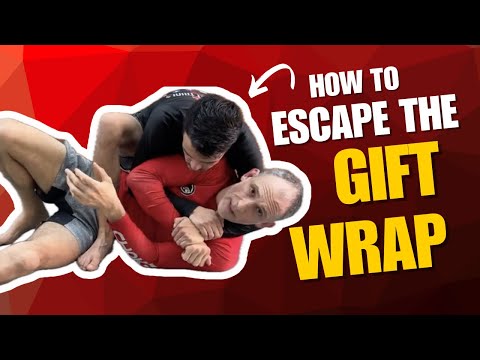
According to Ebsayz, step one is to establish inside position, which allows you to defend for longer and last longer in bad positions. This foundational positioning gives you the ability to execute escapes even when you're tired or under heavy pressure.
Brian Glick recommends taking your hand to your opponent's tricep and peeling it forward just enough to hide your elbow inside—you don't need to fully peel it. Once your elbow is hidden inside, turn your shoulder to get into inside position, which breaks their connection.
Ebsayz emphasizes that immediately after escaping, you should be making a connection where you can get straight into an attack—don't let your opponent re-pin you or reset their position. This offensive mindset prevents them from getting back control.
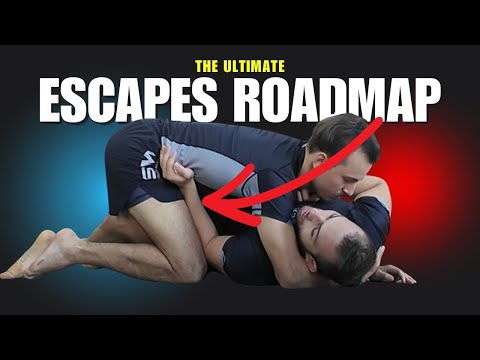
Ebsayz stresses that having a roadmap for pin escapes is crucial; without a plan, you'll get submitted. The roadmap involves technical aspects combined with a mental strategy that lets you escape even when fatigued.
Pin Escape covers techniques for escaping from wrestling pins and holds where the opponent controls you against the mat with your shoulders exposed — a critical survival skill in folk, freestyle, and Greco-Roman wrestling. In wrestling, being pinned (both shoulders on the mat for a specified duration) results in an immediate loss by fall, making pin escape the highest-priority skill after being turned to the back.
Pin escapes are among the oldest and most fundamental wrestling skills, practiced in every wrestling tradition worldwide. In American folkstyle wrestling, the bottom (referee's) position is a standard starting position, and escape/reversal skills from this position are extensively systematised.
Unified MMA: разрешён — Legal defensive/transitional technique; IBJJF: разрешён — Legal; IJF: разрешён — Legal; ADCC: разрешён — Legal; UWW: разрешён — Legal, escape scores 1 point (freestyle), reversal scores 1 point; FIAS Sport Sambo: разрешён — Legal; NCAA Folkstyle: разрешён — Legal, escape scores 1 point, reversal scores 2 points
Оценка опасности 2/10. Low — pin escapes are relatively safe techniques; the primary risk is neck strain from bridging and the risk of being re-pinned if the escape is incomplete
Стандартная цепочка подготовки: Recognise Pin → Bridge → Identify Weak Side → Turn → Clear → Stand or Recover.
Стандартные контрприёмы: When on top, counter pin escapes by: driving hips into the escapee to flatten them / Switching pin positions when one is escaped / Anticipating the bridge direction and adjusting weight / Re-pinning after partial escapes.
Распространённые варианты: Bridge and turn (the most fundamental pin escape; bridge explosively, then…); Sit-out (from bottom (referee's position in folkstyle), sit throug…); Switch (from bottom, reaching back to hook the opponent's leg and…); Granby roll (rolling over the shoulder to escape from turtle or pin po…); Peterson roll (reaching across to trap the opponent's arm and rolling fo…); Stand-up (explosive rise to standing from the bottom position).
In folkstyle wrestling, escape from bottom scores 1 point — it is one of the three scoring positions in NCAA wrestling. In judo, escaping osaekomi prevents the opponent from scoring waza-ari (10 seconds) or ippon (20 seconds).
Основные ошибки, на которые стоит обратить внимание: Flat bridging straight up — bridges must be directional (at an angle) to create escape space; straight-up bridges are… / Panicking and using arm strength only — frantic arm pushing wastes energy; escapes require hip power (bridging) combi… / Waiting too long to escape — the longer you stay pinned, the more the opponent consolidates; attempt escapes immediately / Turning away from the pin instead of into it — many pin escapes require turning into the pinning direction, which is ….
Pin Escape также известен как Pin Esukēpu, Pin Escape, Pinning Escape, Escape From Pin.