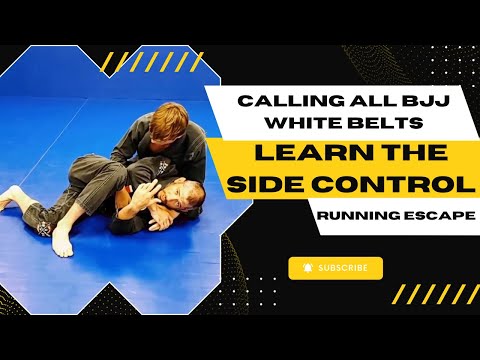
Running Escape

Род

Перевод: running escape

Дистанция и классификация

Категория
Удар и защитаЗамкиБлижний бойБой против нескольких
Дистанция
БлижняяСредняяДальняя

Обзор

The Running Escape uses a continuous, rapid shrimping motion that mimics a running movement to create maximum distance from the opponent and recover guard. [1] The defender performs rapid alternating hip escapes — shrimping to one side, then immediately to the other — creating a running-like motion that progressively creates space and makes it extremely difficult for the opponent to maintain mount. [1],[2] The running escape is particularly effective against opponents who follow the defender's hip movement with their mount positioning. [2],[3]

Также известна как
Running Man Escape[1]Marcelo Garcia Escape[2]Continuous Shrimp[3]
Используется в

История и происхождение

The running escape was popularised in BJJ as a dynamic mount escape technique, attributed to Marcelo Garcia and other elite competitors who used continuous hip movement as a primary escape strategy. [1] It represents a more aggressive and dynamic approach to the traditional shrimp escape. [2],[3]

Страна происхождения· показано в случайном порядке

  • БразилияБразильское джиу-джитсу, ММА
  • ЯпонияБразильское джиу-джитсу
  • СШАММА

Эффективность

The running escape uses a rolling/turning motion to escape mount by turning away from the opponent. [1]

Родословная

Developed in BJJ competition as an alternative mount escape. [1]

Соревновательные результаты

Used in BJJ competition. [1]

Изображения

Изображений для этой техники пока нет.

Войдите, чтобы предложить изображение.

Биомеханический механизм

Primary ActionBreaking the opponent's leg control to advance to a more dominant position
Joints InvolvedHips (posture and pressure), knees (opening the guard with knee-in or standing), hands (grip fighting)
Force VectorForward pressure (stack/smash) or backward posture (stand-up break) to open the closed guard
Passing MechanicOnce the guard is opened, speed passing, pressure passing, or toreando passing advances the position

Позиция и вход

From bottom mountUse bridging, framing, and hip escape (shrimping) to create space and recover guard or reverse the position
From the opponent's attackWhen the opponent reaches for a submission from mount, use the opening to escape

Варианты

Bridge and roll (upa)explosive bridge trapping arm and leg to reverse position
Elbow-knee escapeframing and shrimping to recover guard
Foot drag escapedragging the opponent's foot with the heel to create space for knee insertion
Combination escapebridging to force a reaction, then shrimping when the opponent posts

Видео

Running Escape from Side Control – BJJ White Belt Tip | Thibodaux Jiu Jitsu

0
Running Escape·Jiu Jitsu | Next Generation Martial Arts Thibodaux·Added by Admin

Stuck in side control with no way to turn in? The running escape gives you a smart, technical option when you're pinned

1 video

Изучить технику

Учебных курсов по этой технике пока нет.

Войдите, чтобы предложить курс.

Оценки

Уровень опасности

Риск травмы для человека, к которому применяется техника

3
Умеренный3/10

Bottom escapes from mount/side control; bridge and hip escape mechanics (Ribeiro 2008)

Сложность

Уровень мастерства, необходимый для надёжного выполнения техники

Начинающий
Допустимость на соревнованиях

Разрешена ли техника по основным соревновательным правилам

Заметки по тренировке

The running escape from mount (also called the 'elbow-knee escape' or 'shrimp to guard') uses hip escaping to create space and insert the knee to recover guard (Saulo Ribeiro, Jiu-Jitsu University, 2008)
Execution: frame on the opponent's hip, shrimp away to create space between your hip and theirs, and insert the knee
The 'running' name comes from the foot movement — the bottom foot pushes off the mat in a running motion to drive the shrimp
The running escape is the most commonly successful mount escape at all levels of competition
The escape can recover full guard (knee goes all the way through) or half guard (knee blocks the opponent's leg)
Chain the running escape with the trap-and-roll: attempt the trap-and-roll first, then when the opponent bases wide to prevent the roll, shrimp out
The running escape works on both sides — practice alternating sides to keep the opponent guessing
Frames on the hip and knee/shin shield make the escape sustainable against heavy opponents

Типичные ошибки

!Shrimping without framing on the opponent's hip — the frame prevents them from following your shrimp
!Shrimping only once — multiple shrimps are usually needed; each one gains a few more inches
!Shrimping toward the opponent instead of away — always shrimp in the direction that creates space
!Not inserting the knee aggressively — a tentative knee insertion gets pushed aside
!Framing with extended arms — keep the elbows in; extended arms invite armbar attacks
!Escaping to a flat back without guard — the escape must end in a guard position
!Not using the bottom foot to drive the shrimp — the foot push is what powers the hip escape

Связанные техники

Контрприёмы

Цепочка подготовки

1Create Spaceuse frames, hip movement, or leverage to generate room to move
2Disrupt Controlbreak or weaken the opponent's grips and weight placement
3Execute Escapeapply the specific escape mechanic with timing and commitment
4Recover Positionestablish a safe position (guard, standing, or top)

Источники и ссылки

Основной источник

Jiu-Jitsu University (Saulo Ribeiro, 2008)

1КнигаJiu-Jitsu University (Ribeiro, 2008)

Alias sources — [1] Advanced Brazilian Jiu-Jitsu Techniques (Marcelo Garcia, 2007) [2] X-Guard (Marcelo Garcia, 2008) [3] Jiu-Jitsu University (Saulo Ribeiro, 2008)

2КнигаBrazilian Jiu-Jitsu: Theory and Technique (Gracie & Gracie, 2001)

Effectiveness sources — [1] Jiu-Jitsu University (Ribeiro, 2008)

3ДругоеJapanese Combat Sports Katakana Convention

Standard katakana transliteration of Western martial arts terminology (外来語) — used in Japanese MMA, boxing, and BJJ communities

4ЦитатаJiu-Jitsu University (Ribeiro, 2008)

Alias sources — [1] Advanced Brazilian Jiu-Jitsu Techniques (Marcelo Garcia, 2007) [2] X-Guard (Marcelo Garcia, 2008) [3] Jiu-Jitsu University (Saulo Ribeiro, 2008)

5ЦитатаBrazilian Jiu-Jitsu: Theory and Technique (Gracie & Gracie, 2001)

Effectiveness sources — [1] Jiu-Jitsu University (Ribeiro, 2008)

Сообщество

Атлетизм

Requires

explosive hip bridge power, shrimping ability, timing

Favours

strong glutes and hip extensors for powerful bridges

Key muscles

glutes, hip extensors, core, quadriceps

Часто задаваемые вопросы

What's the first thing I should do when someone has me in side control and is threatening a choke?

Control your opponent's arm immediately. Thibodaux Jiu Jitsu emphasizes that controlling this arm is super important—if you don't, you risk getting choked out, which should feel embarrassing to let happen.

How should I position my hands to defend against chokes and grips in side control?

Cross your bottom arm over your top arm with open hands, keeping them ready to fight for grips and defend your collar. Your hands should be open with knuckles facing toward your cheek, positioned to stop your opponent from getting a grip on your collar.

What do I do with my foot position to prevent my opponent from taking my back during the escape?

Keep your foot on the front side with your knee tight to close the gap and prevent your opponent from stepping over and taking your back. Make the gap as small as possible before you execute the running escape.

Should I rush the running escape or take time to get comfortable in the position first?

Get comfortable in side control first and learn to defend without panicking—learn how to not get submitted and not get your back taken so you can escape whenever you want, rather than running away out of fear.

Как работает Running Escape?

The Running Escape uses a continuous, rapid shrimping motion that mimics a running movement to create maximum distance from the opponent and recover guard. The defender performs rapid alternating hip escapes — shrimping to one side, then immediately to the other — creating a running-like motion that progressively creates space and makes it extremely difficult for the opponent to maintain mount.

Откуда происходит Running Escape?

The running escape was popularised in BJJ as a dynamic mount escape technique, attributed to Marcelo Garcia and other elite competitors who used continuous hip movement as a primary escape strategy. It represents a more aggressive and dynamic approach to the traditional shrimp escape.

Разрешён ли Running Escape на соревнованиях?

Unified MMA: разрешён — Legal defensive/transitional technique; IBJJF: разрешён — Legal; IJF: разрешён — Legal; ADCC: разрешён — Legal; UWW: разрешён — Legal; FIAS Sport Sambo: разрешён — Legal

Насколько опасен Running Escape?

Оценка опасности 3/10. Moderate — bottom escapes from mount/side control; bridge and hip escape mechanics (Ribeiro 2008)

Как подготовить Running Escape?

Стандартная цепочка подготовки: Create Space → Disrupt Control → Execute Escape → Recover Position.

Как защититься от Running Escape?

Стандартные контрприёмы: Maintain Pressure — keep consistent weight distribution to limit escape space / Anticipate Direction — read escape attempt direction and block early / Transition — flow to a new position when the current one is threatened.

Какие есть варианты Running Escape?

Распространённые варианты: Bridge and roll (upa) (explosive bridge trapping arm and leg to reverse position); Elbow-knee escape (framing and shrimping to recover guard); Foot drag escape (dragging the opponent's foot with the heel to create spac…); Combination escape (bridging to force a reaction, then shrimping when the opp…).

Насколько эффективен Running Escape на соревнованиях?

Used in BJJ competition.

Какие типичные ошибки при выполнении Running Escape?

Основные ошибки, на которые стоит обратить внимание: Shrimping without framing on the opponent's hip — the frame prevents them from following your shrimp / Shrimping only once — multiple shrimps are usually needed; each one gains a few more inches / Shrimping toward the opponent instead of away — always shrimp in the direction that creates space / Not inserting the knee aggressively — a tentative knee insertion gets pushed aside.

Какие ещё названия есть у Running Escape?

Running Escape также известен как Ranningu Esukēpu, Running Man Escape, Marcelo Garcia Escape, Continuous Shrimp.