12b Mount Escape, Push Leg & Trap Foot
0
Leg Pump Escape·Pathfinder Jiu-Jitsu Team·Added by Admin
Перевод: leg pump escape
The Leg Pump Escape addresses the body triangle by using a pumping leg motion to create space within the locked triangle. [1] The defender pushes the top leg (the one over the body triangle lock) downward repeatedly while bridging, creating incremental space that weakens the triangle's compression. [1],[2] As the triangle loosens, the defender works to slide the hips out of the triangle or transition the locked legs to a position where they can be pried apart. [2],[3]
The leg pump escape uses explosive leg extension against the opponent's hooks to create space for turning and escaping back control. [1]
Developed in BJJ as a dynamic back escape method. [1]
Used in BJJ and MMA competition. [1]
Изображений для этой техники пока нет.
Войдите, чтобы предложить изображение.
Basics used on this escape: - half bridge - hip escape (shrimp move) Escaping mount position and using butterfly hooks…
SALE SALE SALE OVER 50% OFF – BOX SET – ALL 4 COURSES 50% OFF CLICK HERE – https://bit.ly/2lAOHmp • The Blue Belt Sup…
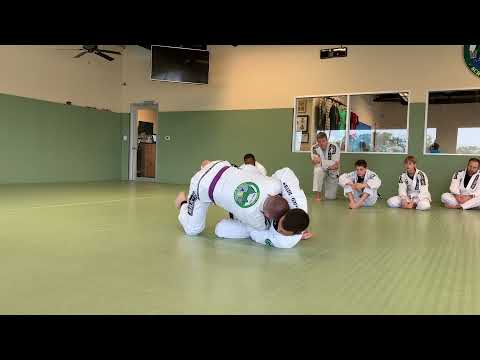
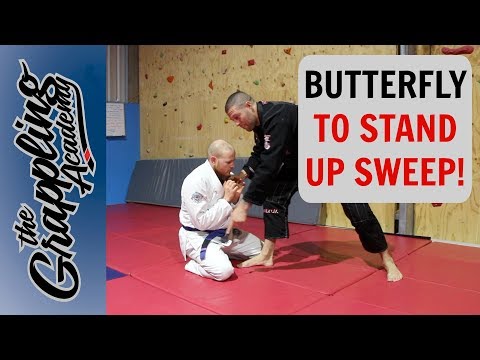
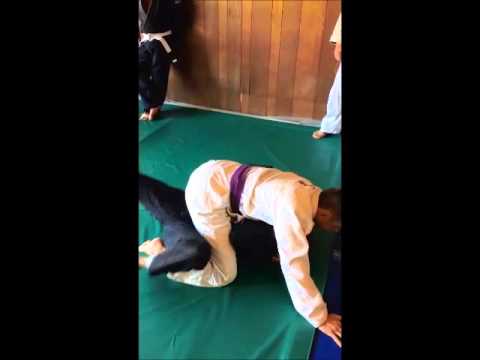
The leg pump escape from body triangle and rear mount positions involves a coordinated bridging and leg-trapping sequence that exploits positional mechanics to create separation. Instructor 1 emphasizes grabbing the attacker's pants and straightening one leg while subtly turning the hips to the side without alerting the opponent, then bridging to lift the attacker's foot approximately two inches and placing it on the defender's leg. Once hooked in a figure-four position behind the attacker's heel, the defender uses arm placement at the knee to create lift and extract their trapped leg. Instructor 1 notes this escape fails against S-mount, crossed feet, and grapevine positions. Instructor 2 (Marcos Cerqueira) describes a half-bridge combined with hip escape, emphasizing keeping arms close to the body and head down to prevent neck attacks, using the bottom leg as support while turning to free the trapped leg through controlled knee movement. Instructor 3 (The Grappling Academy) focuses on the butterfly hook sweeping mechanics that naturally precede or follow leg pump escapes, demonstrating how maintaining attachment and perpendicular drive angle prevents the opponent from leaning back defensively. All three instructors agree that timing, body position control, and proper framing are essential, though they emphasize different entry points and mechanical details within the escape sequence.
Сформировано на основе 3 инструкторов
Учебных курсов по этой технике пока нет.
Войдите, чтобы предложить курс.
Риск травмы для человека, к которому применяется техника
Back escapes must address choke threat while escaping; urgency increases injury risk
Уровень мастерства, необходимый для надёжного выполнения техники
Разрешена ли техника по основным соревновательным правилам
Jiu-Jitsu University (Saulo Ribeiro, 2008)
Alias sources — [1] Back Attacks: Enter the System (John Danaher, 2018) [2] Advanced Brazilian Jiu-Jitsu Techniques (Marcelo Garcia, 2007)
Effectiveness sources — [1] Jiu-Jitsu University (Ribeiro, 2008)
Standard katakana transliteration of Western martial arts terminology (外来語) — used in Japanese MMA, boxing, and BJJ communities
Alias sources — [1] Back Attacks: Enter the System (John Danaher, 2018) [2] Advanced Brazilian Jiu-Jitsu Techniques (Marcelo Garcia, 2007)
Effectiveness sources — [1] Jiu-Jitsu University (Ribeiro, 2008)
explosive hip bridge power, shrimping ability, timing
strong glutes and hip extensors for powerful bridges
glutes, hip extensors, core, quadriceps
No—keep your head on the mat and relax. Bridging with your head off the mat means you're fighting yourself and will just hurt your neck. Marcos Cerqueira emphasizes keeping your head down while slightly moving it to the opposite side of where you want to bridge, which creates space over your shoulder.
You can still escape without controlling the arm. Simply bridge, push them to the side, and when your hips stay elevated, turn in the direction you want to go—there will be a space between your hip and theirs to work with, according to Marcos Cerqueira.
Keep your arms close to you. Stretching your arms out is fine during warm-up drilling, but during the actual escape, maintaining arm contact with your opponent prevents them from escaping and gives you better control, as Marcos Cerqueira explains.
Turn only your hips, not your whole body, and try to stay relatively flat—you don't want to alert your opponent that you're turning. Push Leg & Trap Foot emphasizes that turning your whole body is what happens in a traditional elbow-knee escape, which allows skilled opponents to take your back.
The Leg Pump Escape addresses the body triangle by using a pumping leg motion to create space within the locked triangle. The defender pushes the top leg (the one over the body triangle lock) downward repeatedly while bridging, creating incremental space that weakens the triangle's compression.
The leg pump escape was developed as grapplers sought mechanical solutions to the body triangle's compression lock. The technique uses repetitive motion to gradually weaken the lock rather than a single explosive escape attempt.
Unified MMA: разрешён — Legal defensive/transitional technique; IBJJF: разрешён — Legal; IJF: разрешён — Legal; ADCC: разрешён — Legal; UWW: разрешён — Legal; FIAS Sport Sambo: разрешён — Legal
Оценка опасности 4/10. Moderate — back escapes must address choke threat while escaping; urgency increases injury risk
Стандартная цепочка подготовки: Create Space → Disrupt Control → Execute Escape → Recover Position.
Стандартные контрприёмы: Maintain Pressure — keep consistent weight distribution to limit escape space / Anticipate Direction — read escape attempt direction and block early / Transition — flow to a new position when the current one is threatened.
Распространённые варианты: Bridge and roll (upa) (explosive bridge trapping arm and leg to reverse position); Elbow-knee escape (framing and shrimping to recover guard); Foot drag escape (dragging the opponent's foot with the heel to create spac…); Combination escape (bridging to force a reaction, then shrimping when the opp…).
Used in BJJ and MMA competition.
Основные ошибки, на которые стоит обратить внимание: Pumping too aggressively and losing control — the pumps should be controlled and rhythmic, not explosive / Pumping in the wrong direction — pump toward the bottom hook; pumping upward tightens the opponent's control / Not combining the pump with hand fighting — the choke threat is constant; protect the neck throughout / Trying to clear the hook before pumping down sufficiently — each pump gains a small amount of progress; be patient.
Leg Pump Escape также известен как Reggu Ponpu Esukēpu, Leg Pumping Escape, Body Triangle Leg Pump.