Удар и защитаЗамкиБлижний бойБой против нескольких
Дистанция
БлижняяСредняяДальняя
Обзор
The Standard Knife Redirect uses the open hand or forearm to deflect the knife attack's trajectory while simultaneously stepping offline, guiding the blade past the body and into empty space. [1] The redirect is performed with the palm or outer forearm contacting the attacker's weapon-arm (wrist or forearm, NOT the blade), pushing it to the side while the body moves in the opposite direction. [1],[2] The standard redirect is followed immediately by controlling the weapon hand with both hands to prevent a secondary attack. [2],[3]
The standard knife redirect is a fundamental self-defence technique drawn from multiple martial arts traditions, emphasising deflection and body movement as the primary defence against edged weapons. [1] It is taught in both traditional martial arts and modern self-defence programmes as the safest initial response to a knife attack. [2],[3]
Страна происхождения· показано в случайном порядке
Primary Action — Using foot positioning to control range and angles — maintaining optimal distance relative to the opponent
Joints Involved — Ankles (pivot and directional changes), knees (level maintenance), hips (balance and weight distribution)
Force Vector — Multi-directional — lateral steps, pivots, and retreats adjust distance and angle simultaneously
Distance Principle — Managing the distance between fighters is the most fundamental defensive skill — controlling range dictates which techniques are available
Позиция и вход
From threatened position — Control the weapon hand with both hands (two-on-one), redirect the blade away from the body, disarm or escape
As reactive defence — When attacked, move off the line of the stab, secure the weapon arm, and control it
Варианты
Standard defence — primary defensive technique from the most common position
Reactive defence — triggered by the opponent's attack, minimal movement for maximum protection
Proactive defence — anticipating the attack and positioning to neutralise it early
Counter defence — using the defensive movement to create an immediate counter-attack opportunity
Use this coupon Code and get 40% OFF my Knife Fighting Course: knifevideo40
Buy here: https://www.kalicenter.training/co…
1 / 2
3 videos
Что говорят инструкторы
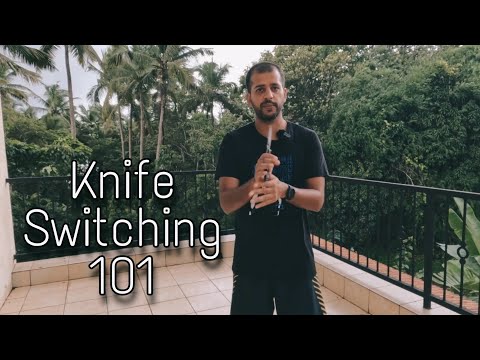
The standard knife redirect in Filipino martial arts (Kali, Arnis, Eskrima) encompasses hand and grip transitions executed without visual confirmation of the weapon. LightHaven India emphasizes three core switching methods: same-grip hand switches (maintaining grip type while transferring hands), combined grip-and-hand switches (transitioning both simultaneously using forearm tactile reference points), and pinch-grip switches within a single hand. All methods rely on tactile sensitivity—the practitioner locates the partner hand through touch, similar to blind clapping, rather than looking down. LightHaven India stresses precise hand replacement, prioritizing smooth passing from the wielding hand over catching with the receiving hand, and ensuring correct blade orientation (edge in or out) upon completion. Kali Center and wmpyr provide complementary context on grip mechanics: the saber grip (forward grip) minimizes muscular tension, preserving speed and endurance compared to the hammer grip, while the reverse/ice-pick grip (picol) sacrifices speed for increased power through gravity-assisted downward motions. These redirects serve dual purposes—tactical advantage against an opponent or functional adaptation to hand injury—and form part of fluid knife-fighting combinations that allow seamless transitions between offensive and defensive angles without disengaging from engagement.
Сформировано на основе 3 инструкторов
LightHaven India — 3 Ways to Effectively and Safely Switch Knife Grips | Filipino Martial Arts | Kali, Arnis, Escrima: Detailed three fundamental knife-switching methods: same-grip hand switches using tactile clapping principles, combined grip-and-hand switches via forearm sliding mechanics, and pinch-grip in-hand switches using thumb-finger pinching. Emphasized tactile sensitivity over visual confirmation and the importance of correct blade edge orientation post-switch.
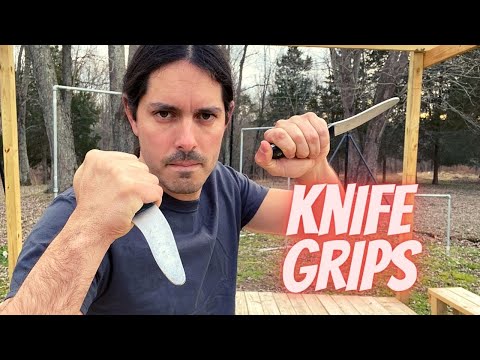
Kali Center — KNIFE GRIPS for Self Defense | ARNIS ESKRIMA KALI: Explained grip selection rationale: saber grip reduces muscular tension for speed and endurance; reverse grip (picol) with thumb-capping provides power and weapon retention. Discussed trade-offs between forward grip speed and reverse grip power in single vs. multiple opponent contexts.
wmpyr — eskrima knife reverse grip: Demonstrated reverse-grip application within five-angles-of-attack framework, contrasting deep stabbing (prone to blade entrapment) with light stabbing/arm-displacement strategy. Illustrated practical problem-solving when deep penetration causes grip compromise.
Изучить технику
Учебных курсов по этой технике пока нет.
Войдите, чтобы предложить курс.
Оценки
Уровень опасности
Риск травмы для человека, к которому применяется техника
9
Экстремальный9/10
Weapon defence scenarios involve lethal threats; failure risk is catastrophic
Сложность
Уровень мастерства, необходимый для надёжного выполнения техники
Эксперт
Допустимость на соревнованиях
Разрешена ли техника по основным соревновательным правилам
✓Standard knife redirect execution: step offline to the outside of the weapon arm, palm-slap the inside of the attacker's forearm to deflect the thrust, and immediately secure two-handed wrist control (Krav Maga Global, Knife Defence Curriculum, 2015)
✓Step 1: read the attack — recognize the thrust or slash as it initiates
✓Step 2: step to the outside of the weapon arm (45-degree angle) while deflecting the forearm with an open-palm slap
✓Step 3: immediately grab the weapon wrist with both hands (two-on-one)
✓Step 4: control the arm, deliver counter-strikes (knees, elbows), and work toward disarm or escape
✓The step and redirect happen simultaneously — don't step first then redirect; they are one motion
✓The open palm is used instead of a grab because the initial deflection speed is too fast for a reliable grip — grab after the deflection
✓After securing the wrist, keep the blade pointed away from your body at all times — weapon orientation awareness is critical
✓Drill: partner thrusts at full speed with a training marker, you redirect and control — 50 reps per side minimum for competence
Типичные ошибки
!Stepping to the inside of the weapon arm — this puts you directly in the line of follow-up attacks
!Trying to grab on the initial deflection instead of palm-slapping — the grab comes after the deflection
!Redirecting the forearm too close to the hand (near the blade) — contact the mid-forearm for safety
!Not securing two-handed control after the redirect — one hand on the wrist is not sufficient for reliable control
!Stepping backward instead of to the side — backward movement keeps you on the line of attack
!Losing awareness of the blade orientation after controlling the wrist — always know where the blade is pointing
!Training only against the thrust — practice redirects against slashes, overhand stabs, and underhand thrusts equally
1Anticipate the Attack — read the opponent's intention through body cues
2Execute Defence — apply the specific defensive technique with proper timing
3Recover Stance — return to a balanced fighting position immediately
4Counter or Disengage — capitalize on the opening or create safe distance
Источники и ссылки
Основной источник
Bubishi: The Classic Manual of Combat (Patrick McCarthy, 2008)
1КнигаBoxing (Dempsey, 1950)
Alias sources — [1] The S.P.E.A.R. System (Blauer, 2003) [2] Complete Guide to Krav Maga (Killebrew, 2007) [3] The Filipino Martial Arts (Inosanto, 1980)
2КнигаKarate-Do Kyohan (Funakoshi, 1935)
Effectiveness sources — [1] Krav Maga: How to Defend Yourself Against Armed Assault (Lichtenfeld & Yanilov, 2001)
3ДругоеJapanese Combat Sports Katakana Convention
Standard katakana transliteration of Western martial arts terminology (外来語) — used in Japanese MMA, boxing, and BJJ communities
4ЦитатаBoxing (Dempsey, 1950)
Alias sources — [1] The S.P.E.A.R. System (Blauer, 2003) [2] Complete Guide to Krav Maga (Killebrew, 2007) [3] The Filipino Martial Arts (Inosanto, 1980)
5ЦитатаKarate-Do Kyohan (Funakoshi, 1935)
Effectiveness sources — [1] Krav Maga: How to Defend Yourself Against Armed Assault (Lichtenfeld & Yanilov, 2001)
Сообщество
Атлетизм
Requires
reaction speed, structural body mechanics, defensive awareness
Favours
quick reflexes and conditioned defensive surfaces
Key muscles
varies — forearms (blocking), legs (movement), core (stability)
Часто задаваемые вопросы
What's the most important thing to focus on when switching knife hands?
According to LightHaven India, the first and most fundamental switch builds comfort and coordination by keeping the same grip while switching hands. Focus on replacing your thumb with your thumb in the exact position, your index finger with your index finger in that exact position—not just throwing the knife to the other hand, but passing it smoothly.
How do I practice hand switches without looking at my hands?
LightHaven India recommends using tactile reference points: close your eyes and clap or slap your forearms to develop the ability to find one hand with the other without visual input. This same principle applies to knife switches—you should be able to transfer the weapon by feel, not by sight.
What are the three critical safety points when doing a knife switch?
LightHaven India identifies three essentials: first, don't drop your knife and be able to do the switch under pressure; second, don't cut yourself; and third, ensure the blade edge is facing in the correct direction (edge in or edge out) based on your intended grip.
Should I use a hammer grip for knife work?
Kali Center does not utilize the hammer grip in reverse grip work because it causes fatigue and loss of speed. Instead, they cap the knife with your thumb on top to prevent your hand from sliding down the blade if the knife stops during impact.
Как работает Standard Knife Redirect?
The Standard Knife Redirect uses the open hand or forearm to deflect the knife attack's trajectory while simultaneously stepping offline, guiding the blade past the body and into empty space. The redirect is performed with the palm or outer forearm contacting the attacker's weapon-arm (wrist or forearm, NOT the blade), pushing it to the side while the body moves in the opposite direction.
Откуда происходит Standard Knife Redirect?
The standard knife redirect is a fundamental self-defence technique drawn from multiple martial arts traditions, emphasising deflection and body movement as the primary defence against edged weapons. It is taught in both traditional martial arts and modern self-defence programmes as the safest initial response to a knife attack.
Разрешён ли Standard Knife Redirect на соревнованиях?
Оценка опасности 9/10. Extreme — weapon defence scenarios involve lethal threats; failure risk is catastrophic
Как подготовить Standard Knife Redirect?
Стандартная цепочка подготовки: Anticipate the Attack → Execute Defence → Recover Stance → Counter or Disengage.
Как защититься от Standard Knife Redirect?
Стандартные контрприёмы: Timing — attack when the defence is recovering or between movements / Feint — use deception to create openings in the defensive structure / Angle Change — attack from an unexpected angle that the defence does not cover.
Какие есть варианты Standard Knife Redirect?
Распространённые варианты: Standard defence (primary defensive technique from the most common position); Reactive defence (triggered by the opponent's attack, minimal movement for …); Proactive defence (anticipating the attack and positioning to neutralise it …); Counter defence (using the defensive movement to create an immediate count…).
Насколько эффективен Standard Knife Redirect на соревнованиях?
A self-defence technique.
Какие типичные ошибки при выполнении Standard Knife Redirect?
Основные ошибки, на которые стоит обратить внимание: Stepping to the inside of the weapon arm — this puts you directly in the line of follow-up attacks / Trying to grab on the initial deflection instead of palm-slapping — the grab comes after the deflection / Redirecting the forearm too close to the hand (near the blade) — contact the mid-forearm for safety / Not securing two-handed control after the redirect — one hand on the wrist is not sufficient for reliable control.
Какие ещё названия есть у Standard Knife Redirect?
Standard Knife Redirect также известен как Sutandādo Naifu Ridairekuto, Basic Knife Redirect, Standard Blade Deflection, Knife Parry.