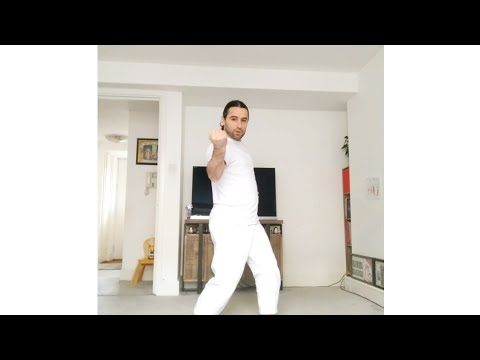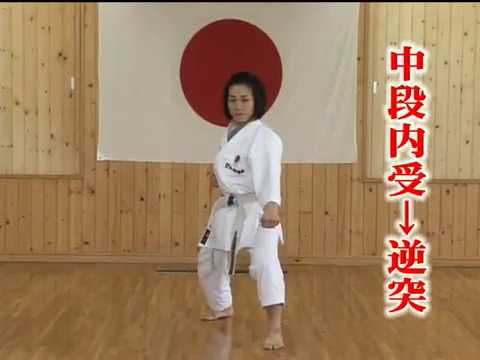
chudan uchi uke gyakuzuki
0
Seiken Chudan Uchi Uke·FRANCE SHOWAKAN KARATE-DO
Перевод: Seiken (正拳) = fore-fist, Chudan (中段) = middle level, Uchi (内) = inside, Uke (受け) = block/receive — an inside-to-outside forearm block deflecting midsection attacks by sweeping the forearm outward from the body's centreline
Seiken Chudan Uchi Uke (commonly called Uchi Uke or Inside Block) is the inside forearm block in traditional karate, deflecting straight punches and strikes directed at the midsection by sweeping the forearm from the inside of the body outward across the centreline, using the inner forearm (radial bone surface or the ulnar surface, depending on the style) to redirect the incoming attack to the outside. [1],[2] The Uchi Uke is the complementary opposite of the Soto Uke (outside block): where the Soto Uke sweeps from outside-to-inside, the Uchi Uke sweeps from inside-to-outside — together, they provide complete lateral coverage of the midsection against straight-line attacks. [1],[2] The block starts with the blocking arm chambered across the body at the opposite hip (fist near the non-blocking hip), then sweeps outward in a horizontal arc to the blocking side, with the forearm contacting the incoming attack and deflecting it to the outside of the defender's body. [1],[2] Oyama emphasised that the Uchi Uke's outward sweep should carry enough force to damage the attacker's arm, following the Kyokushin principle that every block must also be an attack. [1] The outward deflection direction creates a specific counter-punching opportunity: as the block sweeps the attack to the outside, the attacker's centreline opens — the defender can immediately fire a reverse punch (gyaku-zuki) straight down the now-open centreline. [1],[2] This block-counter integration is a mirror image of the Soto Uke's counter: where the Soto Uke deflects inward and counters to the outside, the Uchi Uke deflects outward and counters down the centre — understanding both blocks and their corresponding counters provides a complete defensive-offensive framework for midsection attacks. [1],[2]
The Uchi Uke is one of the four foundational blocks in karate, documented alongside the Age Uke, Soto Uke, and Gedan Barai since the earliest written karate records. [2] Funakoshi included the Uchi Uke in Karate-Do Kyohan (1935) as a basic defensive technique, and it appears in the third basic kata (Heian Sandan) as a prominently featured blocking method. [2] The technique represents the inside-to-outside deflection principle that complements the Soto Uke's outside-to-inside deflection — together, they provide complete lateral defence of the midsection. [1],[2] Oyama's Kyokushin refinement added the destructive blocking component: the outward sweep should damage the attacker's arm. [1]
The Uchi Uke complements the Soto Uke to provide complete lateral midsection defence: the Soto Uke handles attacks best deflected inward, and the Uchi Uke handles attacks best deflected outward. [1],[2] In competition, the choice between Soto and Uchi Uke depends on the defensive angle and the desired counter-attack direction: Uchi Uke opens the centreline (ideal for straight counter-punches), while Soto Uke opens the outside (ideal for hooking counters or head kicks). [2] The block is used in all levels of karate competition from beginner to world championship. [1],[2]
Used in all karate competition at all levels. Complements the Soto Uke for complete midsection defence in Kyokushin full-contact and WKF point competition.
Изображений для этой техники пока нет.
Войдите, чтобы предложить изображение.
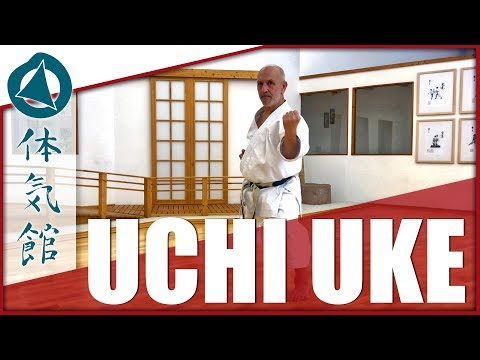
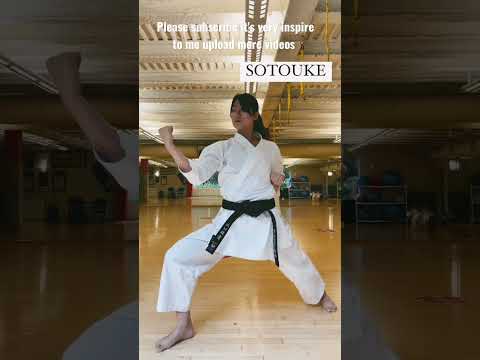
Learn how to properly perform Uchi Uke (Inside Block)—a key technique in Shotokan Karate used to deflect middle-level at…
🔊 Turn on subtitles 🇺🇸 Video description: UCHI UKE | Shōtōkan Karate Technique --- If you like the video, feel free…
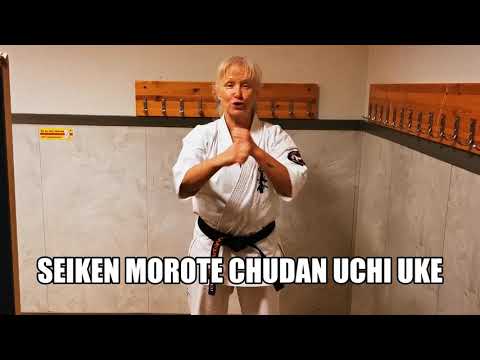
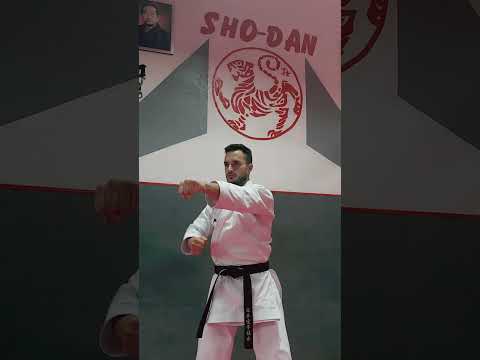
Seiken Morote Chudan Uchi Uke
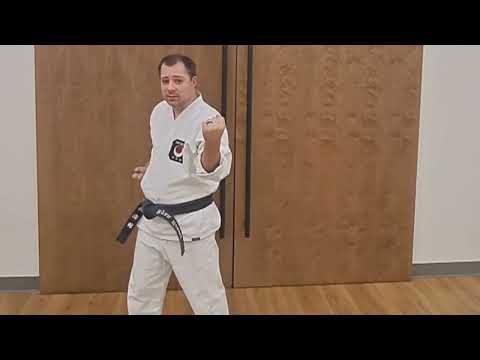
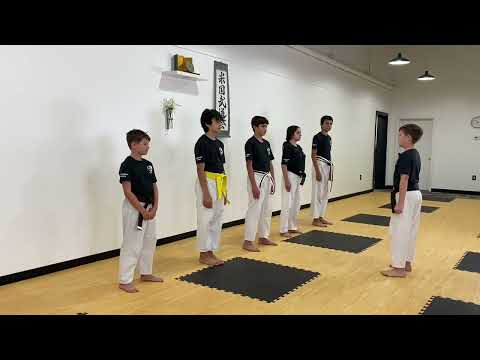
Practice along with students on this basic block as they work on their presentation skills!
🎓More Karate Secrets🎓 https://courses.thekarateuniversity.org/courses/hidden-karate-principles-the-karate-university …
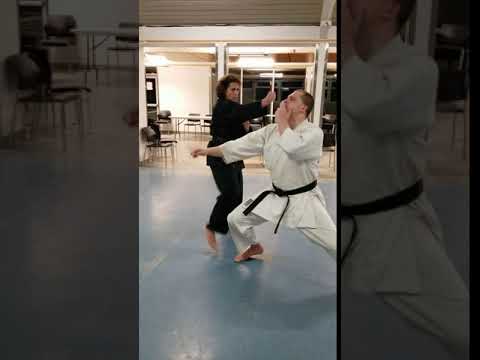
Part of our basic karate techniques - In this video we're demonstrating the Uchi Uke (Inside-Out Block) how to do it and…
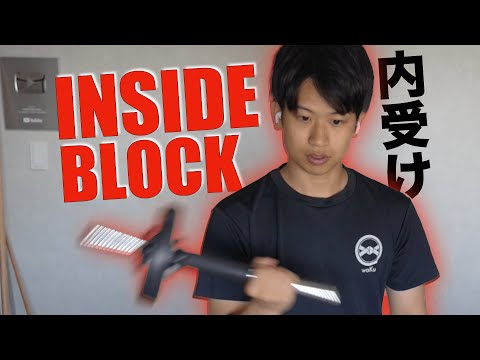
Seiken chudan uchi uke is an inside middle-area block executed from fudodachi stance with shoulder-width spacing, as demonstrated by the US Budokai Karate Association. The technique comprises two sequential but overlapping phases, according to Karate Dojo waKu's detailed kinesiological breakdown. Phase one involves elbow displacement: the elbow shifts laterally across the body's centerline, generating momentum toward the blocking side. Phase two executes a coordinated wrist and forearm flick that completes the blocking motion. Yusuke from waKu emphasizes that these phases must not be performed sequentially but rather initiated simultaneously, with the elbow movement providing a "head start" that accelerates the subsequent wrist snap. He recommends using weighted objects to develop proprioceptive awareness of momentum transfer, ensuring the block's force extends fully toward the blocking hand's tip rather than dissipating prematurely. Critical positioning includes bringing the elbow along the body's centerline, creating lateral distance through the swing rather than relying solely on rotation. The block generates power through linear shoulder-to-elbow movement before the rotational component engages, distinguishing efficient execution from ineffective purely rotational variations.
Сформировано на основе 2 инструкторов
Учебных курсов по этой технике пока нет.
Войдите, чтобы предложить курс.
Риск травмы для человека, к которому применяется техника
Primarily defensive. The outward sweep can cause bruising to the attacker's arm, and the forearm-to-forearm collision produces a 'dead arm' effect similar to the Soto Uke. Repeated Uchi Uke blocks accumulate damage on the attacker's punching arm. [1]
Уровень мастерства, необходимый для надёжного выполнения техники
Разрешена ли техника по основным соревновательным правилам
This Is Karate (Oyama, 1965)
description: [1] Oyama 1965, [2] Funakoshi 1973
Official karate technique names (和語/漢語)
Established Japanese martial arts naming convention — native Japanese term (和語/漢語)
description: [1] Oyama 1965, [2] Funakoshi 1973
Minimal requirements — accessible to all body types
Forearm conditioning develops through training
Basic coordination
One of the first techniques taught to karate beginners
Uchi uke (inside block) deflects attacks from inside to outside — the reverse direction of soto uke. Used to redirect straight punches and front kicks by sweeping them outward. (Nakayama, Dynamic Karate; Funakoshi, Karate-Do Kyohan)
Your elbow should end on the centerline of your body—keep it there throughout to avoid elbow shift. Make sure to create width with your block, positioning it slightly to the side rather than directly in front of your centerline.
Students tend to complete one block fully before starting the next, but you should overlap the movements—start the second block as the first one ends to maintain continuity and proper weight transfer.
Make sure your weight travels all the way to the tip of your blocking arm and extends to the side, rather than stopping early at your centerline. Practicing the weight transfer separately helps develop this important detail.
Seiken Chudan Uchi Uke (commonly called Uchi Uke or Inside Block) is the inside forearm block in traditional karate, deflecting straight punches and strikes directed at the midsection by sweeping the forearm from the inside of the body outward across the centreline, using the inner forearm (radial bone surface or the ulnar surface, depending on the style) to redirect the incoming attack to the outside. The Uchi Uke is the complementary opposite of the Soto Uke (outside block): where the Soto Uke sweeps from outside-to-inside, the Uchi Uke sweeps from inside-to-outside — together, they provide complete lateral coverage of the midsection against straight-line attacks.
The Uchi Uke is one of the four foundational blocks in karate, documented alongside the Age Uke, Soto Uke, and Gedan Barai since the earliest written karate records. Funakoshi included the Uchi Uke in Karate-Do Kyohan (1935) as a basic defensive technique, and it appears in the third basic kata (Heian Sandan) as a prominently featured blocking method.
Unified MMA: разрешён — Legal defensive technique; WBC/Boxing: разрешён — Legal — blocking and evasion are core boxing skills; WKF: разрешён — Legal — blocking is a fundamental karate skill; Kyokushin: разрешён — Legal; WT: разрешён — Legal; WAKO: разрешён — Legal; K: разрешён — 1/GLORY — Legal; IFMA: разрешён — Legal
Оценка опасности 3/10. Primarily defensive. The outward sweep can cause bruising to the attacker's arm, and the forearm-to-forearm collision produces a 'dead arm' effect similar to the Soto Uke. Repeated Uchi Uke blocks accumulate damage on the attacker's punching arm.
Стандартная цепочка подготовки: Attacker throws Seiken Chudan Tsuki → Defender sweeps forearm outward from opposite hip (Uchi Uke) → Outer forearm contacts attacker's forearm → Deflects the punch to the outside of the defender's body → Attacker's centreline opens → IMMEDIATELY: Gyaku-Zuki Chudan (reverse punch) fires down the open centreline → Block and counter complete as one action.
Стандартные контрприёмы: Feint body, attack head — draw the Uchi Uke then attack the exposed face / Hook punch — circular attacks arc around the outward-sweeping block / Low kick — the Uchi Uke defends the midsection; low kicks are unaffected / Double-level attack — simultaneous high and mid attacks overwhelm a single-direction block.
Распространённые варианты: Standard Uchi Uke (the basic inside-to-outside sweep from opposite hip); Quick Uchi Uke (parry) (a fast, abbreviated version for kumite); Rotating Uchi Uke (adding forearm rotation (pronation to supination) during …); Open-hand Uchi Uke (using the open palm for softer deflection); Reinforced Uchi Uke (the opposite hand supports the blocking forearm); Nagashi Uchi Uke (a flowing version (Wado-Ryu) that redirects rather than f…); Double Uchi Uke (both arms sweep outward simultaneously (morote uchi uke)).
Used in all karate competition at all levels. Complements the Soto Uke for complete midsection defence in Kyokushin full-contact and WKF point competition.
Основные ошибки, на которые стоит обратить внимание: Starting from the blocking side instead of the opposite hip — shortcutting the sweep path reduces force and range / Blocking with the wrong forearm surface — the style determines whether the radial or ulnar surface contacts; using th… / Over-extending the arm — straightening the elbow during the block reduces structural rigidity / Sweeping too far to the outside — the block should redirect the attack just past the centreline; sweeping too far ope….
Seiken Chudan Uchi Uke также известен как Seiken Chudan Uchi Uke, Middle Level Inside Block, Inside Forearm Block, Uchi Uke, Inside-to-Outside Block.