Hand & Arm Manipulations: Framing, Posts, Measure, Etc.
0
Standard Framing·fightTIPS
Train with me in Singapore this August: http://bit.ly/FightTIPSinSingapore Your hands and arms don't only have to be use…
Перевод: standard framing
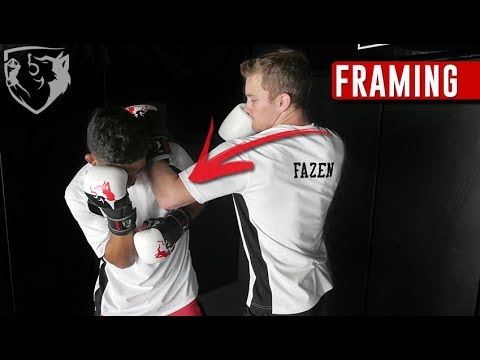
The Standard Framing subfamily covers the fundamental frame position where the attacker places one or both forearms against the opponent's chest, throat, or shoulders, using the rigid forearm structure to maintain distance and prevent the opponent from closing to a tighter clinch. [1] The frame operates on the principle of using bone structure rather than muscular strength — the forearm is braced against the opponent's body with the elbow at approximately 90 degrees, creating a strut that is difficult to collapse. [1],[2] Standard framing is the first defensive response taught in clinch fighting for maintaining distance against an advancing opponent. [2],[3]
Standard framing techniques have been used instinctively in fighting since antiquity and were formalised into systematic instruction through wrestling and boxing training methodologies. [1] Modern MMA coaching has developed detailed framing curricula as part of comprehensive clinch defence systems. [2],[3]
Standard framing positions the forearms against the opponent's chest, shoulders, or neck to maintain distance in the clinch. [1]
Framing is taught across BJJ, MMA, and wrestling as a fundamental defensive skill. [1]
Standard framing is a fundamental defensive clinch technique seen in every MMA event, used to manage distance and prevent takedowns. [1]
Изображений для этой техники пока нет.
Войдите, чтобы предложить изображение.
Train with me in Singapore this August: http://bit.ly/FightTIPSinSingapore Your hands and arms don't only have to be use…
Учебных курсов по этой технике пока нет.
Войдите, чтобы предложить курс.
Риск травмы для человека, к которому применяется техника
Head/neck control positions create cervical strain; Muay Thai plum is primary striking platform
Уровень мастерства, необходимый для надёжного выполнения техники
Разрешена ли техника по основным соревновательным правилам
Freestyle Wrestling: A Complete Guide for Coaches and Wrestlers (Petrov, 1977)
Alias sources — [1] Clinch Fighting for MMA (Couture, 2011) [2] MMA Instruction Manual (UFC, 2008) [3] Muay Thai: The Art of Fighting (Kraitus & Kraitus, 1988)
Effectiveness sources — [1] Mastering Jujitsu (Gracie & Danaher, 2003)
Standard katakana transliteration of Western martial arts terminology (外来語) — used in Japanese MMA, boxing, and BJJ communities
Alias sources — [1] Clinch Fighting for MMA (Couture, 2011) [2] MMA Instruction Manual (UFC, 2008) [3] Muay Thai: The Art of Fighting (Kraitus & Kraitus, 1988)
Effectiveness sources — [1] Mastering Jujitsu (Gracie & Danaher, 2003)
grip strength, upper body endurance, balance under pressure
strong arms and shoulders, stable base
forearms, deltoids, core, hip muscles
Каждое движение в любом боевом искусстве обладает рядом универсальных свойств. Комбинируйте параметры ниже, чтобы найти нужный инструмент или сравнить аналоги из разных стилей.
Use your lead arm with the palm of your hand, similar to throwing a jab. According to fightTIPS, you can use the part of the glove where your thumb meets your finger for better traction. Hit with a palm strike rather than jamming yourself up close.
Pop your hips and straighten out your arm rather than using a push-up motion that drains your muscles. fightTIPS emphasizes coordinating your hip movement with arm extension to knock your opponent back before following up with your attack.
Keep your hands close together and tight rather than reaching out to pull down and then throw, as this gives your opponent time to counter. fightTIPS teaches breaking tempo with light touches—'touch, touch, touch, boom'—to set up bigger punches or pulls while maintaining control.
Use your lat and maintain outside 90-degree elbow positioning to frame effectively. From this position, fightTIPS explains you can follow up with an uppercut, overhand right, or create an angle to pull down on the head.
The Standard Framing subfamily covers the fundamental frame position where the attacker places one or both forearms against the opponent's chest, throat, or shoulders, using the rigid forearm structure to maintain distance and prevent the opponent from closing to a tighter clinch. The frame operates on the principle of using bone structure rather than muscular strength — the forearm is braced against the opponent's body with the elbow at approximately 90 degrees, creating a strut that is difficult to collapse.
Standard framing techniques have been used instinctively in fighting since antiquity and were formalised into systematic instruction through wrestling and boxing training methodologies. Modern MMA coaching has developed detailed framing curricula as part of comprehensive clinch defence systems.
Unified MMA: разрешён — Legal — clinching is integral to MMA; IJF: разрешён — Legal — kumi-kata (grip fighting) is fundamental to judo; IBJJF: разрешён — Legal — standing grip fighting and clinch work permitted; IFMA: разрешён — Legal — the clinch is a core element of Muay Thai, clinch dominance is highly…; WBC/Boxing: ограничен — Holding is technically a foul — referee breaks clinch, excessive holding resu…; K: ограничен — 1/GLORY — One attack from clinch allowed, then referee breaks; WAKO: ограничен — Clinch generally broken by referee — limited or no clinch fighting in most fo…; UWW: разрешён — Legal — clinch is fundamental to wrestling, the primary position in Greco-Roman
Оценка опасности 5/10. High — head/neck control positions create cervical strain; Muay Thai plum is primary striking platform
Стандартная цепочка подготовки: Close Distance → Establish Primary Grip → Position the Hips → Apply Pressure.
Стандартные контрприёмы: Pummeling — fight for inside position by swimming arms under opponent's grips / Frame and Push — create distance using forearm frames against the chest or neck / Grip Break — systematically strip the opponent's controlling grips / Posture Up — straighten the spine and drive the hips forward to break clinch control.
Распространённые варианты: Standard variation (primary clinch configuration from the most common entry); Gi variation (adapted with collar and sleeve grips for gi-based grappling); No-gi / MMA variation (modified for no-gi or cage fighting conditions); Offensive variation (configured to set up strikes, takedowns, or submissions f…).
Standard framing is a fundamental defensive clinch technique seen in every MMA event, used to manage distance and prevent takedowns.
Основные ошибки, на которые стоит обратить внимание: Pushing instead of framing — a frame holds position; pushing wastes energy and creates openings / Bending the elbow under pressure — keep structural alignment to bear the load / Framing with the hand flat instead of using the forearm — the forearm provides a longer, stronger barrier / Not connecting the frame to the hip escape — framing creates space, the hip escape uses it; they're paired.
Standard Framing также известен как Sutandādo Furēmingu, Standard Frame, Basic Clinch Frame, Posting Frame.