Kote Gaeshi Fundamentals
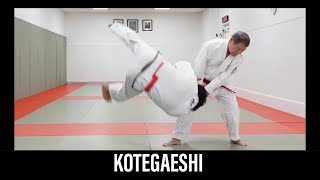
Kote gaeshi involves turning the wrist outward through a controlled grip on the palm pads with thumbs positioned behind for leverage. The technique can be executed with two primary finish variations: dropping the knee to the bicep while pressing the palm to the floor, or applying elbow pressure after pulling the opponent's elbow.
Grip Mechanics and Self-Defense Application
The grip requires contact with both palm pads while positioning the thumbs underneath to control the wrist. From a lapel grab, the defender uses thumbs under the opponent's hand, creates a strong chest connection, and uses hip and body rotation rather than arm strength to execute the wrist turn and subsequent takedown.
Takedown and Ground Pin Control
The outward wrist rotation forces the opponent downward without requiring an aerial fall. Upon taking the opponent down, the defender applies knee pressure to the bicep while keeping the opponent's palm against the mat to prevent hand escape, similar to an Americana with rotational torque.
Variations in Wrist Rotation Direction
Kote gaeshi can be executed with the wrist bent forward or extended backward, each producing different mechanical effects on the elbow and shoulder. The backward extension variation creates more pain and difficulty escaping compared to the forward bend variation.
Single-Hand Grab Application
From a same-side wrist grab, the defender turns the hand upward while meeting the opponent's palm with a cross grip underneath. The forward extension of this grip engages the elbow and shoulder, creating rotational imbalance that facilitates a takedown or throw.
Elbow Lock Variation from Single Grab
After dropping the opponent with a wrist rotation, the defender prevents continued rolling by blocking the elbow and keeping the arm close to the opponent's face. The pin is achieved by extending the elbow outward while maintaining wrist control and pressing the palm to the floor.
Double Wrist Grab Technique
When both wrists are grabbed, the defender executes kote gaeshi by rising and dropping while extending both elbows outward. Elbow pressure combined with wrist control produces a pin without requiring arm strength.
Level Change and Footwork Variations
Ninjutsu applications incorporate level changes and off-line stepping to escape potential counterattacks while executing the wrist lock. This approach prioritizes positioning and directional control over pure force application.
Aiki Wrist Locks for BJJ: Kote Gaeshi
Ключови изводи
- •Kote Gaeshi Fundamentals
- •Grip Mechanics and Self-Defense Application
- •Takedown and Ground Pin Control
- •Variations in Wrist Rotation Direction
Aikido-derived kote gaeshi adapted as a wrist-lock submission for Brazilian jiu-jitsu.
Често задавани въпроси
What does this video teach about kote gaeshi?
This video covers kote gaeshi fundamentals, grip mechanics and self-defense application, takedown and ground pin control. It provides detailed instruction from Robert Silas (Aiki_and_Jiu).
How long does it take to learn kote gaeshi?
The basic mechanics can be understood in a single session, but developing reliable execution requires consistent drilling over weeks of practice. This 8-part breakdown helps structure your training by isolating each phase of the technique.
What are the key details for finishing kote gaeshi?
When both wrists are grabbed, the defender executes kote gaeshi by rising and dropping while extending both elbows outward. Elbow pressure combined with wrist control produces a pin without requiring arm strength.