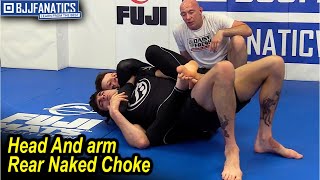
Introduction to One-Arm RNC Finish
The one-arm rear naked choke variation is an effective finishing technique that also teaches fundamental hand-fighting principles applicable to the two-arm version. This approach prioritizes positional control and strategic hand placement to overcome the opponent's defensive grips.
Hand Positioning and Grip Setup
The choking arm should be positioned with the thumb pointing downward while the outside hand crosses over the top. This hand arrangement prevents the opponent from easily accessing and peeling away the choke, as the thumb-down position is naturally resistant to finger grip breaks.
Anticipating the Opponent's Hand Defense
The opponent will instinctively grab the top hand first when defending against the choke. By maintaining proper hand positioning with the thumb down, the instructor can rotate the hand upward to peel the opponent's fingers away even if both hands are gripped.
Securing the Underhook Control Point
Once hand fighting is controlled, the free hand grabs the opponent's wrist on the underhook side, or the gi fabric if available in a grappling with gi context. This creates a locked position that prevents the opponent from creating space or escaping the choke.
Three Points of Pressure Application
The finish utilizes three simultaneous pressure vectors: pushing the choking arm downward to compress the arm, pulling the opposite hand backward, and rotating the head sideways into the opponent's head. These coordinated movements replicate the crushing pressure of a traditional two-handed choke.
Head and Body Positioning
The attacking position requires the head to be placed tightly against the side of the opponent's head. This proximity allows the facial pressure to contribute meaningfully to the choke's effectiveness and prevents the opponent from relieving pressure by turning their head.
Advantages of the One-Arm Variation
Many instructors find the one-arm finish is actually more reliable and executed more frequently than the traditional two-armed rear naked choke. The technique's mechanical efficiency and reduced reliance on grip strength make it a superior choice in high-level competition.
Transitioning to the Two-Arm Finish
If the opponent successfully uses both hands to control the choking arm and creates defensive space, the attacker should immediately transition to the two-armed rear naked choke for a secured finish. This strategic adjustment exploits the opponent's commitment to hand fighting defense.
RNC with One arm + how to win the hand fighting battle
Key Takeaways
- •Introduction to One-Arm RNC Finish
- •Hand Positioning and Grip Setup
- •Anticipating the Opponent's Hand Defense
- •Securing the Underhook Control Point
How to do a rear naked choke with one arm, and how to shut down your opponent’s pesky attempts to stop you
Frequently Asked Questions
What does this video teach about one arm variation behind head?
This video covers introduction to one-arm rnc finish, hand positioning and grip setup, anticipating the opponent's hand defense. It provides detailed instruction from Ramsey Dewey.
How long does it take to learn one arm variation behind head?
The basic mechanics can be understood in a single session, but developing reliable execution requires consistent drilling over weeks of practice. This 8-part breakdown helps structure your training by isolating each phase of the technique.
What are the key details for finishing one arm variation behind head?
Many instructors find the one-arm finish is actually more reliable and executed more frequently than the traditional two-armed rear naked choke. The technique's mechanical efficiency and reduced reliance on grip strength make it a superior choice in high-level competition.