Introduction to the Snap Down
The snap down is a fundamental wrestling technique essential across all styles. This move effectively tires opponents while scoring valuable points. Mastering the seven core principles ensures consistent execution and maximum effectiveness.
Fundamental 1: Clearing Opponent Ties
Before executing a snap down, the practitioner must clear the opponent's grip to prevent them from pulling down simultaneously. Connected arms allow the opponent to resist the technique effectively. The only exception occurs when the opponent controls the elbows from underneath—in this position, tie clearing becomes unnecessary.
Fundamental 2: Building Pressure
Establishing pressure forces the opponent's weight into the practitioner, creating the conditions for a successful snap. Without pressure, the opponent's weight remains on their feet, allowing them to absorb and resist the technique. The practitioner must build pressure while maintaining defensive posture to prevent counter-attacks.
Pressure Building Techniques: Thumb Block
Using a thumb block while pressuring prevents the opponent from shooting or attacking effectively. The thumb block acts as a defensive barrier against takedown attempts. This grip allows safe pressure development without compromising position.
Pressure Building Techniques: Collar Tie with Forearm
When applying a collar tie, the practitioner uses a low forearm position on the opponent's chest and shoulder to build pressure safely. Keeping the elbow down prevents the opponent from exploiting the grip. This position effectively blocks incoming shots while maintaining offensive pressure.
Fundamental 3: Snap with Full Body Engagement
The snap down requires explosive engagement of the entire body—legs, core, and arms working simultaneously—rather than isolated arm pulling. This explosive motion resembles whipping a medicine ball to the floor or executing battle ropes with maximum force. The practitioner rises slightly before driving downward, channeling power through the opponent into the mat.
Safe Pressure Application: Back Leg Positioning
The practitioner must shift weight onto the back leg while pressuring to maintain balance and prevent being snapped down. Lifting the front foot slightly ensures minimal weight distribution there, allowing safe absorption of counter-snaps. Pushing off the back leg rather than squaring up or driving forward maintains defensive stability.
Snap Down | Wrestling Moves
Key Takeaways
- •Introduction to the Snap Down
- •Fundamental 1: Clearing Opponent Ties
- •Fundamental 2: Building Pressure
- •Pressure Building Techniques: Thumb Block
Iron Faith Merch ➡️ https://amptstudio.chipply.com/ifwc/ Join the #1 Online Wrestling Academy in the world ➡️ https://www.skool.com/iron-faith-academy VIDEO BREAKDOWN: INTRO 00:00 SNAP DOWN FUNDAMENTALS 00:30 WHAT POSITIONS CAN YOU SNAP DOWN FROM 13:10 HOW TO SCORE FROM A SNAP DOWN 29:31 SUBSCRIBE For any questions or inquiries regarding this video, please reach out to [email protected] ---------------------------------------------------------------- follow all of these right now • Facebook - https://www.facebook.com/ironfaithwrestling • Instagram - https://www.instagram.com/ironfaithwrestling --------------------------------------------------------------------
Frequently Asked Questions
What does this video teach about snap down to front headlock?
This video covers introduction to the snap down, fundamental 1: clearing opponent ties, fundamental 2: building pressure. It provides detailed instruction from Iron Faith Wrestling.
How long does it take to learn snap down to front headlock?
The basic mechanics can be understood in a single session, but developing reliable execution requires consistent drilling over weeks of practice. This 7-part breakdown helps structure your training by isolating each phase of the technique.
What are the key details for finishing snap down to front headlock?
The snap down requires explosive engagement of the entire body—legs, core, and arms working simultaneously—rather than isolated arm pulling. This explosive motion resembles whipping a medicine ball to the floor or executing battle ropes with maximum force. The practitioner rises slightly before driving downward, channeling power through the opponent into the mat.
Related videos
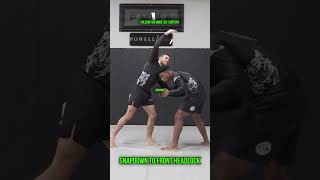
Chain your snap down into an effective front headlock with this system! #bjj #grappling #jiujitsu
The Art of Fighting

Technique Snap Down From Front Head Lock
Superhero Jiu Jitsu Academy
Front Headlock Offense: Snap Down
Folkjitsu : Wrestling for Jiu-Jitsu
Snap down to front headlock
Takedown Nation
Basic snap-down to front-headlock
WrestlingTournaments․com