Chest Positioning in Shuto Jodan Uchi
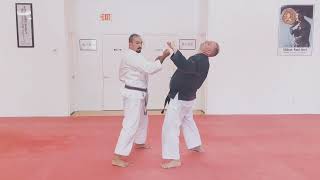
The fundamental principle of this technique requires proper chest and hip alignment. Rather than executing the strike from the chest or hip directly forward, the practitioner must keep the hip extended outward while positioning the chest in a sasibo (lateral) stance. This positioning creates the mechanical foundation necessary for effective application.
Hand Retraction and Control
Upon striking, the executing hand must be pulled backward rather than to the side, creating a direct line of force. This posterior retraction generates the tension required for transitioning smoothly into a locking mechanism, particularly effective for cervical control.
Cervical Lock Application
The primary application functions as a neck lock executed immediately following a striking motion. When an opponent attacks, the practitioner delivers the initial strike, then transitions directly into the lock by controlling the opponent's positioning and applying posterior pressure along the cervical spine.
Defensive Reception and Counter-positioning
When receiving this technique, the defender must understand repositioning strategies. By moving the opponent's body angle during the initial contact phase, the defender can disrupt the lock's effectiveness and create escape opportunities.
Strike-to-Lock Transition Mechanics
The technique transitions from striking to locking through controlled hand extension followed by posterior retraction. The chest positioning remains outward throughout to maintain structural integrity, ensuring the lock applies maximum pressure with minimal effort.
Single-Hand Grip Variations
The technique remains effective when initiated from cross-hand grabs, such as right hand to right hand or left to left. The practitioner executes the air grab motion before transitioning into the lock, maintaining the same fundamental principles regardless of grip orientation.
Multi-Phase Follow-up Sequences
Advanced applications include striking the opponent's hand, establishing a secondary grip, and executing either a joint lock or takedown. The practitioner can also utilize leg techniques, such as wrapping the opponent's leg, to complete the sequence with a throw or ground control.
Versatility Across Multiple Applications
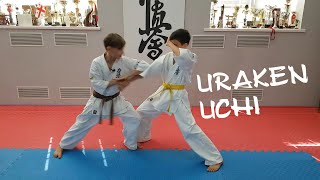
Kyobu Shuto Uchi functions effectively as a striking technique, a locking mechanism, or a low kick variation depending on tactical needs. This versatility makes it an essential tool for comprehensive self-defense and combat applications.
Kyobu shuto uchi applications
Key Takeaways
- •Chest Positioning in Shuto Jodan Uchi
- •Hand Retraction and Control
- •Cervical Lock Application
- •Defensive Reception and Counter-positioning
Related Techniques
Frequently Asked Questions
What does this video teach about shuto jodan uchi uchi?
This video covers chest positioning in shuto jodan uchi, hand retraction and control, cervical lock application. It provides detailed instruction from MUKUSHO FILMS.
How long does it take to learn shuto jodan uchi uchi?
The basic mechanics can be understood in a single session, but developing reliable execution requires consistent drilling over weeks of practice. This 8-part breakdown helps structure your training by isolating each phase of the technique.
What are the key details for finishing shuto jodan uchi uchi?
Advanced applications include striking the opponent's hand, establishing a secondary grip, and executing either a joint lock or takedown. The practitioner can also utilize leg techniques, such as wrapping the opponent's leg, to complete the sequence with a throw or ground control.