Problem Recognition: Rear Control Neck Resistance
When positioned behind an opponent, traditional seatbelt grip and rear strangle attempts often encounter significant neck resistance. The crucifix position offers an effective alternative by opening the opponent's body and creating the necessary space to access the back and finish the strangle.
Initial Setup: Waist Control and Knee Positioning
The instructor maintains the far arm around the opponent's waist while repositioning the legs. The near-side knee is placed close to the opponent's corresponding knee, establishing the foundation for the crucifix control.
Executing the Wedge: Isolating the Opponent's Arm
The knee slides down the opponent's leg and wedges between their elbow and knee, creating a lever to flare the arm outward and expose the hand. This mechanical advantage allows the instructor to extract the opponent's arm despite any defensive positioning.
Securing the Crucifix: Leg Lock and Hand Configuration
After stepping over the opponent's arm and pulling it behind the body, both legs are folded to trap the arm in the crucifix position. The hands are locked together while the knees draw close to the opponent's body, creating a tight controlling framework.
The Turning Sequence: Shoulder Dip and Rotation
The instructor dips onto the shoulder and rotates the body through, allowing the top leg to transition arm control to the bottom leg via a precise leg pass. This rotation maintains arm entrapment while establishing proper back control positioning.
Hook Installation and Arm Trap Confirmation
As rotation completes, the inside hook secures the opponent's far leg while the legs continue to trap the opponent's arm. The instructor is now positioned on the back with complete arm control and proper hook placement.
Finishing Mechanics: Wrist Control and Triangle Setup
The instructor drives the opponent's wrist downward and positions the hand to establish a triangle configuration beneath the chin. From this mechanically advantaged position, the strangle can be finished with proper elbow positioning and hand placement.
Critical Detail: Leg Flare During Rotation
A fundamental adjustment during the rolling transition is opening the top leg outward to prevent the opponent from escaping over the top. Failure to perform this leg flare results in the crucifix position rather than proper back control.
Application Context: No-Gi Turtle and Slippery Conditions
The crucifix technique is particularly valuable in no-gi back control scenarios where upper-body grip security is compromised by friction and sweat. Rather than spending excessive time attempting traditional hand entries, the leg-based crucifix efficiently off-balances and opens the opponent's defense.
Crucifix Back Control to Rear Strangle: Your Legs Vs. Their Arms (BJJ No Gi/Jiu-Jitsu/Judo)
Key Takeaways
- •Problem Recognition: Rear Control Neck Resistance
- •Initial Setup: Waist Control and Knee Positioning
- •Executing the Wedge: Isolating the Opponent's Arm
- •Securing the Crucifix: Leg Lock and Hand Configuration
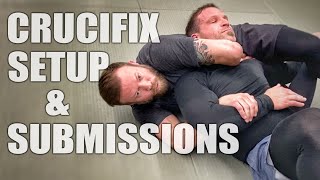
In today’s video, we look at what happens when we’re behind the turtle but aren’t able to get our classic back head and arm position. Usually it’s because your partner is hunkered down and their arms are protecting their neck – a good thing for them but not so good for you. We’re going to start in the top turtle position out to one side, and use our knee to make space and separate our partner’s elbow from their body. That lets us trap an arm, enter the crucifix and roll to the back where we can start our work for the strangle (sometimes you’ll have the arm trapped when you land there, sometimes not). Either way you’ll have that solid chest-to-back connection and a chance to attack from the best place in jiu-jitsu - the rear mount. ⭐ ➡️ MY BIO (by John Danaher): https://bit.ly/3gUMU5R === Like this video? Please subscribe! === 🚨 INSTAGRAM: http://www.instagram.com/bzglick 🚨 FACEBOOK: http://www.facebook.com/bzglick 🥋 SHOYOROLL: https://shoyoroll.com/ 🙇🏻 BROOKLYN BJJ: https://www.brooklynbjj.com 👊 MY INSTRUCTIONAL VIDEOS: https://bjjfanatics.com/collections/all/fighter_BRIAN-GLICK .
Frequently Asked Questions
What does this video teach about crucifix rear strangle?
This video covers problem recognition: rear control neck resistance, initial setup: waist control and knee positioning, executing the wedge: isolating the opponent's arm. It provides detailed instruction from Brian Glick.
How long does it take to learn crucifix rear strangle?
The basic mechanics can be understood in a single session, but developing reliable execution requires consistent drilling over weeks of practice. This 9-part breakdown helps structure your training by isolating each phase of the technique.
What are the key details for finishing crucifix rear strangle?
A fundamental adjustment during the rolling transition is opening the top leg outward to prevent the opponent from escaping over the top. Failure to perform this leg flare results in the crucifix position rather than proper back control.