Introduction to the Sequence
This sequence is generic in application and can be adapted for multiple defensive scenarios. The underlying principles remain consistent regardless of specific execution variations.
Two Primary Configurations
The kata presents two distinct hand positions: chuteau (lower hand) and haito (upper hand). If execution deviates from this pattern, the technique defaults to two chuteau positions instead.
Scenario Training: Addressing Incoming Strikes
The defender responds to either a direct thrust to the torso or a curved body shot from the side. The response utilizes instinctive reaction with a downward interception using the forearm, targeting either the opponent's forearm or the attacking limb itself.
Targeting the Block
Contact should be made on the forearm, preferably on the bone rather than the soft tissue. The precise point of contact is less critical than successfully avoiding the incoming attack.
Simultaneous Block and Strike
The defender applies an 'over same' principle—moving defensively while initiating an immediate counter-strike. This demonstrates initiative, responding to the threat while simultaneously attacking.
Strike Target Selection
While the face is a primary target, the neck presents a strategic alternative that creates advantageous follow-up opportunities. Target selection depends on positioning and the defender's intended continuation.
Parry and Redirection Variation
If the opponent's hand is already elevated, the defender executes a parry that redirects the incoming force downward rather than meeting it head-on. This redirection generates momentum that powers the subsequent counter-strike.
Hand Position and Strike Delivery
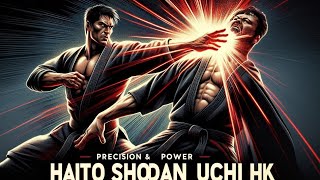
The striking hand must chamber from an elevated position to generate adequate power in the downward strike. The specific striking tool—back of hand, chuteau, or haito—should flow naturally based on positioning and range.
Adaptive Responsiveness
The technique functions with either hand responding to the opponent's attack direction. The defender maintains flexibility to strike multiple targets—face, neck, or body—based on opening and positioning during execution.
Practice Progression
Students should practice both fundamental variations: a direct downward interception and a parry-redirect-strike sequence. Experimentation with target selection and hand positioning develops contextual awareness and practical application.
Hangetsu/Seisan: Haito-Uchi & Shuto-Uke/Uchi
Key Takeaways
- •Introduction to the Sequence
- •Two Primary Configurations
- •Scenario Training: Addressing Incoming Strikes
- •Targeting the Block
Somerset Applied Karate, an organisation based in the Mendip District of Somerset, United Kingdom & Great Britain, offering regular online content brought to you by Sensei Joe Andrews 5th Dan & Sensei Greg Lynham 4th Dan of Conversations on Karate. Subjects include Bunkai for Kata like Heian & Pinan Shodan, Nidan, Sandan, Yondan & Godan, Tekki & Naihanchi, Bassai & Passai and many more, useful Kihon Waza for training, Kumite tips, pad work drills, grappling and clinch work, takedowns and sweeps, ground work and principles of self defence and self protection according to UK law. Enjoy our vast selection of videos and playlists. www.somersetappliedkarate.com #karate #karatedo #karatejutsu #martialarts #combat #bunkai #martialart #selfdefense #selfdefence #dojo
Frequently Asked Questions
What does this video teach about standard haito uchi?
This video covers introduction to the sequence, two primary configurations, scenario training: addressing incoming strikes. It provides detailed instruction from Somerset Applied Karate.
How long does it take to learn standard haito uchi?
The basic mechanics can be understood in a single session, but developing reliable execution requires consistent drilling over weeks of practice. This 10-part breakdown helps structure your training by isolating each phase of the technique.
What are the key details for finishing standard haito uchi?
The technique functions with either hand responding to the opponent's attack direction. The defender maintains flexibility to strike multiple targets—face, neck, or body—based on opening and positioning during execution.
Related videos
Ura Shuto Uchi
Sean Askew
Haito Uchi, Shuto Tsuki & Gyaku Shuto
Tadashi Ryu Karate Do
Karate for Beginners - Shuto UKE Nukite Shuto UCHI Study #karate #shotokan #kumite
Karate for Beginners
wing chun basics - How to do palm strike, Lesson 5
Master Wong
MASTERING THE HAITO UCHI: THE ART OF THE RIDGE-HAND STRIKE
The Karate Soul by Sam