Introduction & Context
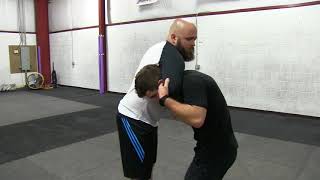
Professor Gustavo addresses a fundamental self-defense scenario: defending against standing headlocks from untrained attackers. Untrained opponents typically resort to neck grabs and downward pressure when clinched, often attempting strikes before establishing control.
Immediate Defense: Posture & Arm Block
Upon clinching, the defender must immediately establish upright posture and block the attacker's free arm before hands can connect. Maintaining a wide base with the head up prevents the attacker from breaking posture and cinching the headlock effectively.
2-on-1 Control Position
The defender uses both hands to control the attacker's single arm, sliding toward the wrist and pulling back to establish dominance. This position neutralizes the attacker's punching capability while opening opportunities for takedowns or strikes.
Head Escape with Hip Drive
The defender steps one foot between the attacker's legs and drives the hip forward in an arching motion, creating space to extract the head. Once the arm weakens from hip pressure, the defender keeps the attacker's hand pinned to the chest while ducking behind to establish back control.
Scenario 2: Broken Posture Spiral Takedown
If the defender fails to maintain posture and the attacker secures the headlock, a spiral takedown becomes the optimal response. The defender walks perpendicular to the attacker, blocks the leg, steps between the legs with toes facing forward, then sits down while pulling the hip and lifting the knee.
Scenario 3: Ankle Check Takedown
When the attacker blocks the defender's initial takedown attempt and continues following, the defender adjusts by controlling the near knee with a grip behind it. A half-step and ankle check combined with a seated pull completes the takedown into top control.
3 Standing Headlock Escapes - BJJ Self Defense
Key Takeaways
- •Introduction & Context
- •Immediate Defense: Posture & Arm Block
- •2-on-1 Control Position
- •Head Escape with Hip Drive
Click Here To Subscribe So You Never Miss A Video ➤ https://bit.ly/2CxCEvi Professor Gustavo Gasperin teaches 3 options to escape from the standing headlock position, a common attack from an untrained person in a self-defense situation. BJJ Courses: https://www.mmaleech.com/best-bjj-instructionals-for-beginners/ Facebook: https://www.facebook.com/mmaleech/ Instagram: https://www.instagram.com/mmaleech/ Free BJJ Mini-Courses: https://www.mmaleech.com/free-stuff/
Related Techniques
Frequently Asked Questions
What does this video teach about defence against headlock?
This video covers introduction & context, immediate defense: posture & arm block, 2-on-1 control position. It provides detailed instruction from MMA Leech.
How long does it take to learn defence against headlock?
The basic mechanics can be understood in a single session, but developing reliable execution requires consistent drilling over weeks of practice. This 6-part breakdown helps structure your training by isolating each phase of the technique.
What are the key details for finishing defence against headlock?
If the defender fails to maintain posture and the attacker secures the headlock, a spiral takedown becomes the optimal response. The defender walks perpendicular to the attacker, blocks the leg, steps between the legs with toes facing forward, then sits down while pulling the hip and lifting the knee.
Related videos
Street self defense Headlock escape
Animal
How to Defend against Neck Lock #selfdefence #rajatayyab #selfedefense #kravmaga #fightback
Pak Tigers Official
Basic headlock escape you need to know
Kevin Goat Self Defense
3 ways to defend a headlock #selfdefense
Coach Tim / Self defense
Front Headlock Defense
Endeavor Defense & Fitness