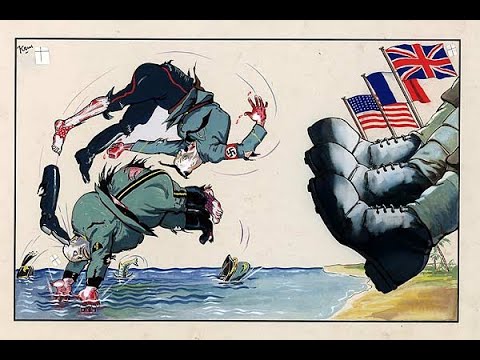
Put the boot in
0
Boot Defence·Tommy Moore: Bartitsu Lab, Boxing & Gutterfighting
Looking how kicks are used in WW2 combatives Welcome to the Bartitsu Lab. Home to content covering historic and modern …
Translation: boot defence
The Boot Defence subfamily covers the technique of hiding the foot from the opponent's grip by curling the toes, pointing the foot, and tucking the heel behind the opponent's body or thigh. [1] The boot is the first-line defence against heel hooks and ankle locks — by preventing the opponent from accessing and controlling the foot, the submission cannot be applied. [1],[2] The boot defence requires the defender to actively manage foot position throughout any leg entanglement, treating the foot like a hand that must be kept safe from grips. [2],[3]
Boot defence hides the foot by turning the toes inward to prevent heel hook and ankle lock entries. [1]
Boot defence became critical with the rise of heel hook attacks in no-gi competition. [1]
Essential in ADCC and no-gi competition. [1]
No images yet for this technique.
Sign in to suggest an image.
Looking how kicks are used in WW2 combatives Welcome to the Bartitsu Lab. Home to content covering historic and modern …
No instructional courses yet for this technique.
Sign in to suggest a course.
Risk of injury to the person this technique is applied to
Submission defence involves resisting joint locks/chokes; risk of injury if defence fails or is delayed
Skill level needed to execute this technique reliably
Whether this technique is allowed under major competition rule sets
Boxing (Edwin Haislet, 1940)
Alias sources — [1] Jiu-Jitsu University (Ribeiro, 2008) [2] Fundamentals of Brazilian Jiu-Jitsu (Danaher, 2012) [3] Brazilian Jiu-Jitsu: Theory and Technique (Gracie, 2001)
Effectiveness sources — [1] Mastering Jujitsu (Gracie & Danaher, 2003)
Standard katakana transliteration of Western martial arts terminology (外来語) — used in Japanese MMA, boxing, and BJJ communities
Alias sources — [1] Jiu-Jitsu University (Ribeiro, 2008) [2] Fundamentals of Brazilian Jiu-Jitsu (Danaher, 2012) [3] Brazilian Jiu-Jitsu: Theory and Technique (Gracie, 2001)
Effectiveness sources — [1] Mastering Jujitsu (Gracie & Danaher, 2003)
grip fighting technique, forearm endurance, timing
strong hands and forearms, quick stripping motions
forearm flexors/extensors, wrist rotators, biceps
Every move, in any martial art, shares a few universal traits. Mix and match below to pinpoint the right tool — or compare equivalents across styles.
Tommy Moore notes that boot defence was massively important in World War II combatives training, as many soldiers in those theaters wore large, heavy boots that were effective weapons.
According to Tommy Moore, kicking a human isn't as intuitive as people think, so it requires dedicated practice time to develop proper execution.
Tommy Moore emphasizes that kicks to a downed opponent are something you must practice, and recommends using a grappling dummy or bob to develop this skill safely.
The Boot Defence subfamily covers the technique of hiding the foot from the opponent's grip by curling the toes, pointing the foot, and tucking the heel behind the opponent's body or thigh. The boot is the first-line defence against heel hooks and ankle locks — by preventing the opponent from accessing and controlling the foot, the submission cannot be applied.
Boot defence became a critical technical concept with the rise of modern leg lock systems. The Danaher Death Squad's systematic approach to leg locks brought equal emphasis on leg lock defence, with the boot concept becoming a fundamental teaching point in defensive leg lock training.
Unified MMA: legal — Legal defensive technique; IBJJF: legal — Legal — defensive techniques are fundamental to grappling; IJF: legal — Legal defensive action; ADCC: legal — Legal; UWW: legal — Legal defensive technique; FIAS Sport Sambo: legal — Legal
Danger rating 3/10. Moderate — submission defence involves resisting joint locks/chokes; risk of injury if defence fails or is delayed
The standard setup chain: Anticipate the Attack → Execute Defence → Recover Stance → Counter or Disengage.
Standard counters include: Timing — attack when the defence is recovering or between movements / Feint — use deception to create openings in the defensive structure / Angle Change — attack from an unexpected angle that the defence does not cover.
Common variants: Standard defence (primary defensive technique from the most common position); Reactive defence (triggered by the opponent's attack, minimal movement for …); Proactive defence (anticipating the attack and positioning to neutralise it …); Counter defence (using the defensive movement to create an immediate count…).
Essential in ADCC and no-gi competition.
Top errors to watch for: Relaxing the foot while defending — the boot requires active ankle tension; any relaxation gives the opponent access / Flexing the foot upward (dorsiflexion) instead of pointing down — dorsiflexion exposes the heel for the hook / Not combining the boot with leg straightening — the boot alone doesn't prevent all heel hook angles / Hiding the heel but not working to escape — the boot buys time; use it to pummel legs and clear the entanglement.
The Boot Defence is also known as Būtsu Difensu, Boot Escape, Foot Lock Boot, Ankle Lock Boot Defence.